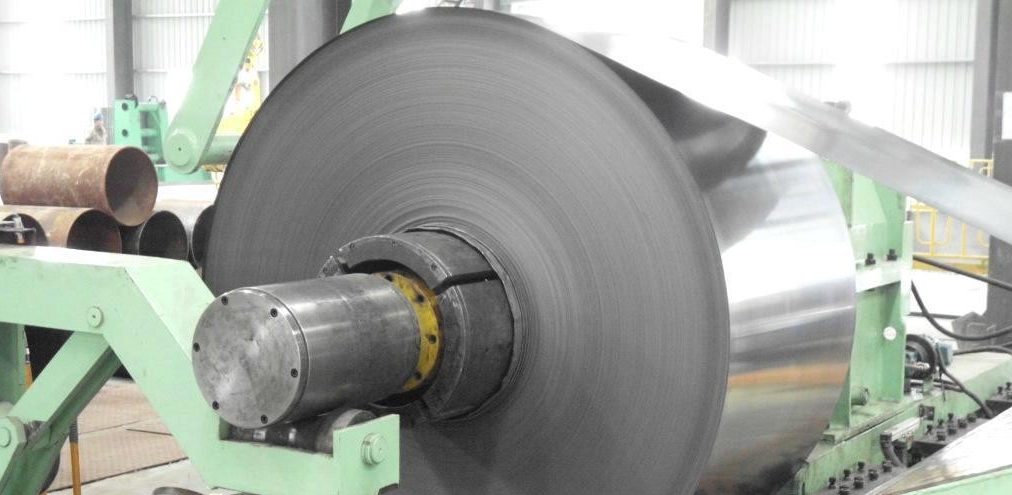

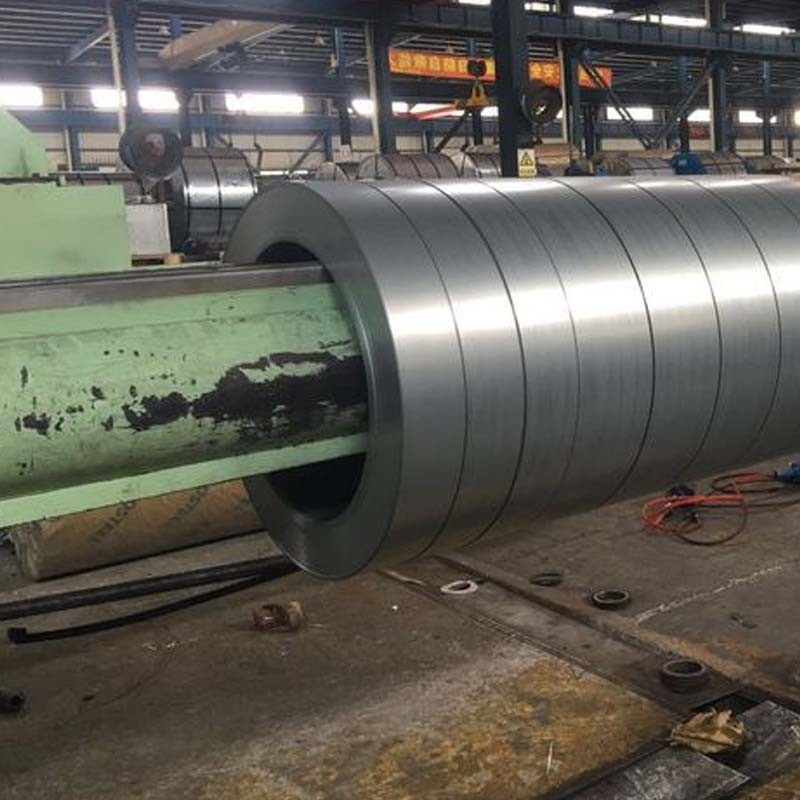
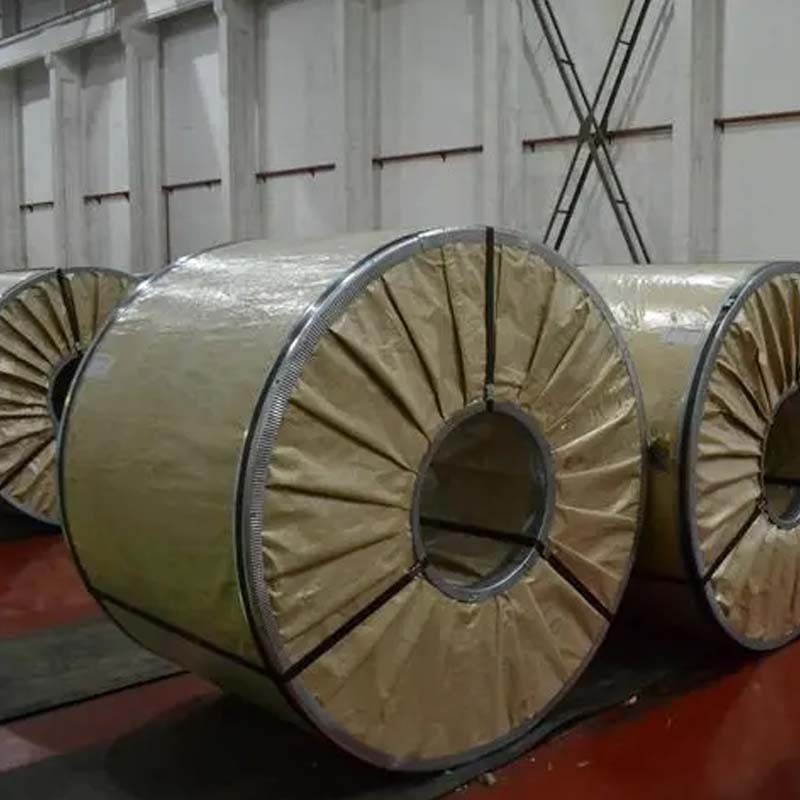
Cold-rolled hard coil (also known as hard-rolled coil) refers to a coiled steel product made from hot-rolled steel coils. After pickling to remove surface iron oxide scale, it is continuously cold-rolled at room temperature, but without annealing.
Due to the continuous cold deformation during cold rolling, work hardening occurs, significantly increasing the strength and hardness of cold-rolled hard coils, but decreasing their plasticity and toughness, and deteriorating their stamping performance. Therefore, cold-rolled hard coils are usually not used directly as the final product, but rather as the base material for subsequent processes such as hot-dip galvanizing. Cold-rolled hard coils are the precursor to cold-rolled sheet coils (annealed state), and the default delivery state for cold-rolled sheet coils is generally annealed.
The production of cold-rolled hard coils is the first half of the cold rolling process, with the core process flow being:
Hot-rolled coil (raw material) → Pickling (removal of iron oxide scale) → Continuous cold rolling → Hard-rolled coil (finished product)
1. Pickling: Using hot-rolled steel coils as raw material, pickling solutions such as hydrochloric acid are used to remove the iron oxide scale (black scale) from the surface of the hot-rolled coils, preparing for cold rolling.
2. Cold Continuous Rolling
After pickling, the steel coil is continuously rolled in multiple passes on a cold continuous rolling mill at room temperature (below the recrystallization temperature) to reduce its thickness to the target thickness. Work hardening occurs during this stage—as the deformation increases, the strength and hardness of the steel rise, but its plasticity and toughness decrease.
The chemical composition of cold-rolled hard coils does not have a uniform, fixed value. Instead, it is determined based on its grade and the standards it follows (such as Chinese national standard GB, Japanese standard JIS, etc.). Different grades achieve different strengths, plasticities, and processing properties by controlling the content of elements such as carbon and manganese.

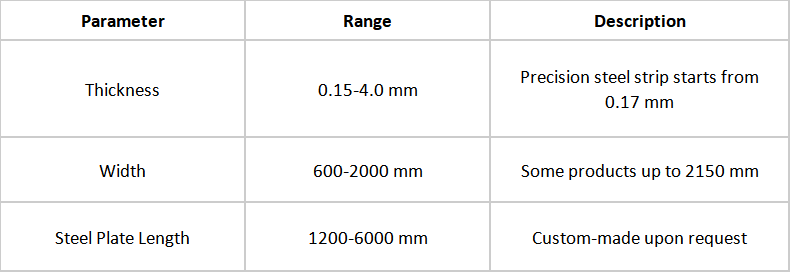
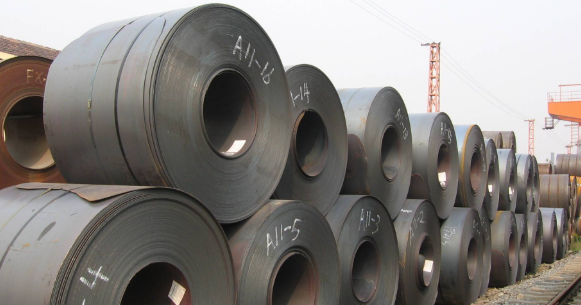
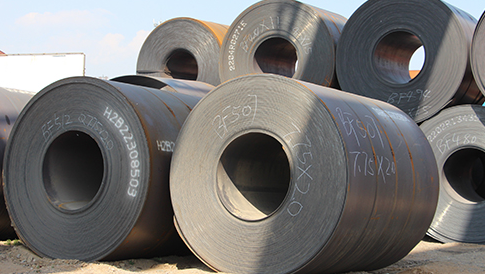
The weight of a cold-rolled hard coil is generally between 6 and 13.5 tons, and the inner diameter of the coil is typically 610 mm. Cold-rolled hard coils do not undergo annealing, thus maintaining their high hardness after cold rolling.
Core Performance Characteristics
1. High Hardness
Cold-rolled hard coils are not annealed, resulting in extremely high hardness. Their Rockwell hardness (HRB) is greater than 90, and some products require HRB ≥ 85.
2. High Strength
Due to the work hardening effect, the yield strength of cold-rolled hard coils is much higher than that of annealed cold-rolled sheets. For example, SPCC's yield strength can reach 130–300 MPa.
3. Low Plasticity and Toughness
Work hardening leads to a decrease in the material's plasticity and toughness, resulting in lower elongation and poor weldability.
4. Poor Machinability: Cold-rolled hard coils have extremely poor machinability, allowing only for simple directional bending (typically less than 90 degrees, perpendicular to the coiling direction). Some steel mills offer four-edge bending.
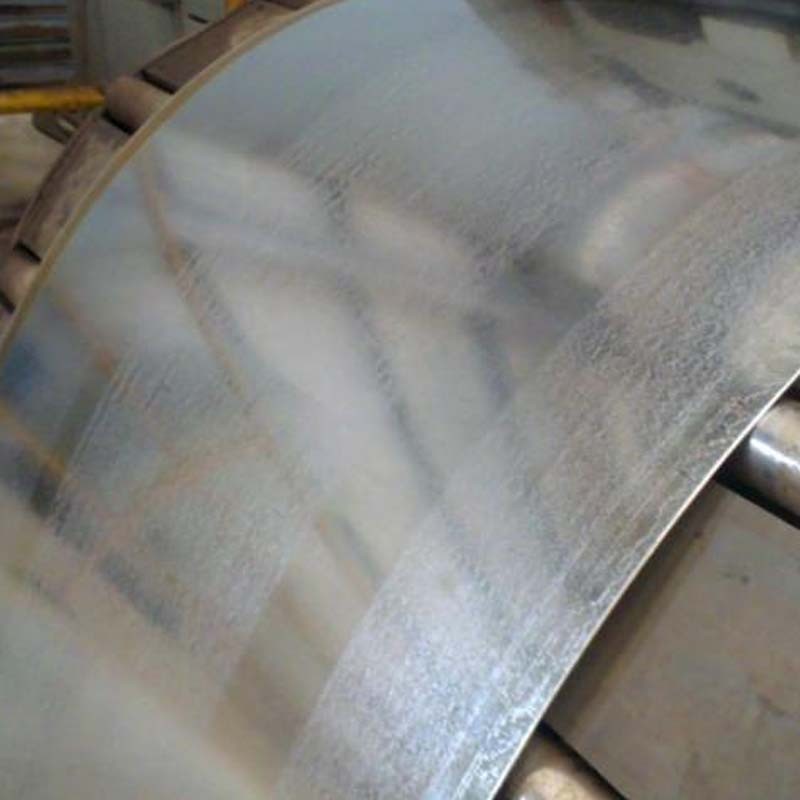
5. Surface Appearance: Visually, cold-rolled hard coils have a slightly darker, duller appearance, unlike the bright surface of annealed cold-rolled sheets.
Main Advantages:
1. It is suitable for extremely thin strips that cannot be produced by hot rolling (the thinnest can be less than 0.001mm).
2. The surface quality of cold-rolled products is superior, and there are no defects such as pits and Suppression of iron oxide scale and other defects. According to the requirements of users, coils with different surface roughness (smooth surface or hemp rough surface, etc.) can be produced to facilitate the processing of the next process.
3. The mechanical and technological properties of cold-rolled hard coil are very good (such as high strength, low yield limit, good weight deep drawing performance, etc.).
4. It can realize high-speed rolling and full continuous rolling with high productivity.
Main Applications
The galvanizing unit with pre-annealing processing device processes galvanizing;
After annealing, it is processed into ordinary cold rolling; there is basically no need to process the panel.
Others: supermarket shelves, pipe making, filing cabinets, lamps, daily hardware and other Industries; In the stationery manufacturing industry, a small part uses fully rigid board, that is, cold-rolled hard coil; The umbrella industry generally uses hard rolls with a specification of 0.2-0.5mm to make umbrella ribs.
Cold-rolled hard coil is a steel product made from hot-rolled coil as raw material, which is pickled and cold-rolled without annealing. Due to work hardening effect, it has high strength and high hardness (HRB>90), but poor plasticity and stamping performance. Cold-rolled hard coil is usually not used directly; its core use is as a base material for coated products such as hot-dip galvanized sheet, aluminized zinc sheet, and color-coated sheet, and it is also used in simple bending scenarios such as construction and shelving.
The key difference between cold-rolled hard coil and cold-rolled sheet (annealed state) is whether it has undergone annealing—annealing eliminates work hardening, restores the material's plasticity, and makes it suitable for stamping. Therefore, when purchasing, it is necessary to clearly define the product state and select the appropriate product according to the end use. Cold-rolled hard coil is continuously developing towards ultra-thin and high-precision production.





|

|

|

|

|
| Timely Info | Independent | Platform | Multiple guarantees | Self-operated storage |
China Steel Market
Empowering small and medium-scale steel purchasing

| About us | Channel | Useful tools |
|---|---|---|
| About China Steel Market | Prices | Steel Weight Calculation |
| Contact Us | Answers | Why Choose Us |
| Terms & Conditions | Inventory | Avoiding Trade Fraud Guide |
| Privacy Policy | Help |
Hot search words:
China Rebar prices China Wire Rod Prices Welded Steel Pipe Prices