
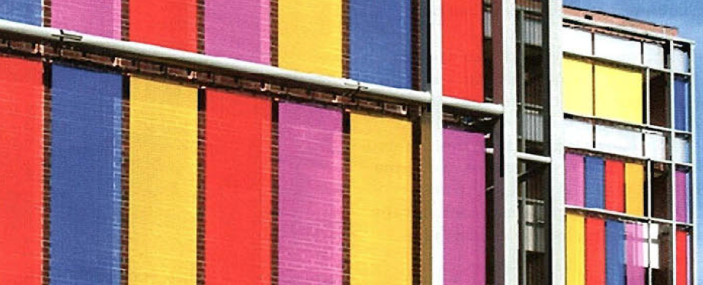
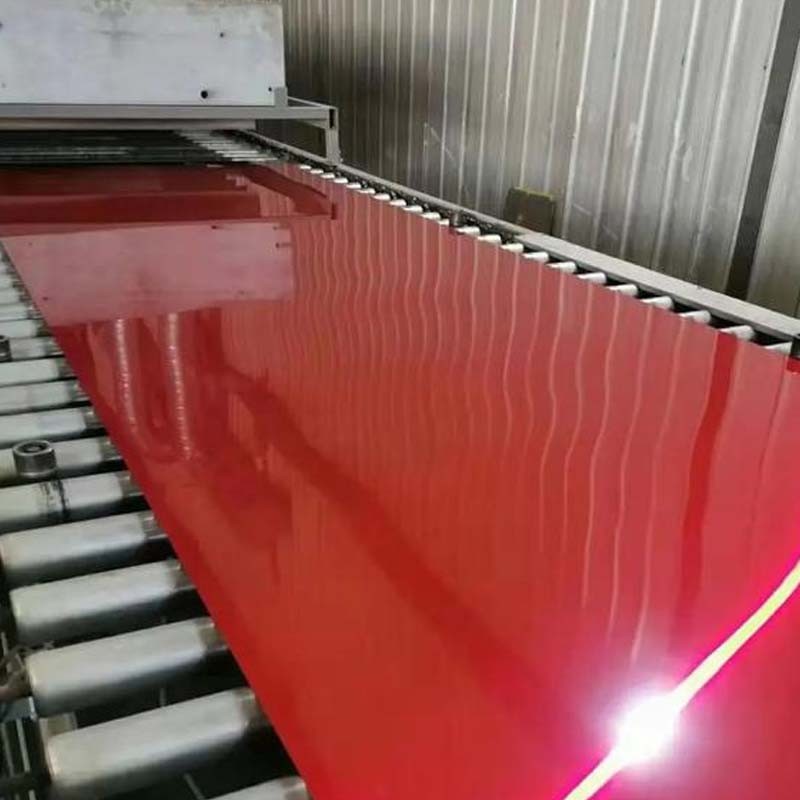
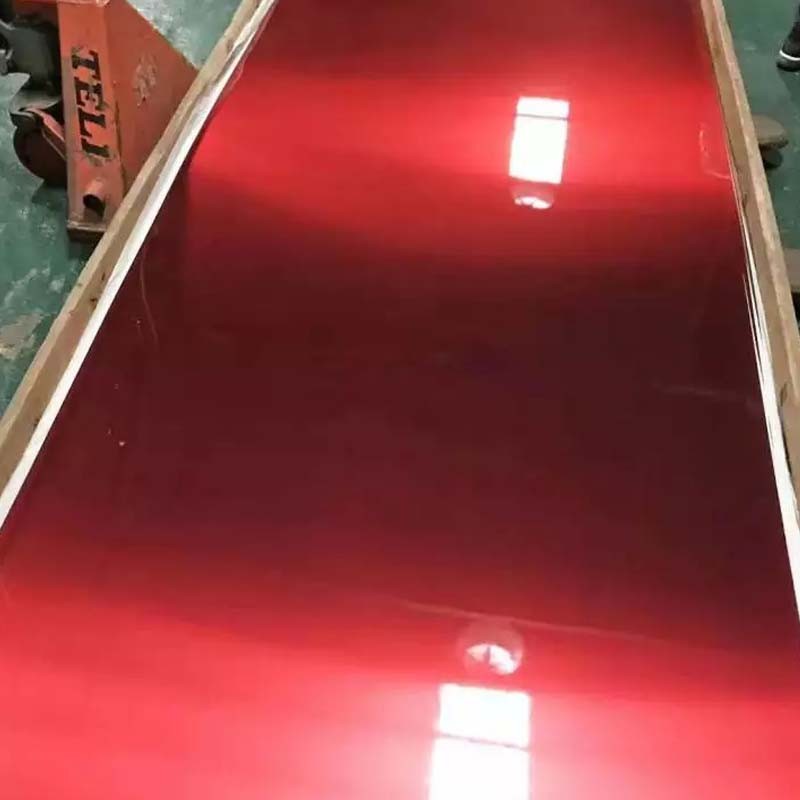
Colored stainless steel sheets—also known as decorative colored stainless steel—are functional decorative materials created by applying surface treatment technologies to impart color to the metal.
These sheets are produced by treating the stainless steel surface with processes such as PVD vacuum coating, electroplating, etching, or spraying. They retain the original physical, chemical, and mechanical properties of the base stainless steel while offering superior corrosion resistance. The colored layer is integrated with the stainless steel substrate—distinguishing it from simple surface coatings—and is fade-resistant. They are widely used in architectural decoration, interior design, and commercial spaces.
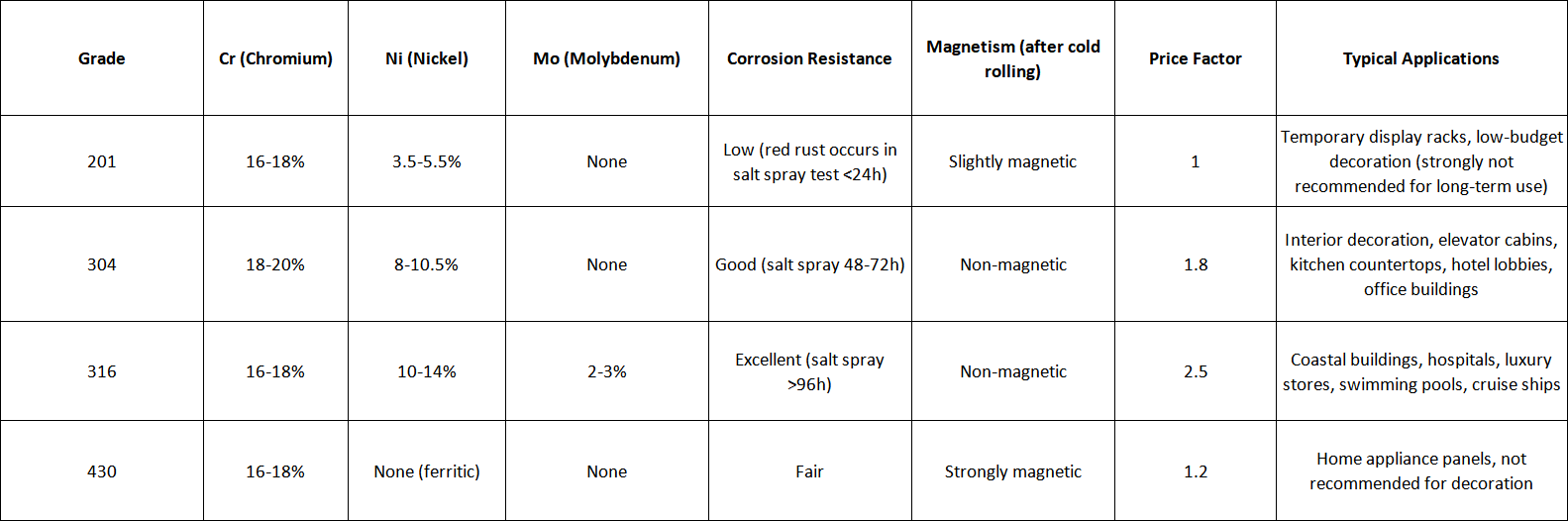
Comparison table of common grades
1. Chemical coloring process.
The coloring principle is straightforward: it relies on the optical interference of the surface oxide film to produce various colors. The process generally consists of three stages: oxide film formation, electrolytic hardening, and sealing.
The complete process flow includes:
Mechanical polishing → Cleaning → Alkaline degreasing → Cleaning → Electropolishing → Cleaning → Activation → Cleaning → Chemical coloring → Hardening of the colored film → Cleaning → Sealing → Cleaning → Drying
Oxide film formation: The most critical step; the thickness of the oxide film—and thus the final color—is controlled by adjusting the immersion oxidation time.
Hardening: Enhances the oxide film's wear, corrosion, and heat resistance.
Sealing: Fills the pores of the film layer using steam, sodium silicate (water glass), or potassium dichromate.
2. The second major method for coloring stainless steel is Physical Vapor Deposition (PVD). This process takes place in a vacuum chamber containing a small amount of gas—typically argon. The gas is ionized by a high negative voltage; the resulting plasma—consisting of electrons and positive ions—bombards the metal substrate, ejecting (or sputtering) metal ions or atoms that deposit onto the cleaned product to form a thin coating (typically 300 nm). It is crucial that the surface to be coated is free of contaminants; otherwise, the coating will not adhere properly. While PVD is commonly used for coating small objects like drill bits, it is also used to produce larger colored furniture or items, though the size of the workpiece is limited by the dimensions of the vacuum chamber. Coating larger objects and sheets requires higher-power plasma ionization, with the plasma's magnetic field aligned parallel to the target surface.
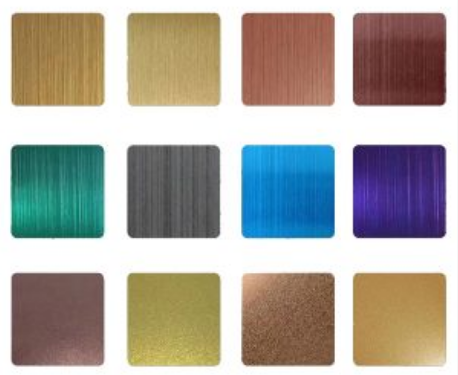
The color of a PVD coating is determined by the source material. Common coating materials and their corresponding colors include:
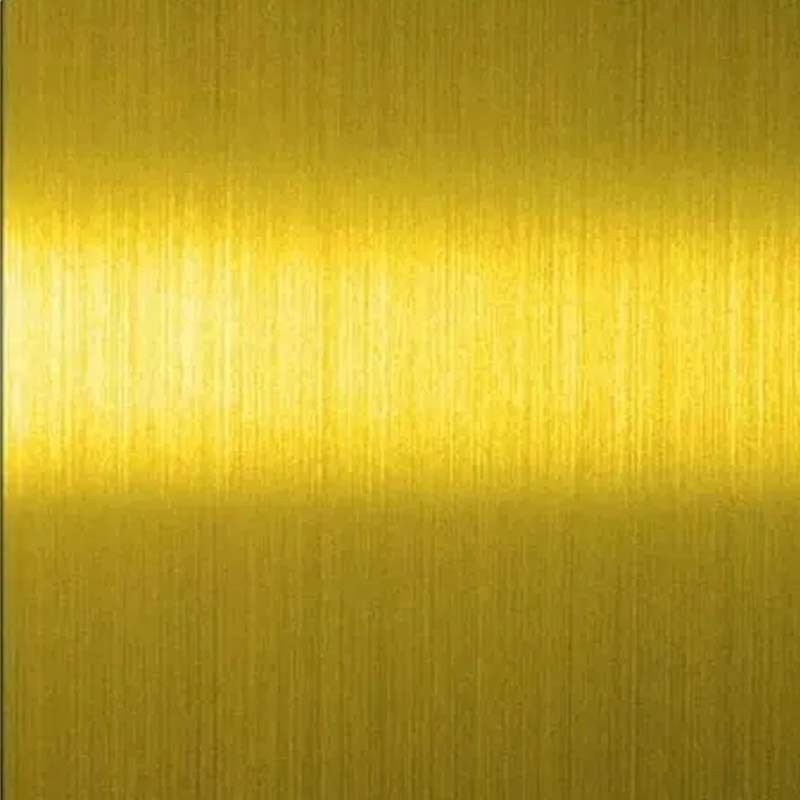
TiN: Gold
TiCN: Rose gold, champagne gold
CrN: Silver-gray
TiC: Black titanium
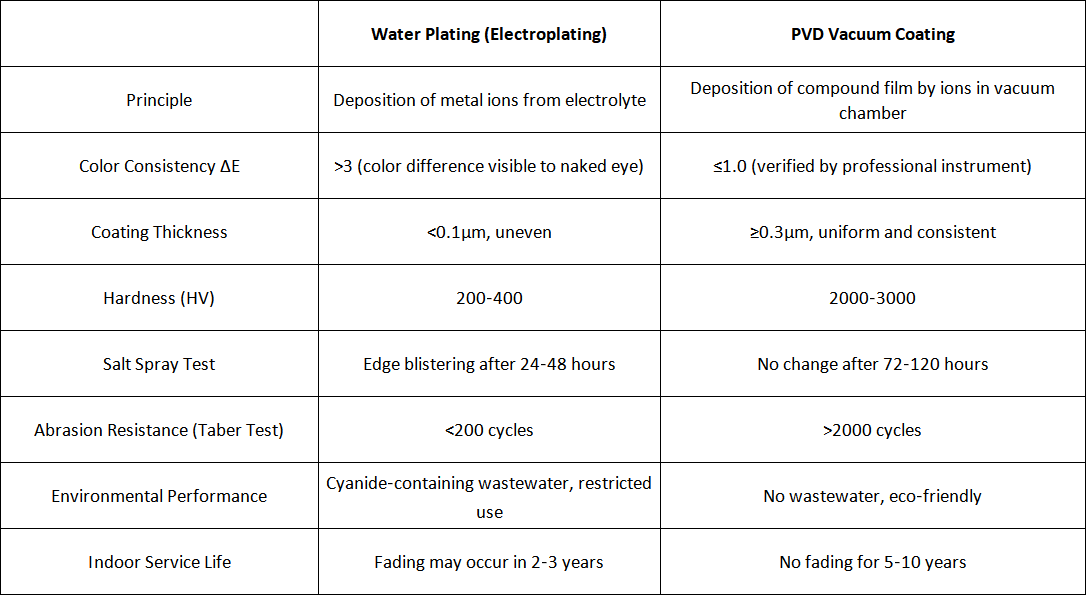
PVD vs. Electrochemical Coloring:
PVD coatings offer superior wear resistance, and the color remains consistent regardless of the viewing angle;
Colors produced by electrochemical coloring may shift slightly depending on the viewing angle. The size of parts coated via PVD is limited by the dimensions of the vacuum chamber.
Aqueous plating vs. PVD vacuum coating
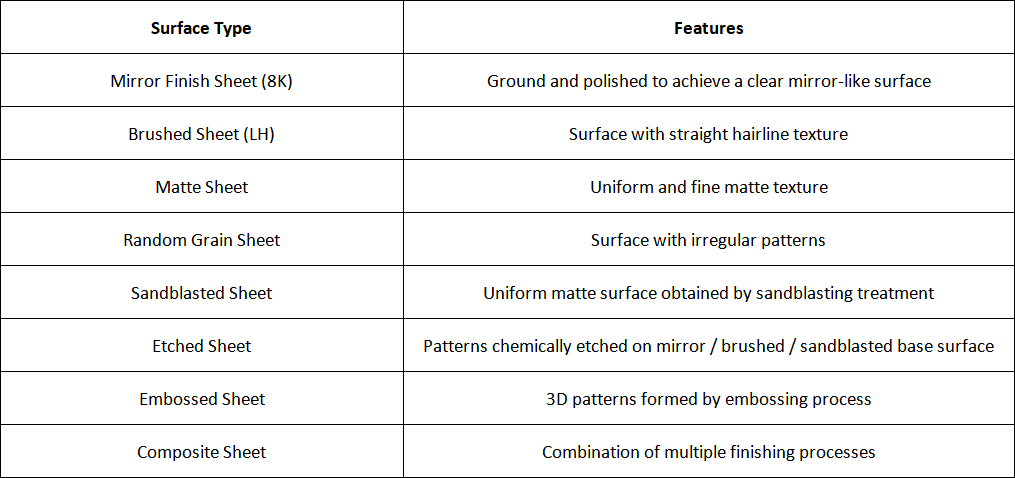
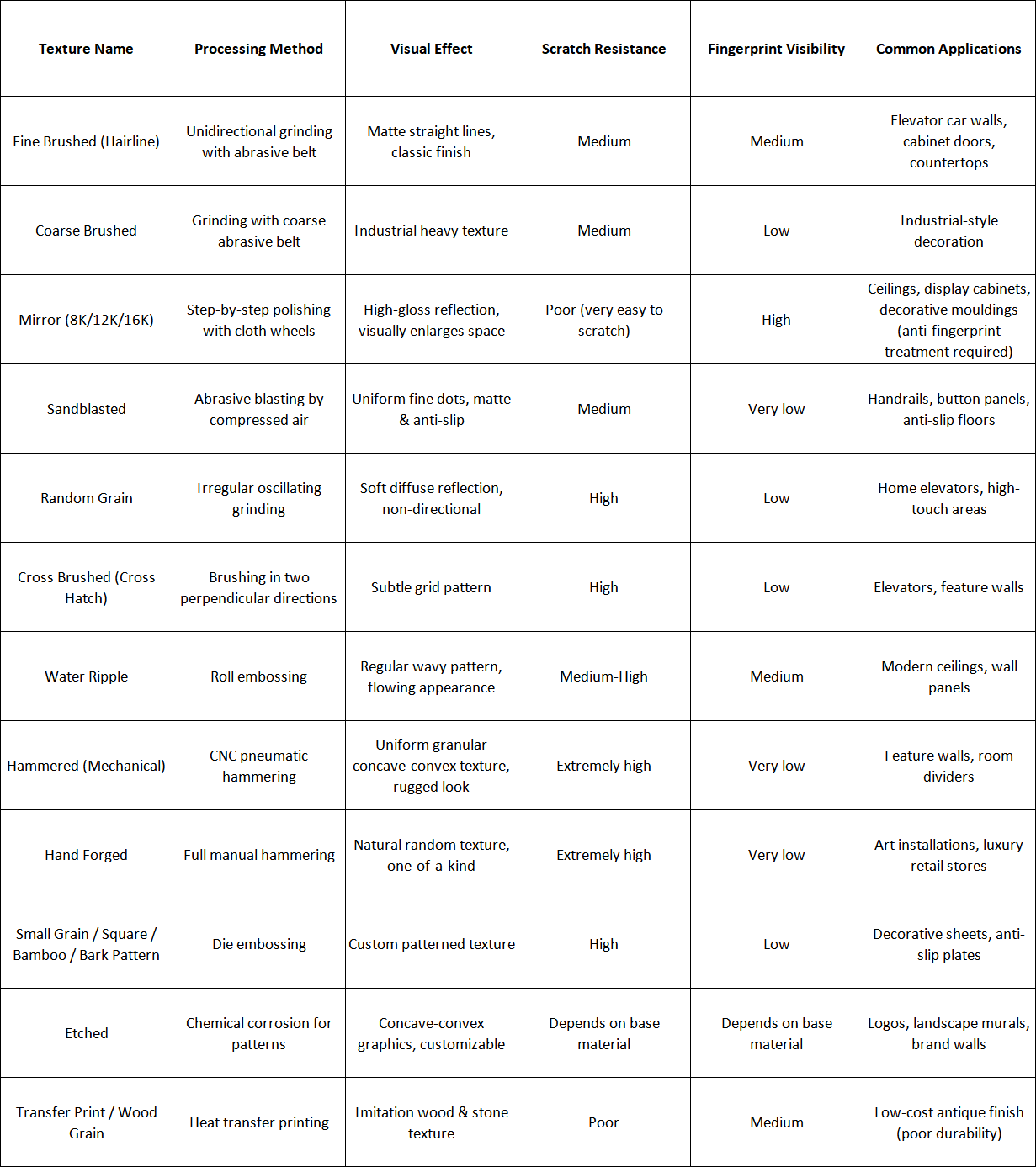
Hairline, Mirror, Bead-blasted, Random Pattern, Hammered, Water Ripple, and Embossed. Texture Comparison Chart.
1. Rich colors and high decorative appeal
Utilizing PVD titanium coating technology, the material can display a wide range of colors, such as rose gold, champagne gold, black titanium, sapphire blue, and iridescent (rainbow) finishes. The surface offers various finishes—such as mirror, brushed, matte, and etched—to suit diverse interior design styles.
2. Corrosion and Oxidation Resistance
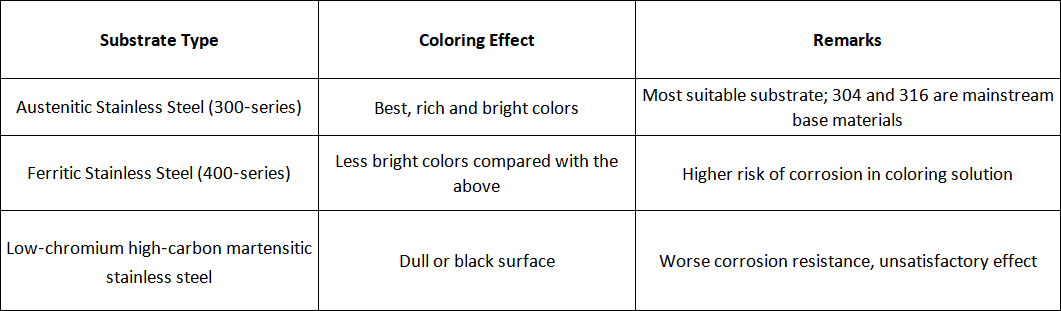
The base material is 304/316 stainless steel, offering excellent rust resistance; it is suitable for humid or high-salinity environments (e.g., coastal areas, swimming pools, kitchens).
The PVD coating is more wear-resistant than standard spray finishes, resists fading, and retains its vibrant color over long-term use.
3. Easy to Clean and Fingerprint-Resistant
Treated with a nano-coating or anti-fingerprint finish, the surface repels oil and fingerprints; routine cleaning requires only a wipe with a damp cloth.
Ideal for settings with strict hygiene requirements, such as elevator cabins, cabinetry, and hospitals.
4. High Strength and Wear Resistance
The stainless steel substrate offers high hardness and impact resistance, making it more durable than standard color-coated steel.
Brushing and etching processes enhance surface wear resistance and minimize scratching.
5. Eco-friendly, Non-toxic, and Safe
Free from harmful substances like formaldehyde and VOCs; meets food-grade and medical-grade standards, making it suitable for kitchen countertops, medical equipment, etc.
High fire-resistance rating (Class A non-combustible material); suitable for public spaces such as shopping malls and subways.
6. Customizable Processing
Supports advanced fabrication techniques including laser cutting, bending, punching, and welding to create custom-shaped decorative components.
Can incorporate features like LED backlighting and etched patterns to achieve unique, personalized decorative effects.
1. Architectural Decoration
Curtain walls and suspended ceilings: Highly weather-resistant, making them suitable for exterior architectural decoration.
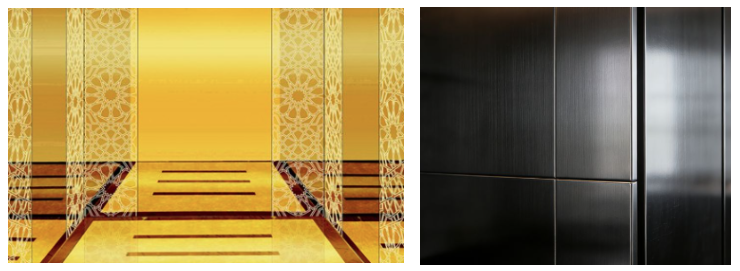
Elevator cabins and door frames: Fingerprint-resistant and easy to clean, adding a touch of luxury.
2. Home Design
Cabinet and wardrobe panels: Moisture-resistant and heat-resistant, ideal for kitchens and bathrooms.
Feature walls and room dividers: Combining colored sheets with lighting designs creates an atmosphere of understated luxury.
3. Commercial Spaces
Hotels, KTVs, and shopping malls: Iridescent and laser-finish sheets enhance visual impact.
Brand image walls and logos: Custom etching or laser engraving of corporate logos.
4. Industrial and Medical Sectors
Laboratory and hospital wall surfaces: Antimicrobial stainless steel sheets meet hygiene standards.
Food processing equipment: Complies with food safety requirements and is easy to clean and disinfect.
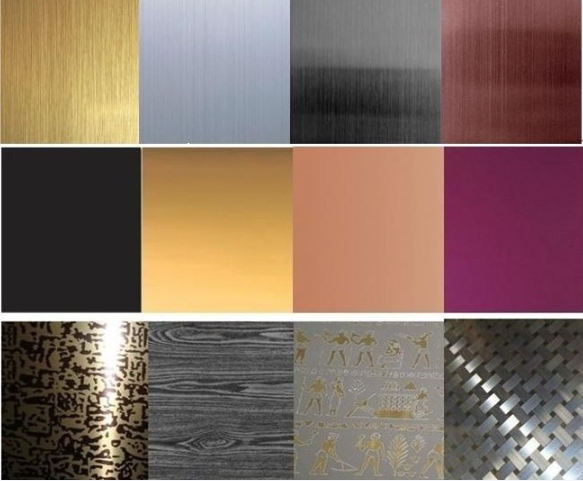
Colored stainless steel sheets combine aesthetics, durability, and functionality, making them an ideal choice for high-end decorative materials. Whether used for architectural curtain walls, home renovations, or commercial interior design, they offer unique visual effects through diverse colors and finishes while meeting practical needs such as rust resistance and ease of cleaning.



|

|

|

|

|
| Timely Info | Independent | Platform | Multiple guarantees | Self-operated storage |
China Steel Market
Empowering small and medium-scale steel purchasing

| About us | Channel | Useful tools |
|---|---|---|
| About China Steel Market | Prices | Steel Weight Calculation |
| Contact Us | Answers | Why Choose Us |
| Terms & Conditions | Inventory | |
| Privacy Policy | Help |
Hot search words:
China Rebar prices China Wire Rod Prices Welded Steel Pipe Prices