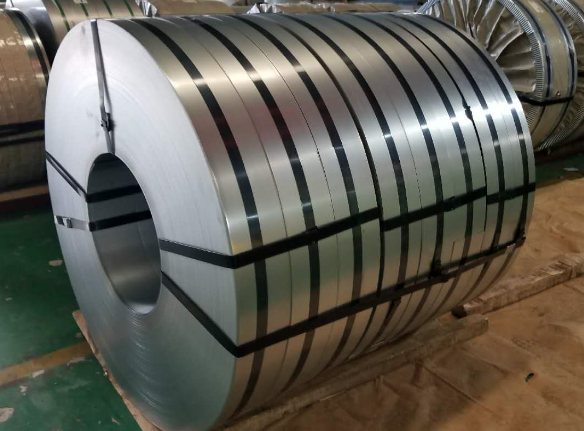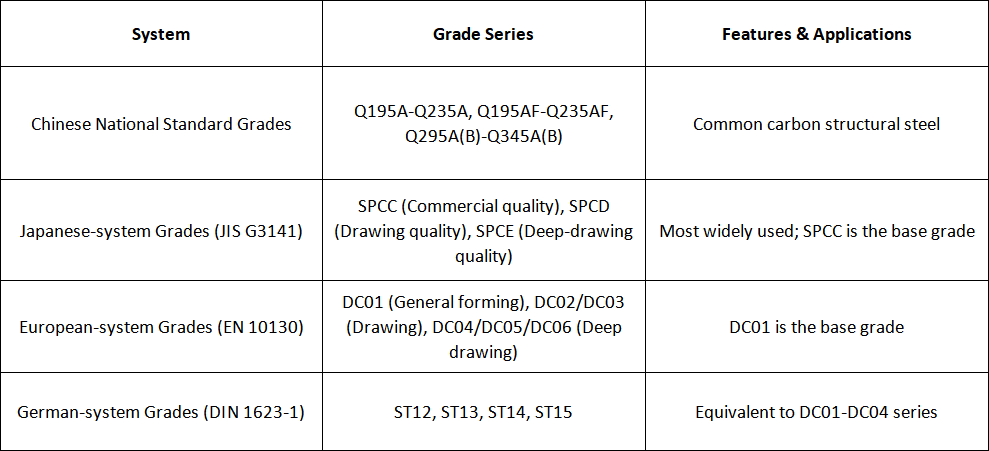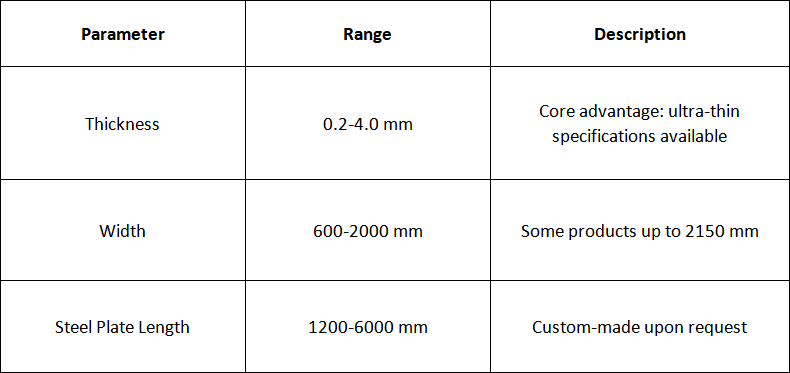

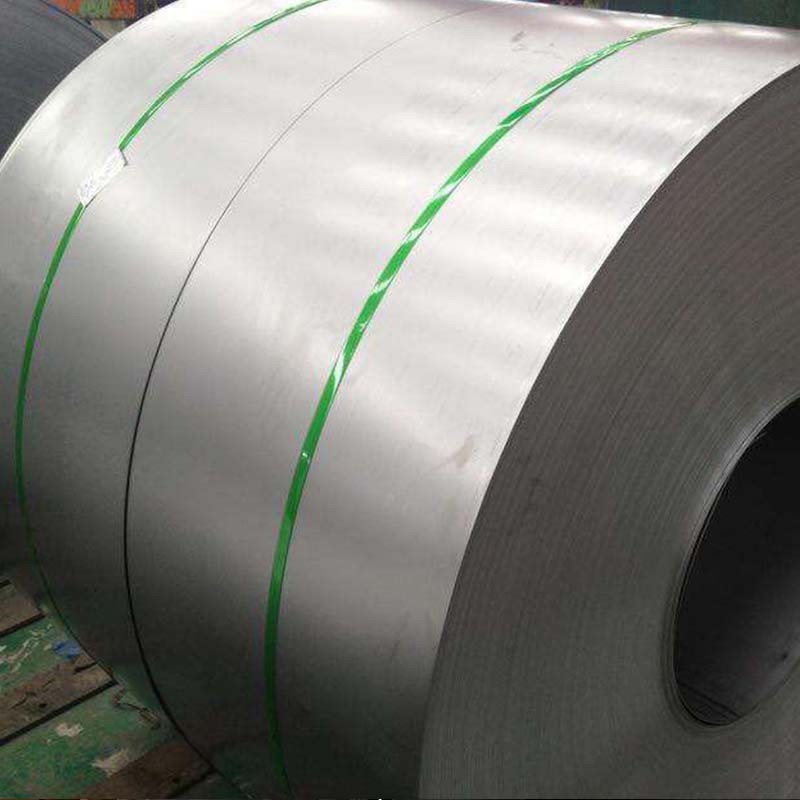
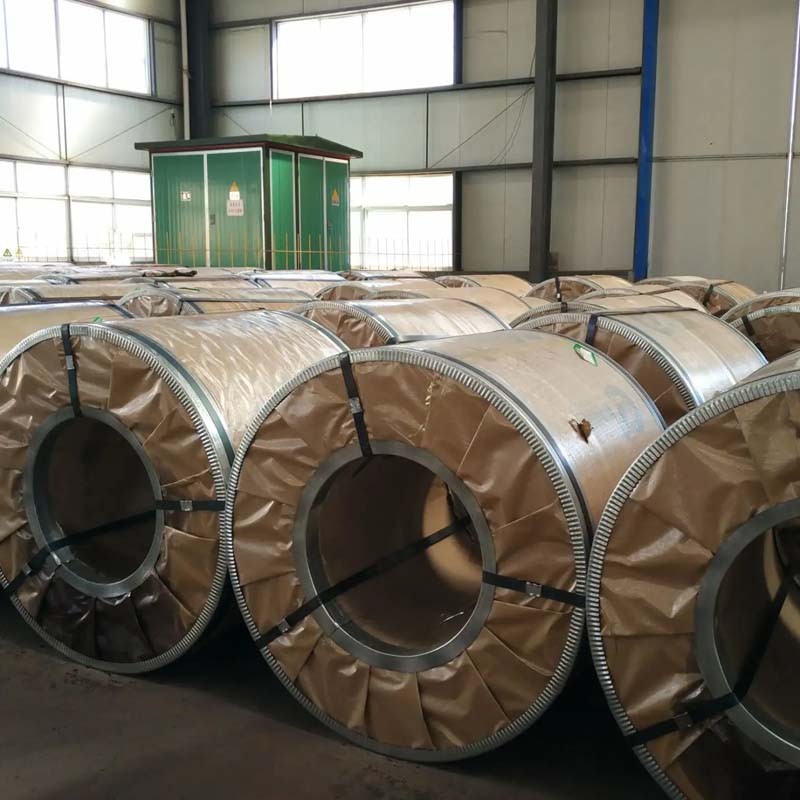
Cold-rolled coils are steel products delivered in coils, manufactured from hot-rolled coils. After pickling to remove iron oxide scale, they are rolled at room temperature, followed by degreasing, annealing, and leveling processes. They are an indispensable basic material in modern high-end manufacturing.
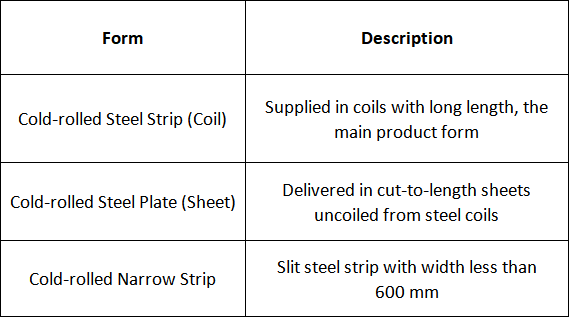
The main product forms of cold-rolled coils include:
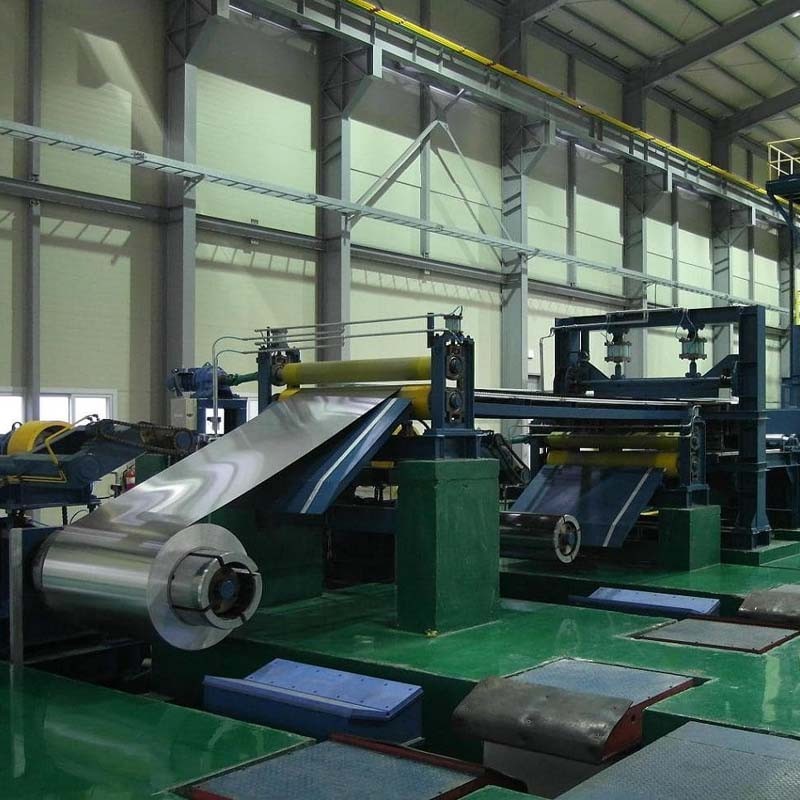
Cold-rolled coils are an important substrate for producing coated products such as galvanized sheets, tinplate, and color-coated sheets. The production process of cold-rolled coils is complex and highly automated, representing the highest level of steel rolling technology.
The manufacturing process of cold rolled coils usually includes the following steps:
1. Hot Rolling: First, the original steel is subjected to a hot rolling process at high temperatures to heat it to a higher temperature, and then it is pressed into the required thickness and width by a roll mill to form hot rolled steel coils.
2. Pickling: Hot rolled coils are pickled to remove surface oxidized skin and contaminants to ensure better surface quality after cold rolling.
3. Cold Rolling: Hot rolled steel coils are re-rolled at room temperature in a cold rolling mill. The thickness of the steel in this process will become more uniform, while the surface will become smoother.
4. Annealing: Cold rolled coils may need to be annealed to remove internal stresses and improve the ductility and workability of the steel.
Core process
Hot rolled coil (raw material) → Pickling → Cold rolling → Degreasing → Annealing → Smoothing → Finishing → Finished Product Warehousing
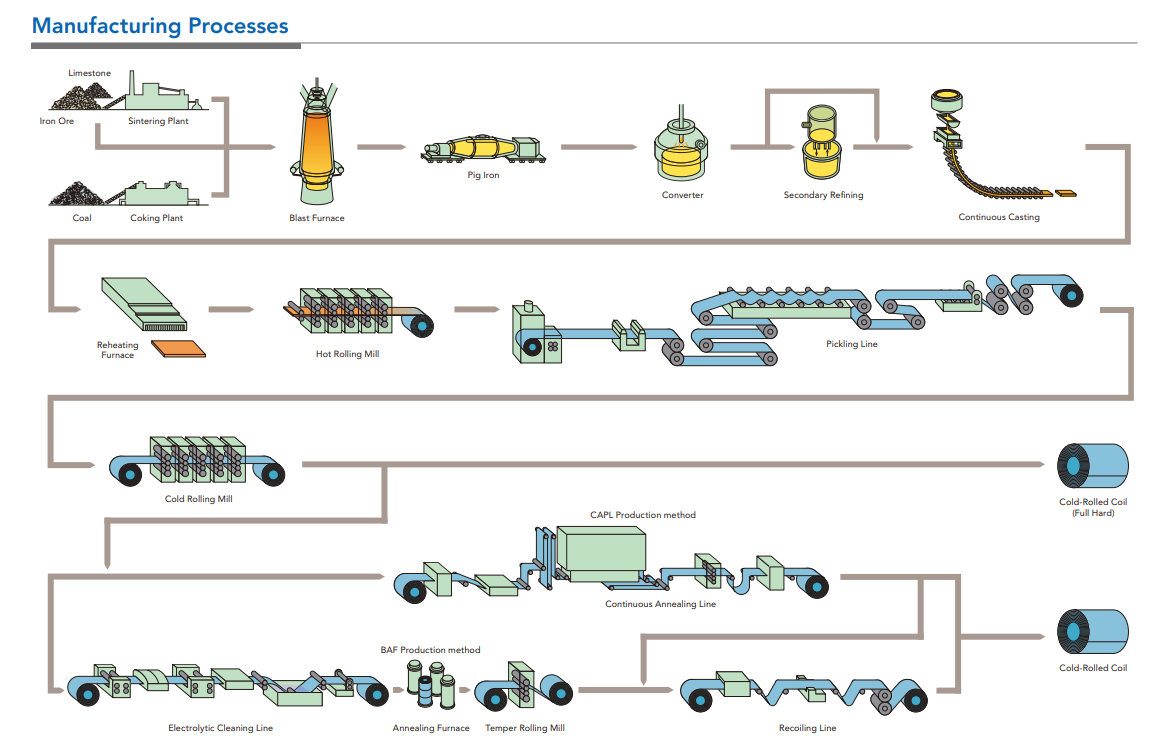
Cold-rolled coils suffer from work hardening, leading to deteriorated stamping performance. Annealing is essential to restore their mechanical properties.
There are two main annealing processes:
Banner-type annealing:Step-by-step annealing, with heating temperatures typically controlled between 680 and 720°C;
Continuous annealing:High production efficiency, suitable for mass production.
After annealing: The strip surface is bright, and plasticity is restored, making it suitable for stamping.
Chemical Composition (Typical Values)

Core Performance Characteristics:
1. Excellent Surface Quality: Cold rolling does not involve heating, eliminating defects common in hot rolling such as pitting and iron oxide scale. The surface quality is excellent, with high smoothness. Strips with different surface roughnesses (glossy or roughened surfaces, etc.) can be produced according to customer requirements.
2. High Dimensional Accuracy: Cold-rolled products have high dimensional accuracy, with thickness deviations controllable within 0.01–0.03 mm. High-end precision products can achieve thickness accuracy below ±5 μm.
3. Excellent Mechanical Properties: After annealing, cold-rolled sheets exhibit superior mechanical and processing properties compared to hot-rolled thin steel sheets. They primarily utilize low-carbon steel grades and require good cold bending and welding performance, as well as certain stamping properties.
4. Good Stamping Performance: Cold-rolled sheets possess high stamping performance, low yield point, and no aging properties, making them particularly suitable for deep drawing. Cold rolling allows for the production of thinner, more precise, and flatter products.
5. Easy to Coat and Plate: Cold-rolled sheets have a clean and bright surface, facilitating painting, electroplating, and other surface treatments. They are ideal substrates for coated products such as galvanized sheets and color-coated sheets.
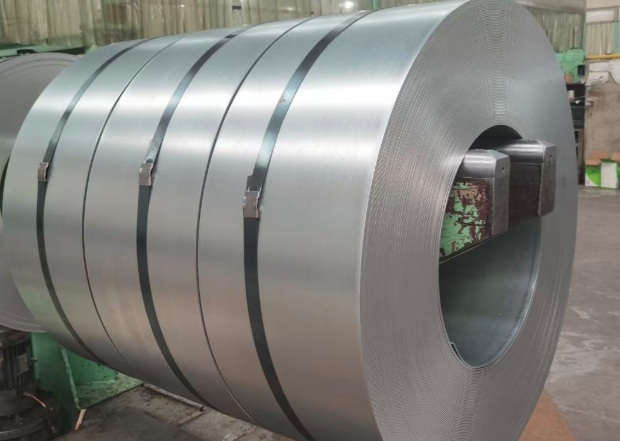
Cold-rolled coils, characterized by their smooth surface, high dimensional accuracy, and excellent stamping performance, are widely used in automotive manufacturing, home appliances, electronics, machinery, and construction industries. Currently, cold-rolled coils are rapidly developing in the direction of high strength, ultra-thinness, high precision and intelligent manufacturing.
Key differences between cold-rolled coils and hot-rolled coils:
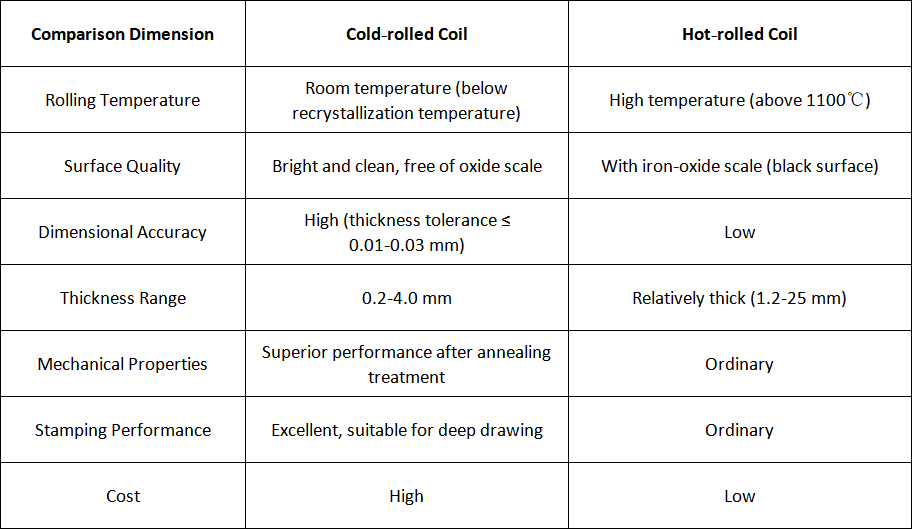
To summarize, cold rolled steel coil, as a metal material treated by a special process, has many unique characteristics. Its high strength, good toughness and excellent surface quality make it widely used in industries such as automotive, construction and home appliances. With the advancement of technology and growing demand, the development prospect of cold rolled steel coils will be even broader. Whether in the lightweight design of new energy vehicles, the structural stability of high-rise buildings, or the environmental performance of home appliances, cold rolled steel coils will play an important role in contributing to the development of different industries.




|

|

|

|

|
| Timely Info | Independent | Platform | Multiple guarantees | Self-operated storage |
China Steel Market
Empowering small and medium-scale steel purchasing

| About us | Channel | Useful tools |
|---|---|---|
| About China Steel Market | Prices | Steel Weight Calculation |
| Contact Us | Answers | Why Choose Us |
| Terms & Conditions | Inventory | Avoiding Trade Fraud Guide |
| Privacy Policy | Help |
Hot search words:
China Rebar prices China Wire Rod Prices Welded Steel Pipe Prices