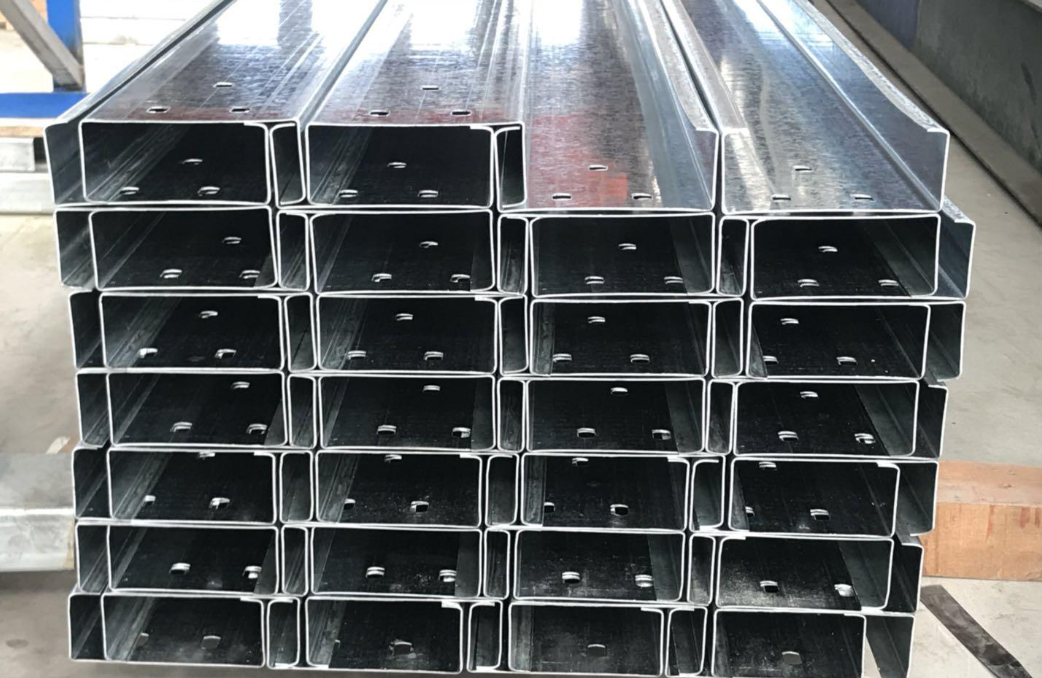

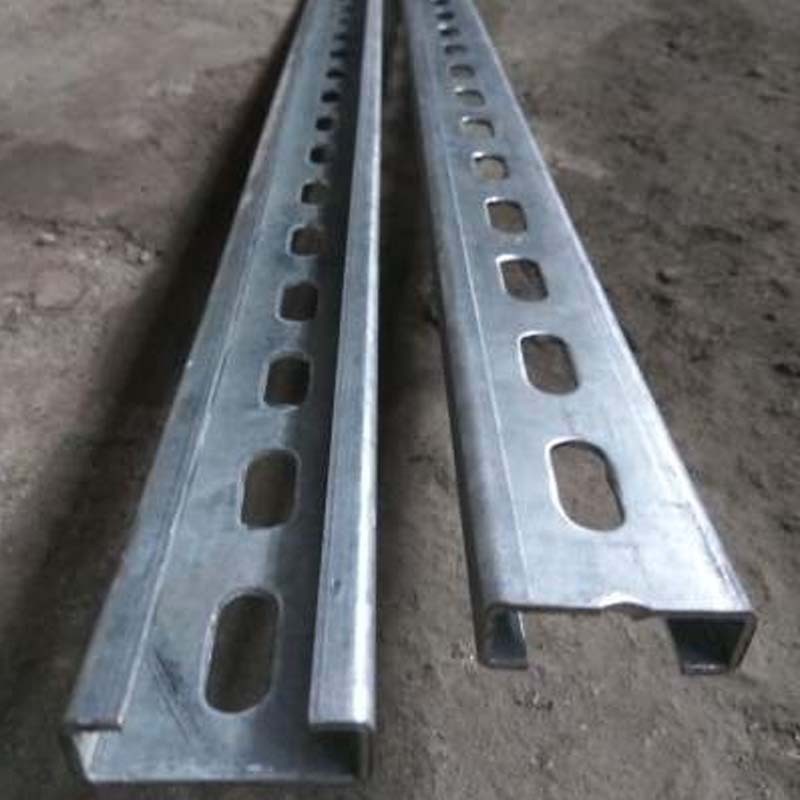
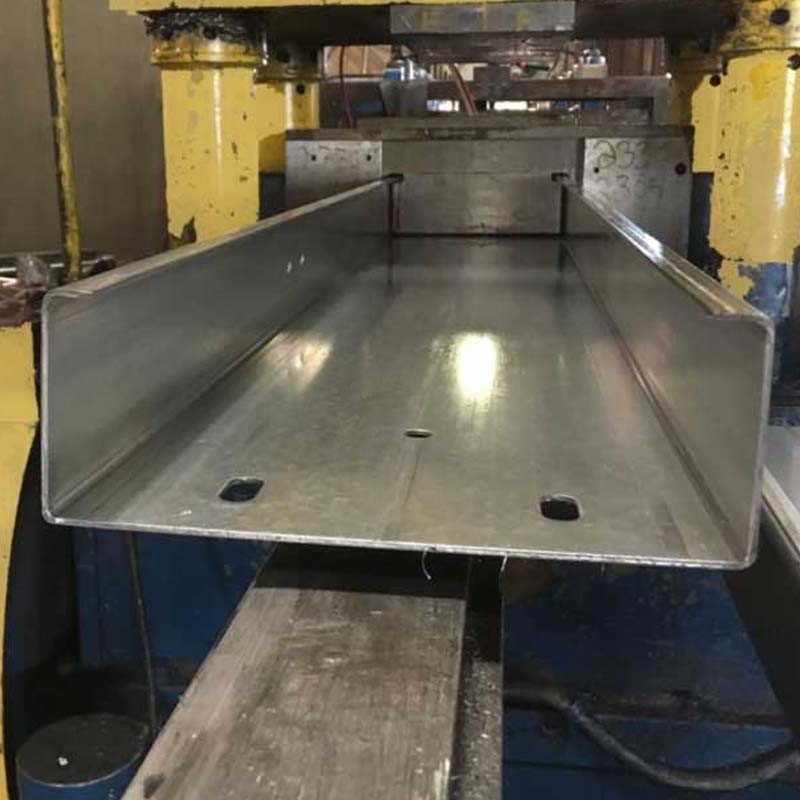
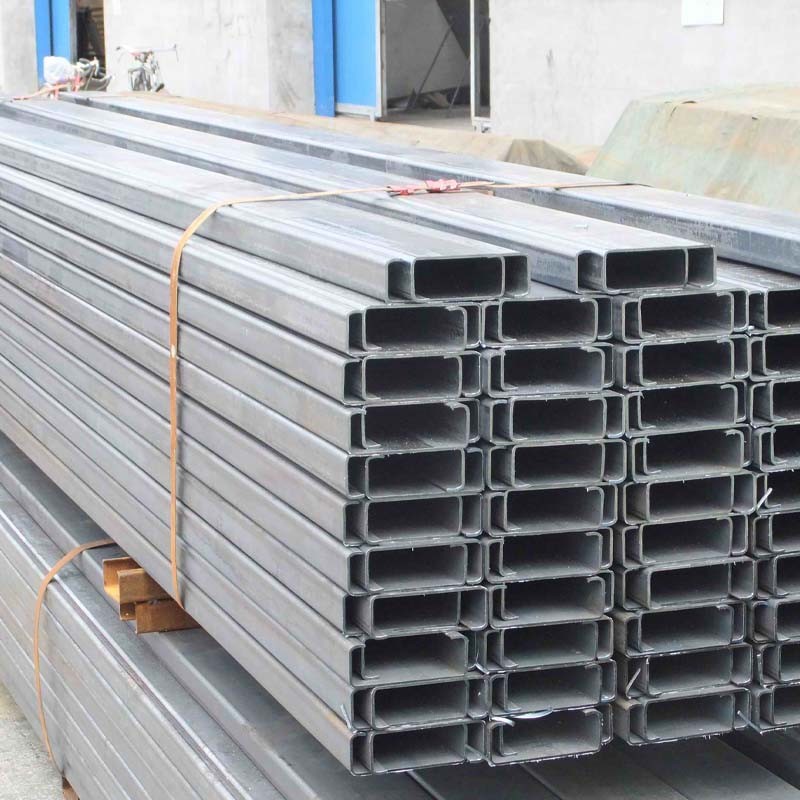
C-shaped steel, also known as C-channel or C-section, is a type of hot-rolled steel section with a shape resembling the letter "C." It is a versatile and widely used structural component in construction and engineering projects, offering various benefits due to its unique cross-sectional design.
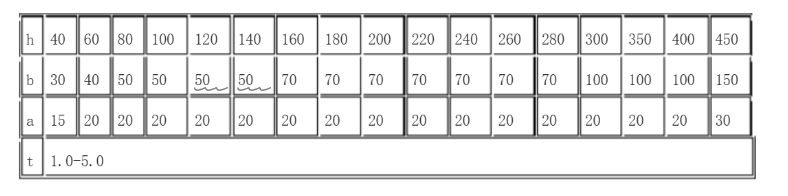
There are many kinds of C-shaped steel, divided from the cross-sectional shape, there are open, semi-closed and closed. The main products are cold-formed channel steel, angle steel, Z-shaped steel, cold-formed corrugated steel plate, square tube, rectangular tube, electric welding special-shaped steel tube, rolling shutter door, etc. . C-shaped steel is usually produced with a thickness of less than 6mm and a width of less than 500mm. Commonly used specifications in China include equal-edge angle steel (leg length 25-75 mm), inner-curling angle steel (leg length 40-75 mm), channel steel (height 25-250 mm), inner-curling channel steel (height 60-250 mm) ), curled Z-shaped steel (height 100~180 mm) and more than 400 specifications and varieties. Products are widely used in mining, construction, agricultural machinery, transportation, bridges, petrochemicals, light industry, electronics and other industries.
C-shaped steel is the main material for making lightweight steel structures. It is made of cold-formed steel plates or steel strips. Not only can its wall thickness be made very thin, but it also greatly simplifies the production process and improves production efficiency. It can produce various profiles and C-shaped steel of different materials with uniform wall thickness but complex cross-sectional shapes that are difficult to produce by ordinary hot rolling methods. In addition to being used in various building structures, C-shaped steel is also widely used in vehicle manufacturing, agricultural machinery manufacturing, etc. There are many types of C-shaped steel, with split opening, semi-closed opening and closed opening according to the cross-section. According to the shape, there are cold-formed channel steel, angle steel, Z-shaped steel, square tube, rectangular tube, special-shaped tube, rolling shutter door, etc.
According to the regulations of GB6725-92, C-shaped steel is made of ordinary carbon structural steel, high-quality carbon structural steel, low-alloy structural steel steel plate or steel strip cold-formed. C-shaped steel is an economical section steel, and it is also a high-efficiency and energy-saving material. It is a new type of steel with strong vitality. It is widely used in various fields of the Ming economy. Its uses can be roughly divided into highway guardrails, steel structures, automobiles, and containers. , steel formwork and scaffolding, railway vehicles, ships and bridges, steel sheet piles, transmission towers, others, etc. 10 categories.
At present, the main varieties of C-shaped steel in China are: cold-formed square and rectangular pipes for structures, cold-formed steel for passenger cars, steel for rolling shutter doors and steel windows, welded pipes for low-pressure fluid transmission, C-shaped steel for general openings, C-shaped steel for construction steel structures, and Cold-formed profiles of various cross-sections have been widely used in construction, machinery, nuclear power, automobiles, railways, agricultural machinery, chemicals, petroleum, refrigeration, food, textiles, medical care, supermarkets, containers and other industrial and civilian industries, especially emerging The industry's demand for C-shaped steel shows a trend of "wide volume and large coverage".
One of the characteristics of C-shaped steel is its lightweight. Compared with traditional building materials such as concrete and masonry, C-shaped steel is lighter and lighter in weight. This makes transportation and installation easier when constructing large buildings. In addition, C-shaped steel is made of cold-bending process, and there is no emission of pollutants during the manufacturing process, which is friendly to the environment.
In addition, C-shaped steel has high strength and stable structural characteristics. Due to its special "C" cross-sectional shape, C-shaped steel is able to provide high strength and rigidity. It can effectively bear the weight of the building, and through proper design and installation, it can make the building more stable and safe. C-shaped steel also has good load-carrying capacity and can adapt to different types of loads, such as wind loads, snow loads, etc. Therefore, it is a cost-effective construction material choice.
In addition to the above features, C-shaped steel is also versatile and durable. The flexibility of C-shaped steel allows it to be used in the design and construction of various building structures. Whether it is a simple roof structure or a more complex bridge structure, C-shaped steel can meet the needs of designers. In addition, the corrosion resistance of C-shaped steel is also one of its important characteristics. Compared with traditional building materials, such as wood and concrete, C-shaped steel is not easy to be corroded and damaged, and can maintain its structure and function under different environmental conditions.
In short, as an important building material, C-shaped steel plays an important role in construction engineering. It has the characteristics of lightweight, high strength, stability, versatility and durability, providing more choices and flexibility for the design and construction of buildings. In the future, with the continuous development and innovation of construction technology, C-shaped steel will continue to play an important role in the field of construction and create a better living and working environment for people.



|

|

|

|

|
| Timely Info | Independent | Platform | Multiple guarantees | Self-operated storage |
China Steel Market
Empowering small and medium-scale steel purchasing

| About us | Channel | Useful tools |
|---|---|---|
| About China Steel Market | Prices | Steel Weight Calculation |
| Contact Us | Answers | Why Choose Us |
| Terms & Conditions | Inventory | |
| Privacy Policy | Help |
Hot search words: