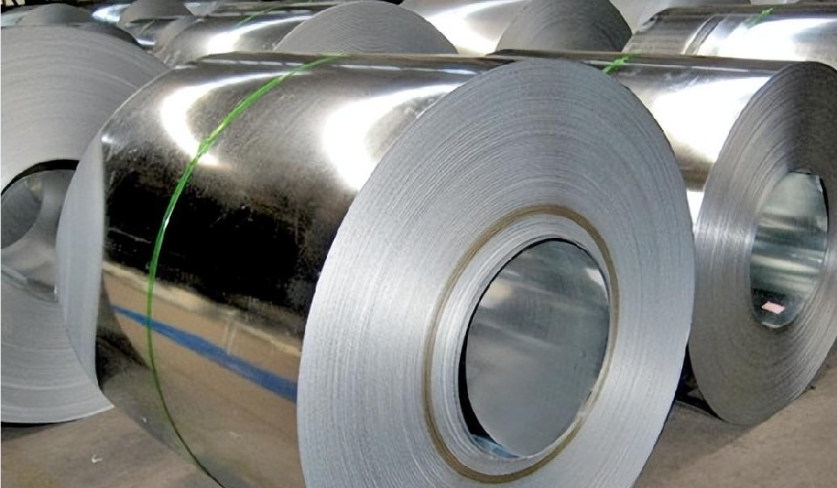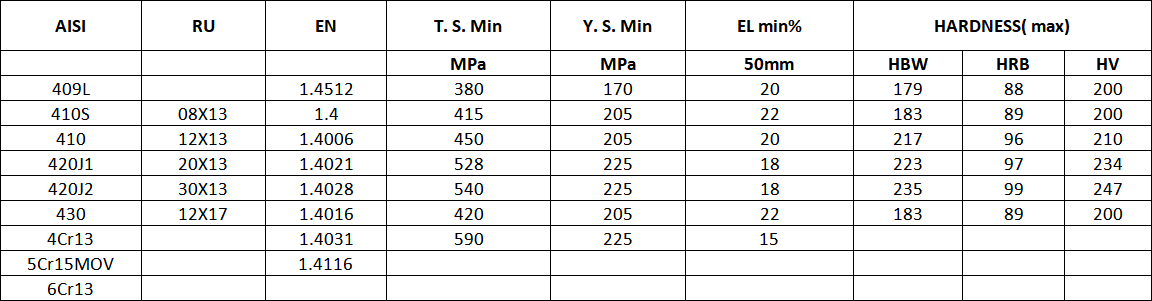

400 series stainless steel is a series of stainless steels with chromium (Cr) as the main alloying element, containing no nickel or only trace amounts (usually <0.6%). Its basic microstructure at high and room temperature is body-centered cubic, while in service conditions it is predominantly ferritic or martensitic.
The biggest difference between 400 series stainless steel and 200 and 300 series stainless steel is that it does not contain expensive nickel; therefore, its price is much lower than 300 series austenitic stainless steel, earning it the title of "economical stainless steel." It also features a low coefficient of thermal expansion and excellent resistance to stress corrosion.
Key characteristic: 400 series stainless steel is magnetic, which is one of the most intuitive ways to distinguish it from 300 series austenitic stainless steel.
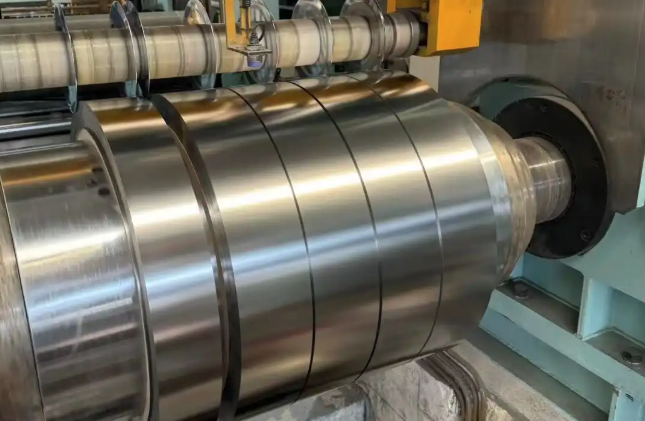
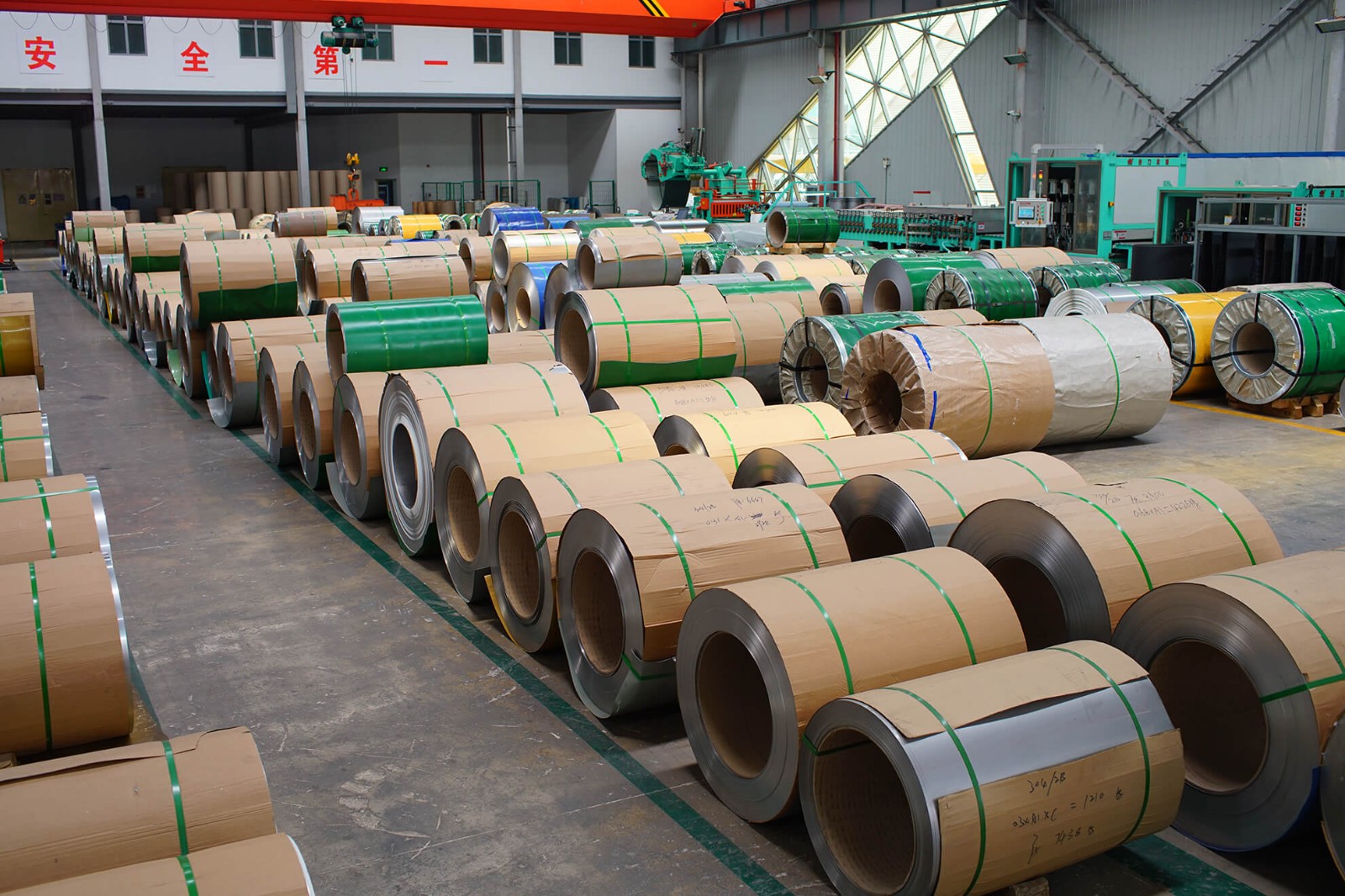
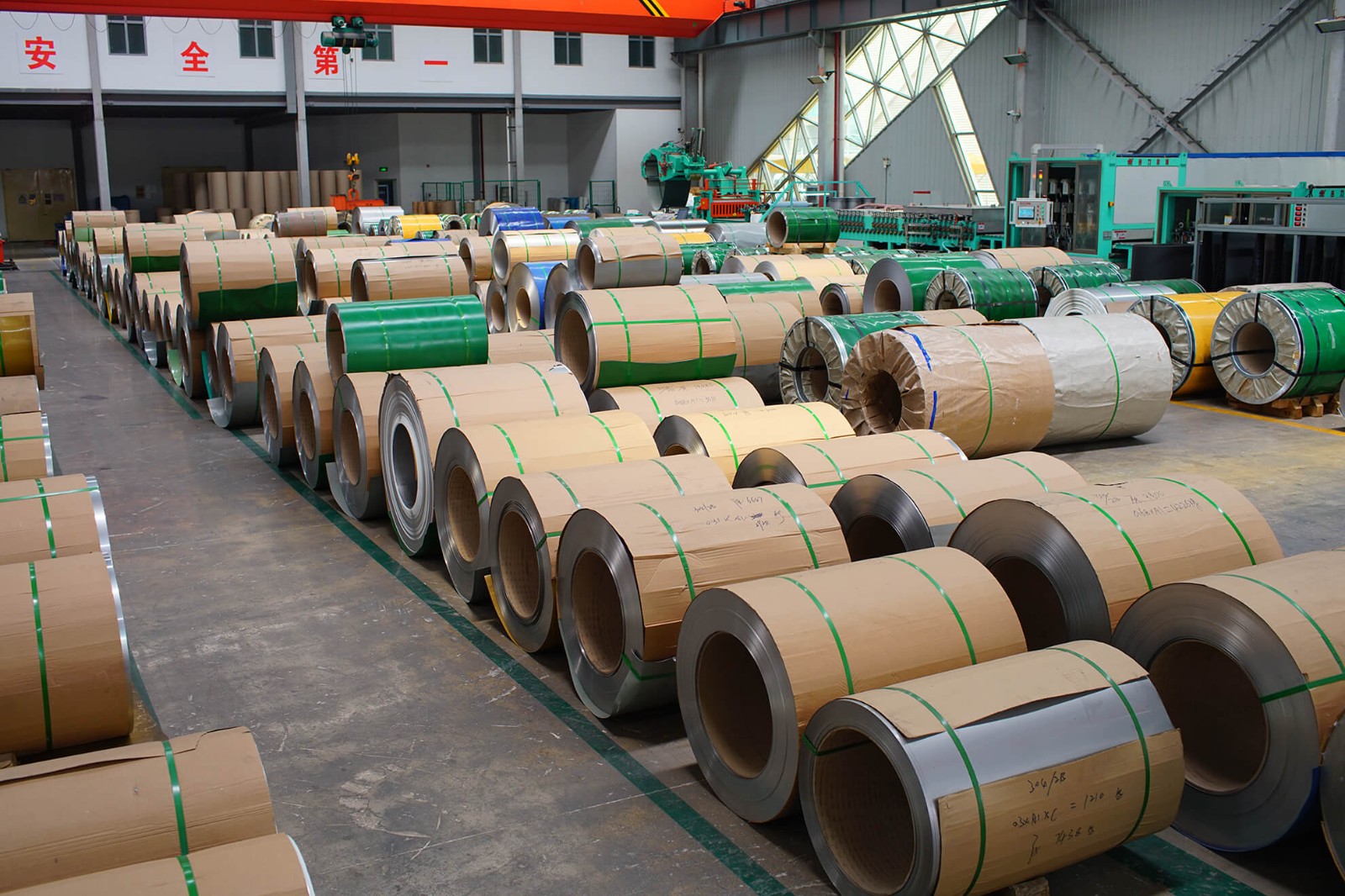
400 series stainless steel coils mainly include:
1. Ferritic stainless steel (US ASTM grade):
405, 430, 430F, 434; Ferritic stainless steel typically has a chromium content between 11% and 30%, contains no nickel, and possesses good formability, corrosion resistance, and oxidation resistance.
2. Martensitic stainless steel (US ASTM grade):
403, 405, 410, 416, 420, 431, 440A, 440B. Martensitic stainless steel has a chromium content of approximately 13% and can undergo quenching heat treatment to improve hardness and strength.
409
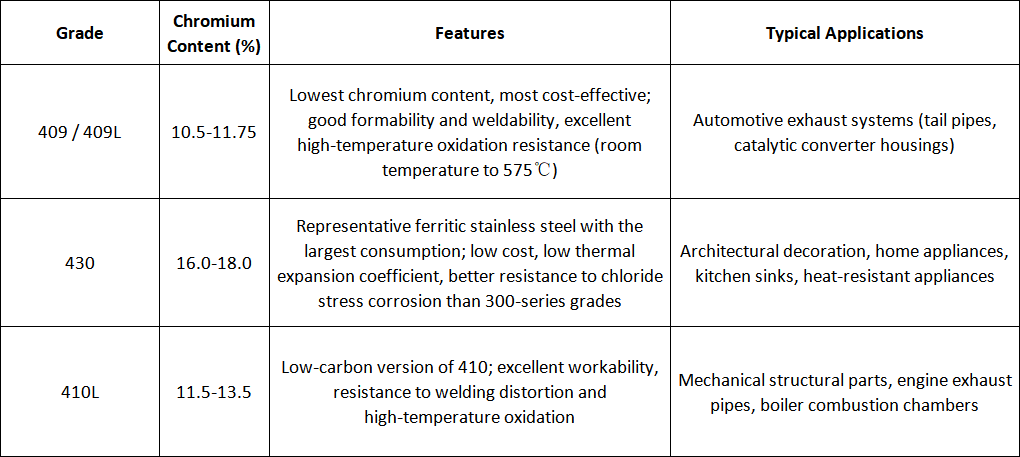
409H stainless steel has good processing and welding properties, and its high-temperature oxidation resistance is also good. It can withstand a temperature range from room temperature to 575℃ and is mostly used in the manufacture of automotive exhaust systems. 409L stainless steel, based on this, controls the carbon and nitrogen content of stainless steel, resulting in better weldability, formability, and corrosion resistance. It is mainly used in automotive exhaust pipes, heat exchangers, containers, and other products that do not require heat treatment after welding.
410
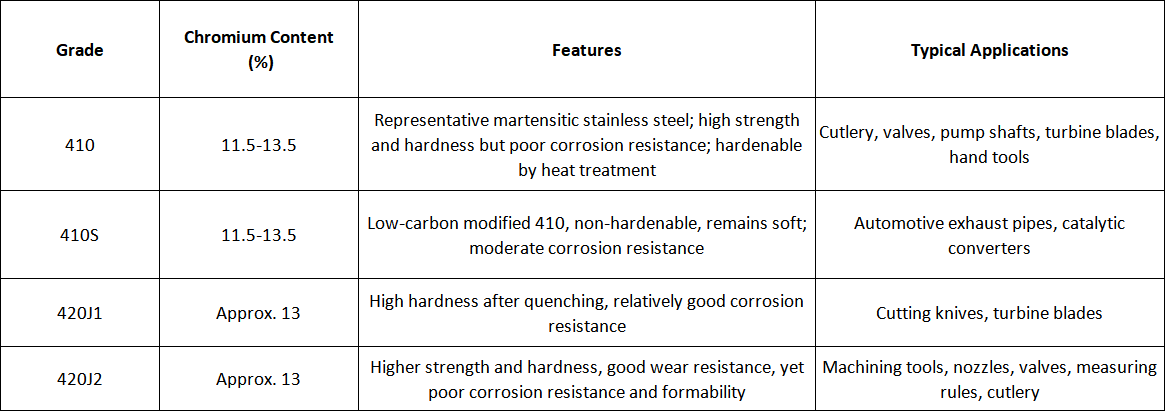
410 stainless steel is a representative type of martensitic stainless steel, characterized by high strength and hardness; however, its corrosion resistance is poor, making it unsuitable for severely corrosive environments. It has a low carbon content, good machinability, and its surface can be hardened through heat treatment. 410L, based on 410 stainless steel, has a reduced carbon content, offering excellent machinability, resistance to weld deformation, and high-temperature oxidation resistance. It is mainly used for mechanical structural parts, engine exhaust pipes, boiler combustion chambers, and burners.
420
420 stainless steel has high hardness after quenching and good corrosion resistance, and is mostly used to make cutlery (knives) and turbine blades. 420J2 is a representative type of martensitic stainless steel, with even higher strength and hardness; however, its corrosion resistance and machinability are poor, although its wear resistance is relatively good. Heat treatment can improve its mechanical properties. After quenching, its hardness increases compared to 420J1 steel. It is widely used in machining cutting tools, nozzles, valves, rulers, and tableware.
430
430 Stainless Steel is a representative grade of ferritic stainless steel. It has a low coefficient of thermal expansion, good formability, and good oxidation resistance. It is suitable for manufacturing heat-resistant appliances, burners, household appliances, tableware, and kitchen sinks. 430 stainless steel is inexpensive and has good machinability, making it a relatively ideal substitute for 304 stainless steel.
Core Advantages
1. Low Cost: Nickel-free or containing only trace amounts of nickel, significantly lower price than 300 series stainless steel.
2. Low Coefficient of Thermal Expansion: Much lower than austenitic stainless steel, excellent thermal stability.
3. Excellent Resistance to Stress Corrosion: Superior resistance to chloride stress corrosion compared to 300 series stainless steel.
4. Good Thermal Conductivity: Better thermal conductivity than austenitic stainless steel.
5. Good Resistance to Thermal Fatigue: Suitable for high-temperature cyclic conditions.
6. Strong Resistance to High-Temperature Oxidation: Withstands a temperature range from room temperature to 575℃.
7. Magnetic Properties
Main Limitations
1. Limited Corrosion Resistance: Similar to 300 series in oxidizing media (atmosphere, fresh water, nitric acid), but easily corroded in severely chemical atmospheres.
2. Inferior Formability and Weldability compared to 304.
3. Some grades (e.g., 410) have poor corrosion resistance and are unsuitable for severely corrosive environments.
4. 475℃ Brittleness Issue: Prolonged exposure to the 475℃ brittle temperature range in some grades can lead to the formation of a Cr-rich α' phase, reducing impact toughness.
5. Intergranular Corrosion Proneness: 430 stainless steel exhibits a tendency for intergranular corrosion.
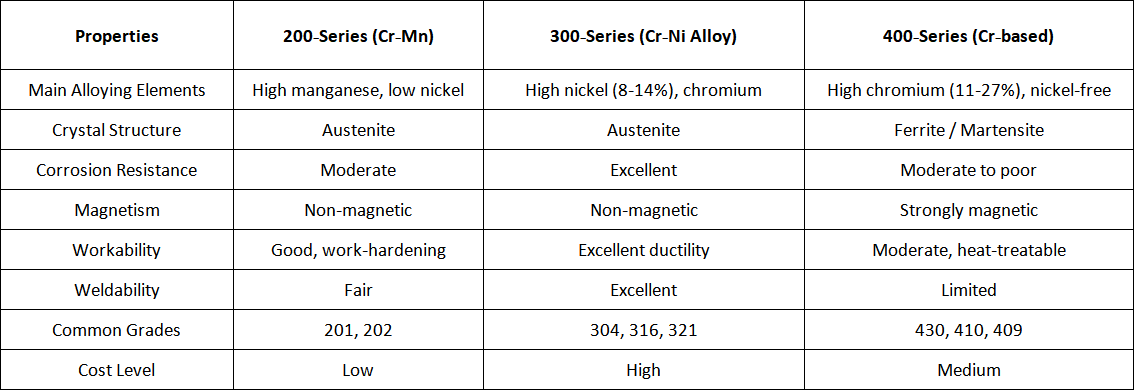
200 Series: Chromium-nickel-manganese alloys offer a cost-effective alternative to the 300 Series for indoor use.
300 Series: High-nickel austenitic steels offer superior corrosion resistance and weldability (e.g., 304 and 316).
400 Series: Chromium-based ferritic and martensitic steels, known for their high magnetic hardness and good wear resistance.
Automotive Industry: The application rate of 400 series stainless steel in the automotive industry is increasing year by year. Automotive exhaust systems are the most important application scenario for 400 series.
Railway freight cars, turbine blades, metallurgical equipment, tableware, cutlery, utility knives in the manufacturing industry, high-strength martensitic stainless steel used in thermal power generation components, etc. Ferritic 400 series stainless steel can also be used in magnesia-based metallurgical furnaces and machined parts.
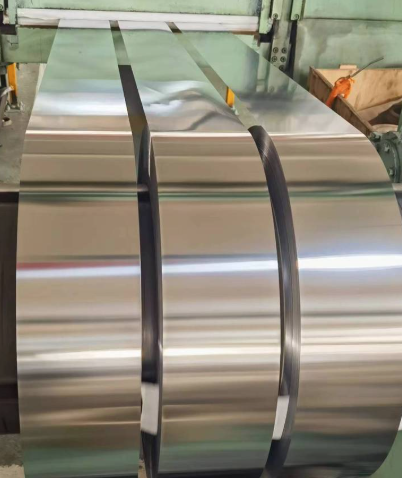
400 series hot-rolled stainless steel coils are "economical" stainless steels containing little or no nickel, represented by 430 (ferritic) and 410 (martensitic). Compared to the 200 and 300 series, its core advantages lie in its lower price, lower coefficient of thermal expansion, excellent resistance to stress corrosion, and magnetic properties; its core limitations are limited corrosion resistance and inferior formability and weldability compared to the 300 series.
The largest application area for 400 series hot-rolled stainless steel coils is automotive exhaust systems (reaching 100% penetration in Japan), and it is also widely used in home appliances, building decoration, industrial equipment, and tool manufacturing. With continuous breakthroughs in production technology and ongoing expansion of product varieties, 400 series stainless steel is gradually replacing some 300 series products in more fields.





|

|

|

|

|
| Timely Info | Independent | Platform | Multiple guarantees | Self-operated storage |
China Steel Market
Empowering small and medium-scale steel purchasing

| About us | Channel | Useful tools |
|---|---|---|
| About China Steel Market | Prices | Steel Weight Calculation |
| Contact Us | Answers | Why Choose Us |
| Terms & Conditions | Inventory | |
| Privacy Policy | Help |
Hot search words:
China Rebar prices China Wire Rod Prices Welded Steel Pipe Prices