
200 series stainless steel is a general term for chromium-manganese-nickel austenitic stainless steels. Its core characteristic is the partial substitution of expensive nickel (Ni) with manganese (Mn) and nitrogen (N), significantly reducing costs while maintaining an austenitic structure. Therefore, 200 series stainless steel is also known as "nickel-saving stainless steel."
Compared to the higher nickel content of the 300 series (such as 304), the main characteristic of 200 series stainless steel is the combination of low nickel and high manganese. 200 series stainless steel has higher strength and lower price, but its corrosion resistance is relatively weaker, making it only suitable for non-corrosive or weakly corrosive environments. This gives it unique mechanical properties and market advantages.
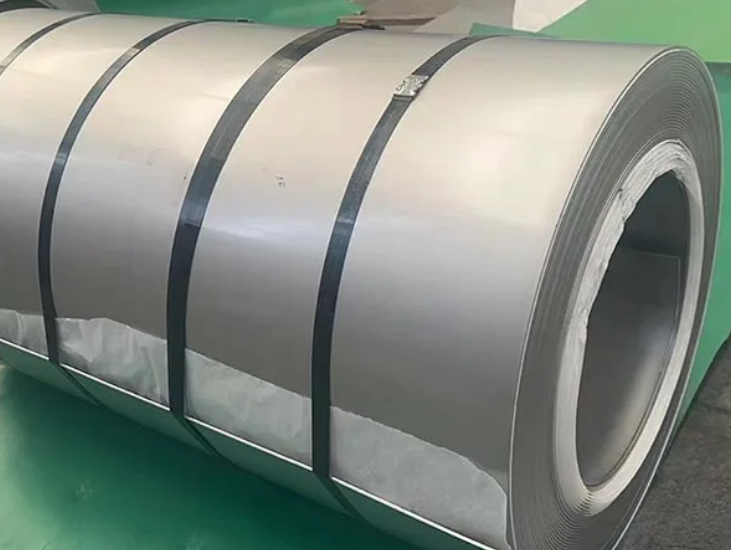
The manganese content in the chemical composition of 200 series stainless steel is as high as 5%~10%, greatly reducing production costs. The strength and hardness of this material are improved, but its corrosion resistance is slightly worse than that of the 300 series.
Chemical composition:

Mechanical properties:

Physical properties:

Chemical properties:
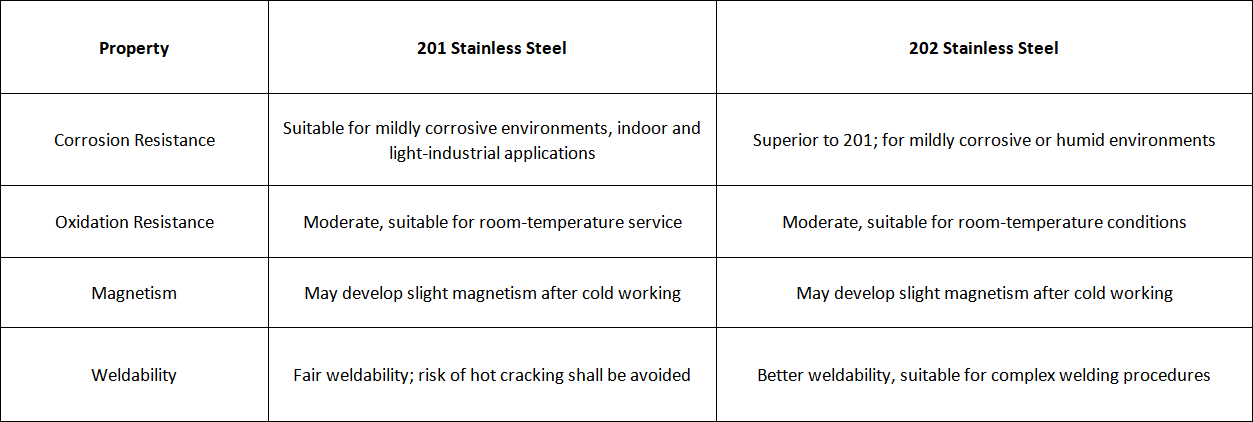
201 stainless steel: Lowest cost, high cost-performance ratio, suitable for a wide range of applications.
202 stainless steel: Moderate cost, improved performance, suitable for demanding environments.
Advantages
High Strength: 200 series stainless steel has higher strength than 300 series; for example, JS200 series has higher strength than 304.
Cost Advantage: Due to its low nickel content (4-6%), the price is significantly lower than 300 series.
Good Machining Performance: It has high ductility and excellent toughness, suitable for deep drawing.
Austenitic Structure Stability: The austenitic structure is stabilized by adding manganese and nickel, preventing the formation of harmful phases such as σ phase or chromium carbide.
Limitations
1. Limited Corrosion Resistance: Only suitable for non-corrosive or weakly corrosive environments; cannot completely replace 304 stainless steel.
2. Inferior High-Temperature Performance compared to 300 Series: Shorter service life in high-temperature, highly corrosive environments.
3. Quality Issues: Due to the long-term lack of unified standards, the market has products of varying quality, significant differences in composition, and even counterfeit and substandard products.
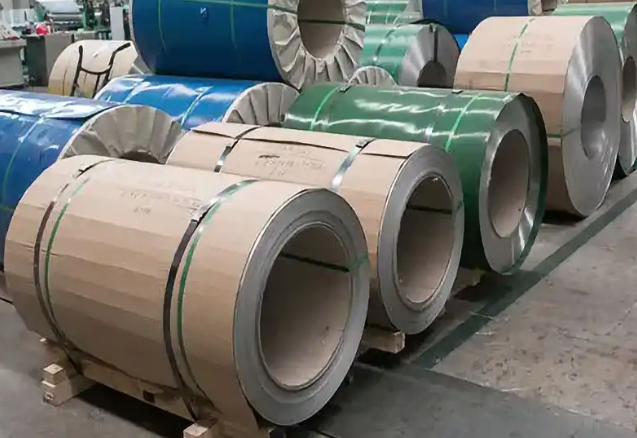
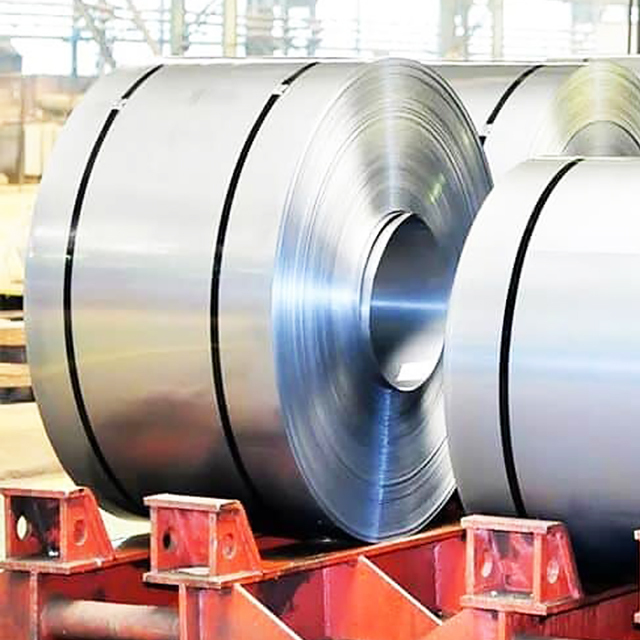
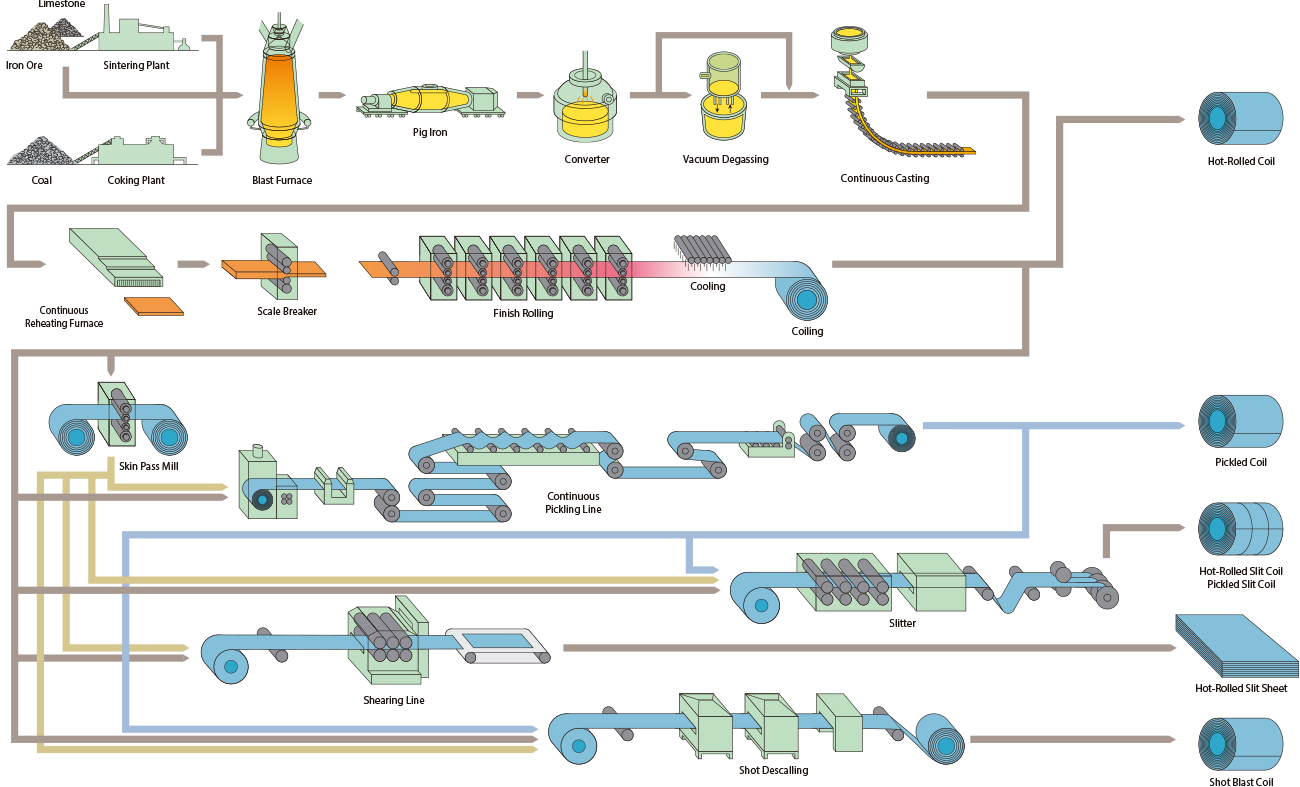
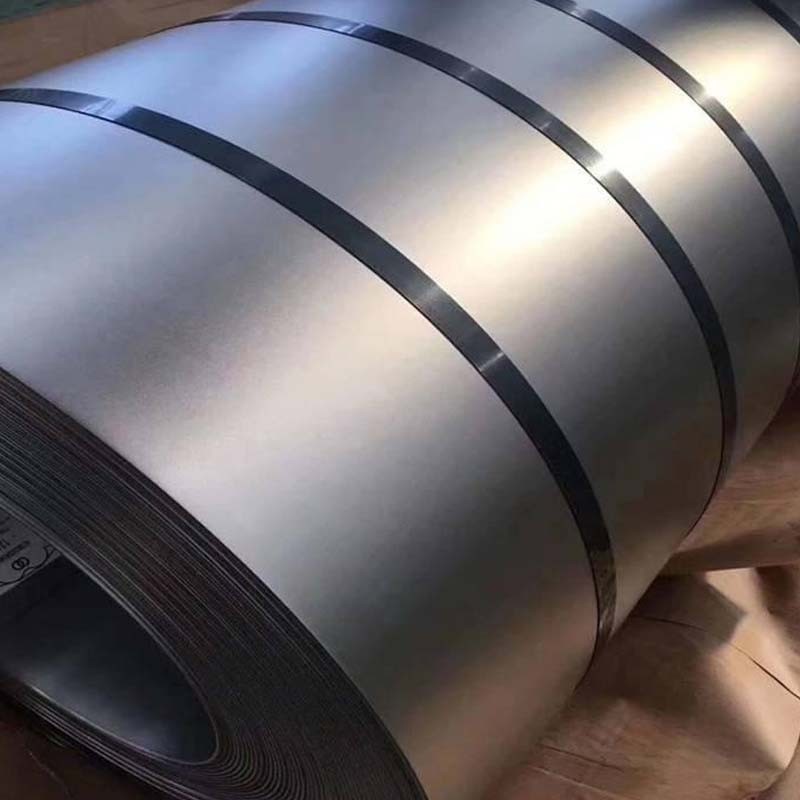
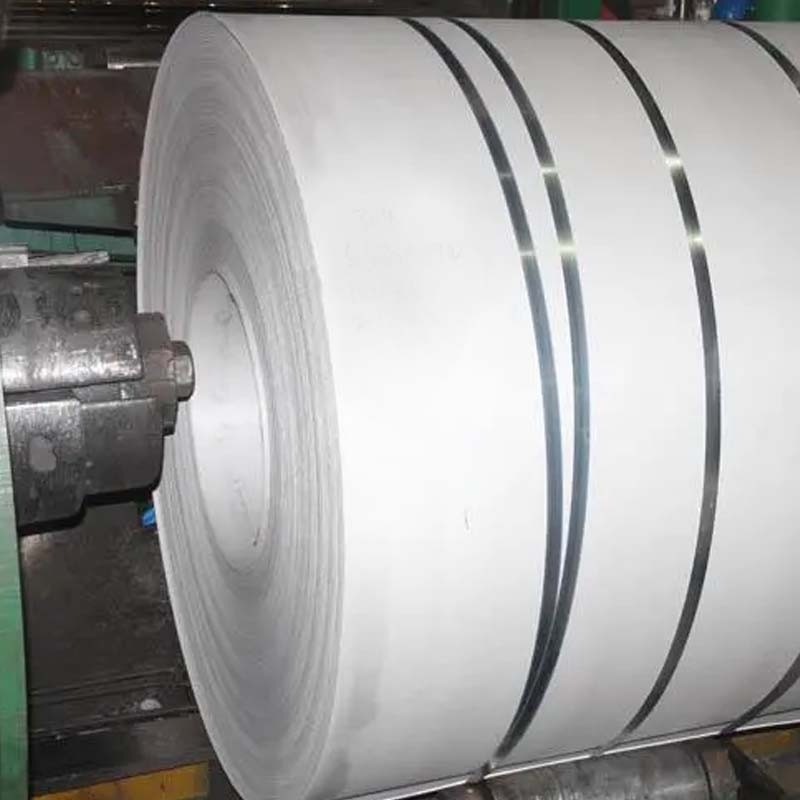
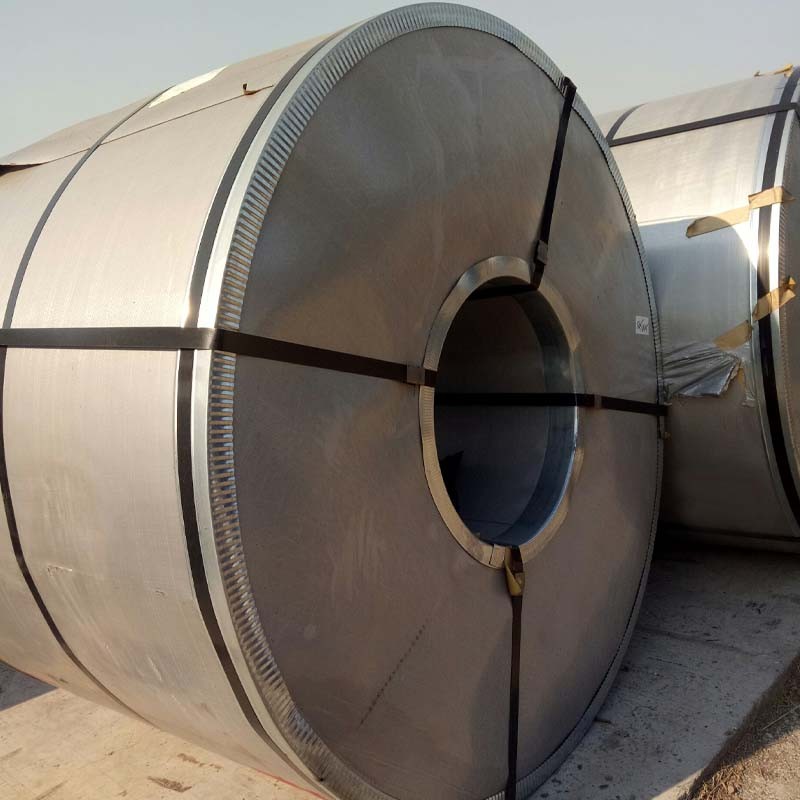
Manufacturing stainless steel, including the 200 series, involves several stages that turn raw materials into the final product, a stainless steel coil in this case. Here is a simplified version of the process:
1. Melting and Casting: The raw materials, which are primarily iron ore, chromium, silicon, nickel, carbon, nitrogen, and manganese, are melted together in an electric furnace. This process takes about 8 to 12 hours. Once everything is melted and combined, the molten steel is cast into semi-finished forms, such as slabs, blooms, or billets.
2. Forming: For the production of coils, slabs are the most commonly used semi-finished product. The slab is heated and then sent through a series of rollers to reduce its thickness and form it into a long, thin strip.
3. Hot Rolling: The hot slab is first re-heated to a uniform temperature and then rolled in a hot strip mill to achieve the desired thickness.
4. Cutting to size: Once the steel has been annealed and passed through a final skin pass mill, it’s cut into large coils according to the desired width and weight of the coil.
5. Descaling: Throughout the processing, scales (a form of rust or iron oxide) can form on the surface of the steel. These scales are removed using various descaling techniques like pickling or shot blasting.
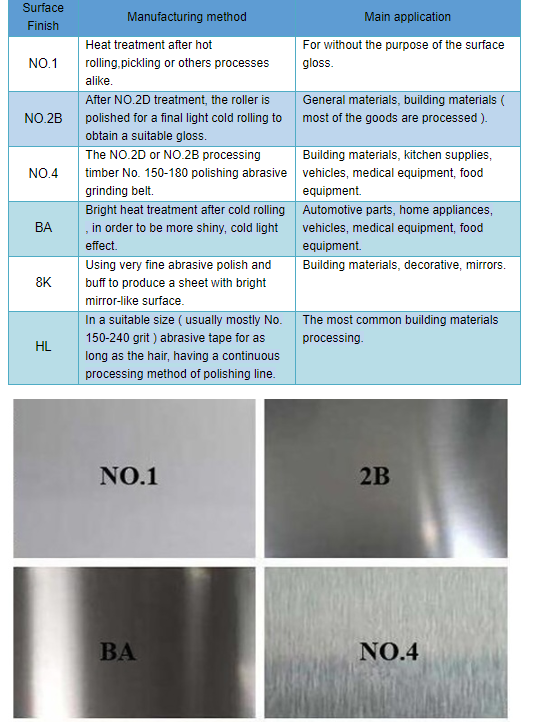
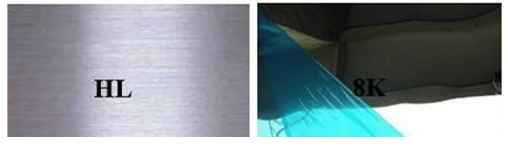
6. Finishing: Finally, the steel is given its final finish. This can involve further reducing its thickness, applying protective coatings, or treating it to alter its physical properties. The finish will depend on what the final product will be used for.
It’s worth noting that the specific processes, temperatures, and times used can all vary depending on the exact composition of the steel and what the manufacturer’s goals are for its properties.
Comparison with 300 Series:
300 series stainless steel, especially type 304, has a higher nickel content and stronger corrosion resistance, but it is also more expensive. In comparison, 200 series stainless steel offers a significant price advantage, making it more suitable for projects with limited budgets. While its corrosion resistance is slightly lower than 300 series, it still performs well in general environments.
Compared to 400 series: 400 series stainless steel is ferritic, possessing strong wear and corrosion resistance, but its mechanical properties and ductility are inferior to 200 series stainless steel. 200 series stainless steel has higher strength and hardness, making it suitable for applications requiring high strength.
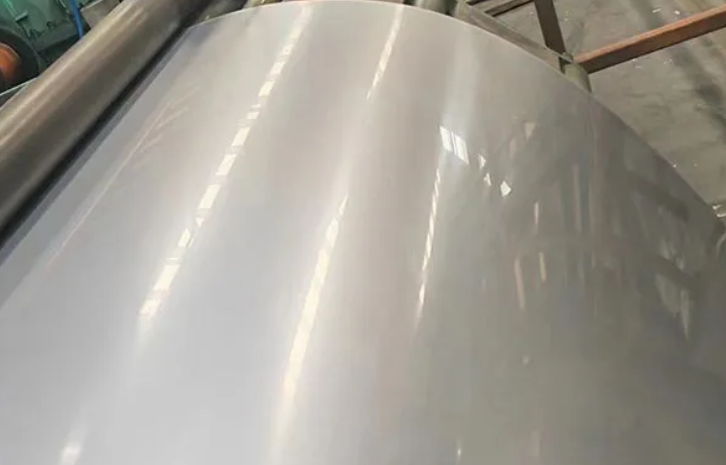
200 series stainless steel coils exhibit a combination of features that make them a versatile choice in numerous industries. Here are some of the key features of these coils:
1. Affordability: 200 series stainless steel coils are cost-effective mainly because of their lower nickel content, substituted with manganese. This makes them a popular choice in a variety of applications where cost is a significant factor.
2. Strength and Hardness: Compared to other stainless steel series like the 30 series, the 200 series stainless steel tends to have higher strength and hardness. This means it can withstand more wear and tear, making it ideal for certain industrial applications.
3. Formability: 200 series stainless steel is known for its formability. This means it can be easily manipulated into various forms without losing its strength or integrity, making it useful in applications that require a lot of shaping and forming.
4. Magnetic Properties: Unlike 300 series stainless steels, 200 series stainless steels are generally magnetic due to their higher ferrite content.
5. Weldability: 200 series stainless steels generally have good weldability.
6. Corrosion Resistance: While they have a good resistance to corrosion, they are less resistant than 300 series stainless steels. The specific level of corrosion resistance can vary greatly depending on the exact alloy and the environment in which the steel is used.
Applications of these coils include appliances, kitchen utensils, architectural features, automotive parts, and more. However, it’s important to note that the exact properties can vary depending on the specific alloy within the 200 series and the processing techniques used. For certain applications that require extreme corrosion resistance, higher series like 300 or 400 may be more suitable.
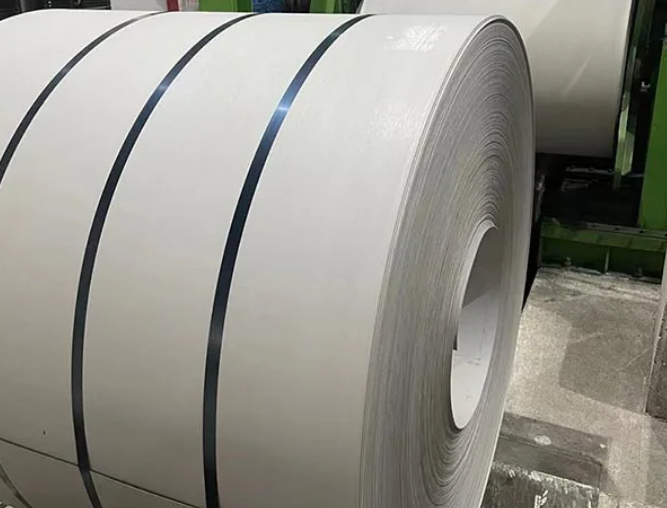
1. Kitchen Utensils: One of the most common uses of 200 series stainless steel is in the manufacturing of kitchen utensils. This is because they are resistant to corrosion and can be easily cleaned. It’s also commonly used in cookware and cutlery.
2. Appliances: 200 series stainless steel is also commonly used in home appliances, such as refrigerators, washing machines, dryers, and dishwashers due to its corrosion resistance, durability, and aesthetic appeal.
3. Automotive Components: The high strength-to-weight ratio of 200 series stainless steel makes it ideal for certain automotive components. It can also be formed into various shapes, making it versatile for a variety of parts.
4. Building and Construction: In the building and construction industry, 200 series stainless steel is often used for cladding, handrails, door and window fittings, street furniture, structural sections, reinforcement bar, lighting columns, lintels, and stone supports.
5. Industrial Machinery: Various types of industrial machinery and equipment also utilize 200 series stainless steel due to its corrosion resistance and high strength.
6. Food and Beverage Industry: The food and beverage industry uses 200 series stainless steel in food processing equipment, brewery equipment, and kitchen benches.
Remember that while the 200 series offers good corrosion resistance, it is less resistant than the 300 series, so it may not be suitable for environments with high corrosivity. The specific alloy and processing techniques can also affect the properties of the steel, so it’s important to choose the right type for the specific application.





|

|

|

|

|
| Timely Info | Independent | Platform | Multiple guarantees | Self-operated storage |
China Steel Market
Empowering small and medium-scale steel purchasing

| About us | Channel | Useful tools |
|---|---|---|
| About China Steel Market | Prices | Steel Weight Calculation |
| Contact Us | Answers | Why Choose Us |
| Terms & Conditions | Inventory | |
| Privacy Policy | Help |
Hot search words:
China Rebar prices China Wire Rod Prices Welded Steel Pipe Prices