


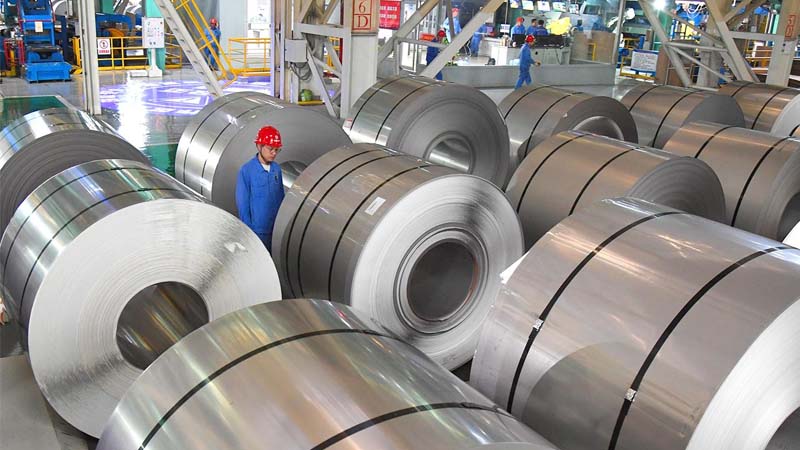
"Success! We have finally succeeded in rolling 0.3 mm stainless steel..." Recently, cheers came from the end of the 300 line of the cold rolling mill of China Baowu TISCO. (hereinafter referred to as "the cold rolling mill").
The successful rolling of 0.3 mm ultra-thin stainless steel not only breaks the design limit, but also marks a solid step forward for the 300 line in tackling the challenge of ultra-thin materials. It also demonstrates the factory's confidence and determination to break through the industry's "winter".
Since the third quarter of this year, the stainless steel market has been under continuous pressure, with unit production not reaching full capacity, low capacity utilization, and a continuous decline in various operating indicators. Breaking the deadlock has become an urgent issue for the cadres and employees of the stainless steel cold rolling mill. "With the market downturn continuing to intensify, enterprises must seek new profit growth points to move from 'surviving' to 'thriving'," admitted Zhang Teng, the factory's Party Secretary and Director. "Improving capacity utilization and expanding product range are essential to cope with the downturn, which is why we've turned our attention to the thin-specification production of the 300 line in the cold rolling mill." The thinnest specification of this line is designed to be 0.6 mm, while the thinnest thickness previously produced in batches was 0.7 mm. Driven by the high goals set by China Baowu TISCO Group, the 300-line production line actively increased its pressure and launched an attack on the 0.3 mm specification.
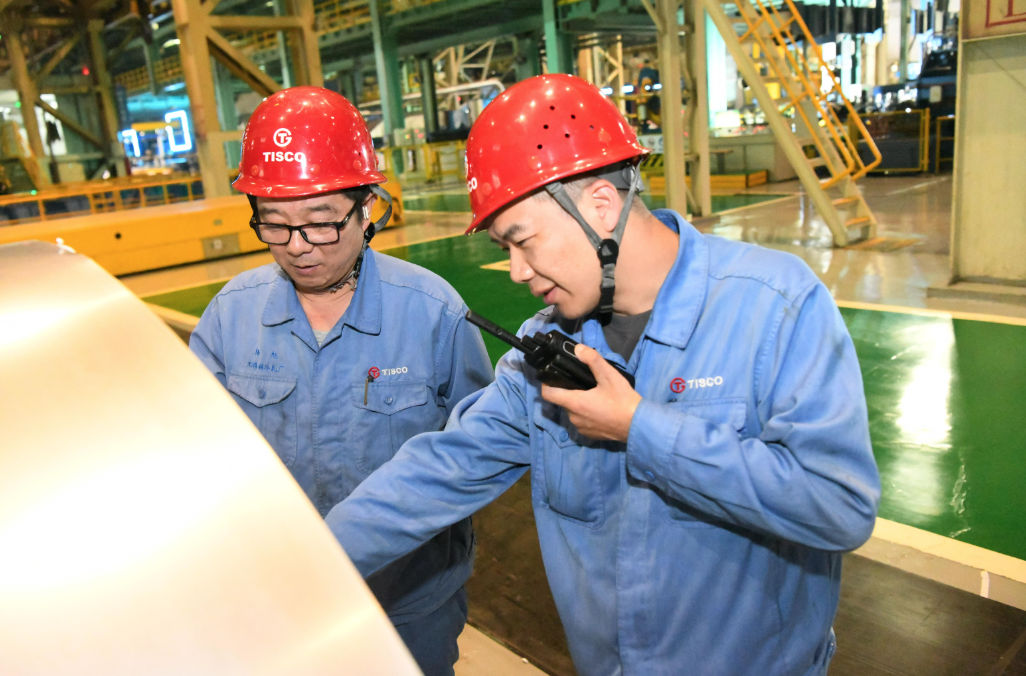
It's easier said than done. 0.3 millimeters is far beyond the design limit, making rolling extremely difficult and posing a very high risk to the entire line. "Is it really possible to jump to 0.3 millimeters all at once?" "It's so thin, the tape is very easy to break, the risk is too high!" Doubts were endless. "We are determined to do the difficult but right thing!" Zhang Teng's resounding words dispelled doubts and strengthened his confidence in tackling the challenge.
The cold rolling mill decided to start at 0.6 mm. The research team tackled the challenges head-on, repeatedly adjusting the parameters based on 0.7 mm operating parameters, and were the first to achieve stable production at 0.6 mm. Encouraged by this, the team set out to work towards a depth of 0.4 millimeters. However, problems such as raw material transition, deformation distribution, plate shape control, and tension setting followed one after another, each requiring detailed solutions. The research team can be seen everywhere, from the rolling mill to the furnace area and the pickling section, and the production line remains brightly lit even late at night. Ultimately, a complete routing solution was formed, and the 0.5 mm and 0.4 mm specifications were successively achieved.
The real challenge lies in the 0.3 mm material feeding stage. Although it appears to be only 0.1 millimeters thinner than 0.4 millimeters, the risk of the tape breaking increases dramatically. With the raw materials ready for rolling, everyone's hearts were in their throats; the preset rolling pressure could only be gradually increased, and the frame deformation exceeded 33%, making it more prone to slippage, edge waviness, and other problems compared to 0.4 millimeters.
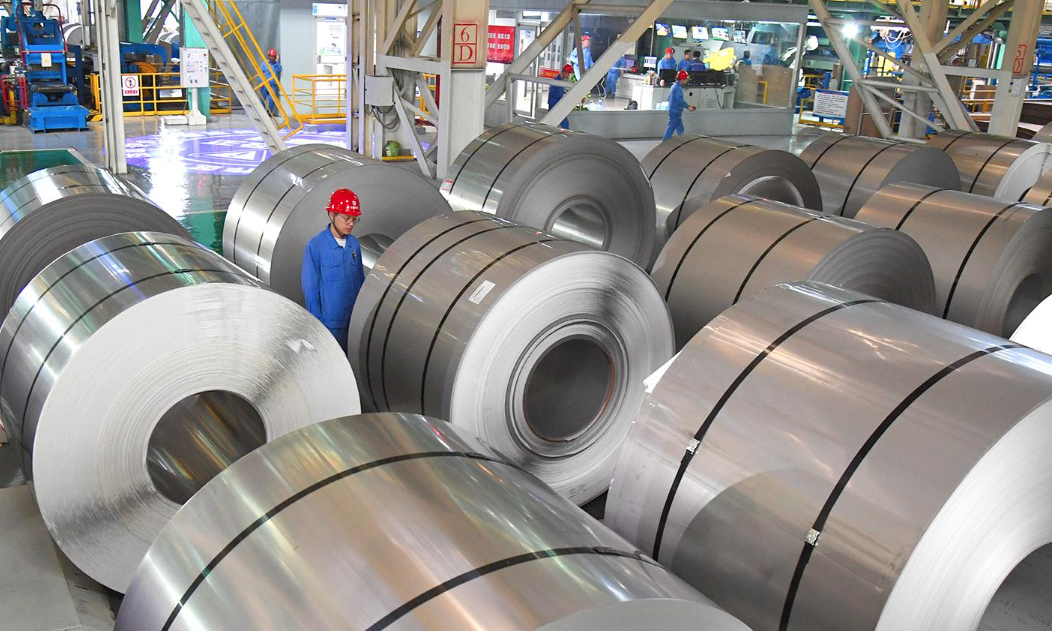
How to ensure the shape control of the continuous rolling mill? Although the outlet is equipped with a plate shape detection instrument that can adjust the pressure based on feedback, the distance between the plate shape rollers on each frame is at least 2 meters. Operations supervisor Yang Xingzhou decided to assign personnel to monitor the exit of each rolling mill to facilitate timely adjustments by the main operator. "There's a wave on the edge of the third frame, quickly move the rollers..." Wen Xiaoli, the machine operator, shouted urgently over the walkie-talkie. "Received!" the main operator Ma Liangliang replied quickly, and similar conversations continued. Everyone kept a close eye on the real-time parameters, dynamically tracked the strip condition, and optimized the parameters of each stand at any time to ensure that the strip safely passed through the five continuous rolling mills. The moment the weld passed smoothly, a sense of relief filled the control room. However, another problem arose during the winding process; the material was too thin, and the steel strip could not enter the winding machine jaws. Just when everyone was at a loss, squad leader Yang Xu came up with a clever solution: when the steel strip enters the jaws, use a wooden stick to tap the head of the material, which cleverly solves the problem. Everyone calls it the "stick operation method".
After a series of technical breakthroughs, the 300 production line successfully produced 0.3 mm stainless steel, providing valuable experience for subsequent stable production and product expansion. “The thinner the material, the greater the difficulty. Improper control of rolling force can easily damage equipment and rollers.” Li Shengxiong, the plant manager of the cold rolling mill, said with deep feeling, “Only by treating difficulties as challenges and challenges as opportunities can we add strength and confidence in the industry’s ‘winter’.”







|

|

|

|

|
| Timely Info | Independent | Platform | Multiple guarantees | Self-operated storage |
China Steel Market
Empowering small and medium-scale steel purchasing
| About us | Channel | Useful tools |
|---|---|---|
| About China Steel Market | Prices | Steel Weight Calculation |
| Contact Us | Answers | Why Choose Us |
| Terms & Conditions | Inventory | Avoiding Trade Fraud Guide |
| Privacy Policy | Help |
Hot search words:
China Rebar prices China Wire Rod Prices Welded Steel Pipe Prices



