


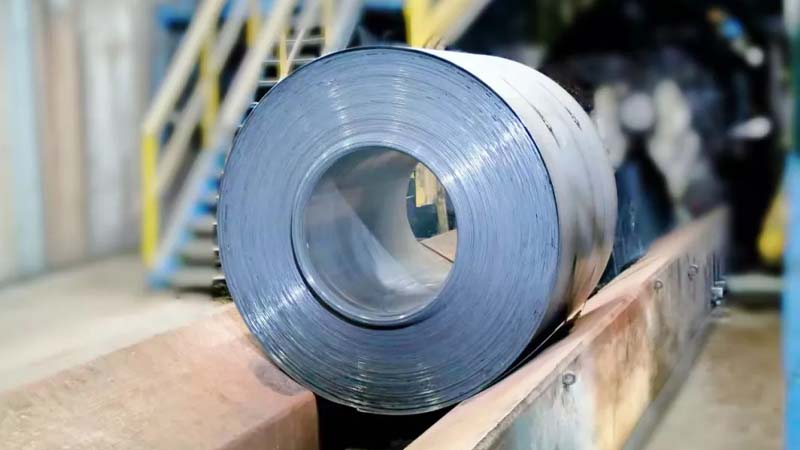
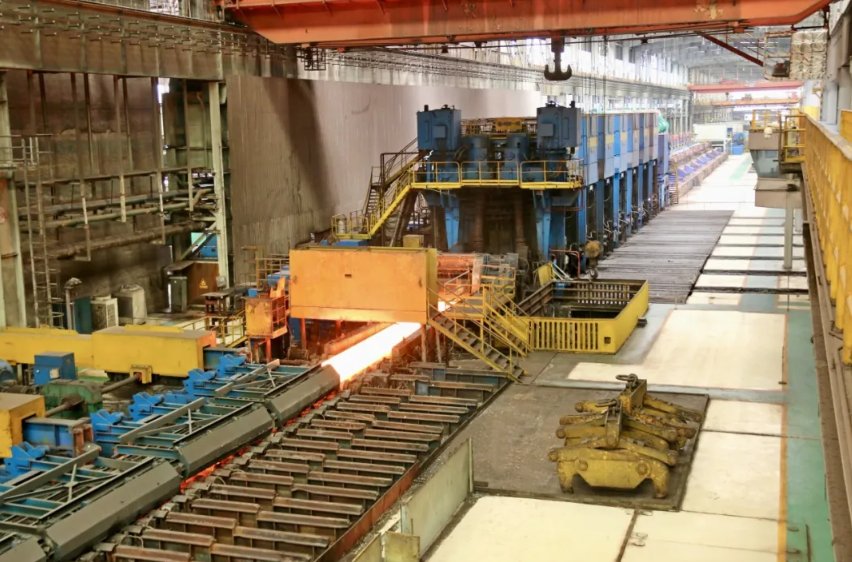
The red-hot steel billets moved quickly through the hot continuous rolling mill, and the roar of the mill echoed throughout the site. Rolls of smooth and flat stainless steel sheets slowly rolled off the production line along the conveyor rollers. Since the beginning of this year, the No. 2 Steelmaking Rolling Operation Department has been committed to the company's strategic goal of "unswervingly moving towards the high ground of advanced steel materials" and has continued to exert its efforts in the high-end stainless steel track. From the first trial production to stable mass production, it has accelerated step by step, continuously broadened its product portfolio, and continuously improved its process capabilities, injecting strong momentum into the expansion and upgrading of the company's advanced steel materials product matrix.
Unlocking a Robust Solution for High-Temperature Environments
Following a successful initial trial run on July 24 and the seamless completion of a batch production run on August 14, 253MA rare-earth heat-resistant austenitic stainless steel made a critical leap—from its debut as a new product to stable, full-scale production—in just over twenty days. It has now emerged as a high-performance addition to the division’s portfolio of high-value-added specialty steels.
By incorporating rare-earth elements into a chromium-nickel alloy base, 253MA stainless steel achieves superior high-temperature oxidation resistance and thermal stability, far surpassing conventional heat-resistant steels and enabling it to withstand even more demanding high-temperature operating conditions. However, while these rare-earth elements enhance performance, they also significantly narrow the margin for error during the rolling process.
Drawing on the specific characteristics of this steel grade, the technical team conducted rigorous analysis and simulations. They meticulously examined key control parameters—ranging from heating duration and rolling cadence to temperature ranges and cooling protocols—and made precise, targeted adjustments. Once the trial run proved successful, the team promptly codified these process standards, transforming "trial-production experience" into "standardized mass-production specifications" and establishing a mature, reliable capacity for large-scale manufacturing.
Unlocking New Scenarios for High-End Applications
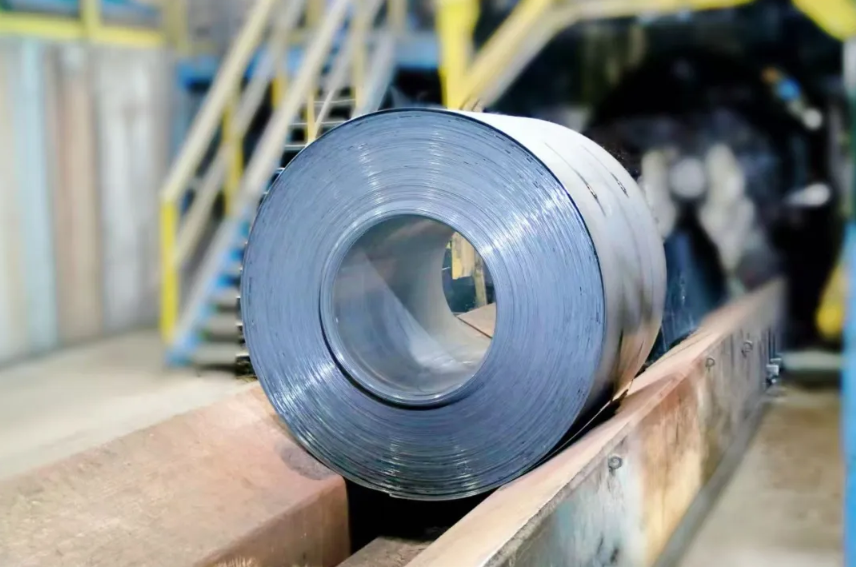
From the batch rolling of 316LFH32 three-layer stainless steel clad plates in mid-June, to the successful one-pass rolling of 304FH32 clad plates at an ultra-thin gauge of 2.65mm, and the stable, large scale production of 304FH21 two-layer stainless steel clad plates (ranging from 6mm to 12mm in thickness), the Second Steelmaking and Rolling Department has steadily deepened its presence in the stainless steel clad plate sector, building a comprehensive product portfolio featuring a wide variety of types and specifications.
Rolling thin-gauge products has long represented a "technical pinnacle" in hot strip rolling. As the target thickness decreases, the control window for the rolling process narrows significantly. Furthermore, the inherent differences in chemical composition, thermal expansion coefficients, and deformation resistance among the various steel grades within a multi-layer composite structure often lead to defects such as warping, wavy edges, or poor bonding between the layers.
To address these challenges, the technical team, leveraging their existing process expertise, conducted extensive simulations and parameter modeling. They precisely optimized heating temperatures and furnace residence times, while fine-tuning rolling forces, reduction ratios, and rolling speeds to achieve the ideal balance. Throughout the production process, the team closely monitored plate shape and dynamically adjusted parameters. By successfully overcoming the technical hurdles associated with 5mm and 2.65mm thicknesses, they not only pushed the precision limits of the hot strip rolling mill in a real-world production environment but also filled a gap in the market for thin-gauge clad plates, further broadening the company’s product thickness spectrum.
Achieving Full-Scale Mass Production Across Multiple Units
On July 1, the first smelting and casting were completed, marking the "from scratch" achievement. On July 8, three furnaces were continuously produced, entering "stable mass production". On August 11, the twin-strand slab continuous casting machine successfully cast two furnaces of thick-gauge cross-section slabs. In just two months, manganese-chromium alloy stainless steel has completed three leaps and officially entered a new stage of large-scale, multi-unit production.
However, the road to overcoming these challenges was not without its difficulties. Due to the high manganese and chromium alloy content of this steel, nitrogen control was extremely difficult, and the continuous smelting and casting of multiple furnaces posed a significant challenge to production organization and equipment stability. Faced with difficulties, the operations department tackled key challenges in core areas such as composition control, refining process, and continuous casting parameters, and tailored a full-process production plan. In the steelmaking process, temperature was strictly controlled, and alloy elements were precisely adjusted. In the continuous casting process, special protective slag was used, and protective casting and constant casting speed control were strictly implemented.
From the first stable mass production achieved by the No. 1 wide slab continuous casting machine to the successful casting of thick-gauge cross-section slabs by the No. 2 twin-strand slab continuous casting machine, the technical team of the operations department worked together to successfully open up a new path for parallel mass production of multiple units, and the capacity release and market adaptability were improved simultaneously.
Breakthrough in the Rolling Challenges of Super Stainless Steel
On August 14, super austenitic stainless steel S38926 successfully rolled off the production line, adding another heavyweight member to the high-end product matrix.
S38926 is a typical high-alloy "top student", with full content of alloying elements such as chromium, nickel, molybdenum, and nitrogen, and its corrosion resistance is close to that of nickel-based alloys. However, this high alloy content also makes the rolling process exceptionally difficult, placing rigorous demands on both rolling mill equipment and the precise coordination of process parameters.
To ensure a successful trial run, the technical team in the operations department systematically optimized the heating regime, rolling rhythm, reduction distribution, and cooling process based on the characteristics of the steel grade, once again delivering an impressive result of a perfect first rolling success.
With multiple production lines operating simultaneously and multiple product categories advancing in synergy, the stainless steel products of the No. 2 Steelmaking and Rolling Operation Department are making a strong entry into the market, striving to accelerate product upgrades.







|

|

|

|

|
| Timely Info | Independent | Platform | Multiple guarantees | Self-operated storage |
China Steel Market
Empowering small and medium-scale steel purchasing
| About us | Channel | Useful tools |
|---|---|---|
| About China Steel Market | Prices | Steel Weight Calculation |
| Contact Us | Answers | Why Choose Us |
| Terms & Conditions | Inventory | Avoiding Trade Fraud Guide |
| Privacy Policy | Help |
Hot search words:
China Rebar prices China Wire Rod Prices Welded Steel Pipe Prices



