


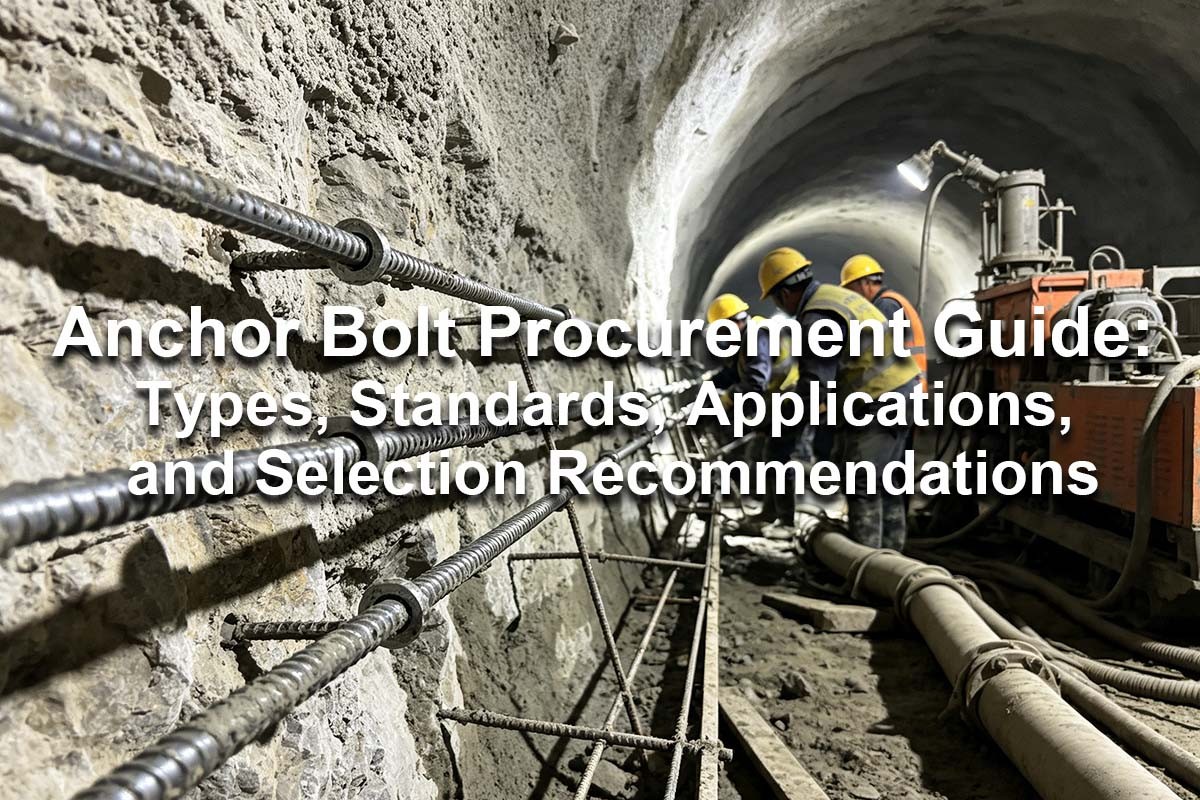
Recently, we’ve frequently received technical inquiries via our backend messages section regarding the procurement and selection of anchor bolts. Given the complex technical specifications and diverse engineering conditions, it’s often difficult to know where to begin. To help you organize your thoughts, we’ve compiled this special edition of resources on anchor bolt selection and procurement for your reference. Covering everything from selection logic and common types to key parameters and acceptance criteria, we hope this will provide tangible assistance for your work.
An anchor bolt is a slender, rod-shaped support element with one end anchored in stable rock or soil and the other end exposed and subjected to a preload. It is one of the most widely used support elements in geotechnical engineering, underground mining, tunnel engineering, slope stabilization, and deep excavation shoring systems. The installation method involves first drilling a hole, then anchoring one end of the anchor bolt in stable rock or soil, and connecting the other end to the ground support structure.
Anchor bolts typically consist of three basic components: the anchor head, the anchor rod, and the anchorage body. Their basic operating principle is as follows: the anchor bolt is secured to deep, stable rock through its anchorage end; by utilizing the rod’s own tensile strength and the locking effect of the surrounding rock, the shallow, unstable rock mass is “suspended” or “sutured” to the deep, stable rock mass, thereby limiting rock mass deformation and improving overall stability.
By reinforcing and stabilizing the surrounding strata, rock bolts help control deformation, improve strata integrity, and enhance the load-bearing capacity of rock and soil masses. They are considered one of the most cost-effective and widely used support solutions in modern geotechnical engineering. Furthermore, rock bolts cause minimal disturbance to the foundation during installation and provide reliable long-term support. Rock bolts can be used alone or in combination with welded wire mesh, shotcrete, steel arches, and other support components to construct comprehensive ground support systems suitable for both temporary and permanent projects.
The difference between anchor bolts and anchor cables is merely a quantitative difference, not a qualitative one; it simply comes down to the different tension member.
Anchor Bolts | Anchor Cables |
An anchor bolt resembles a thickened rebar; it is typically a solid or hollow metal rod with a threaded or corrugated surface. | Anchor cables, on the other hand, resemble a bundle of steel wires, consisting of multiple strands of high-strength steel wire twisted together and encased in a protective sheath. |
Anchor bolts less than 20 meters long | Anchor cables are typically 20–50 meters long. |
The tension members of anchor bolts are rebar or steel pipes. | The tension members of anchor cables are made of steel strands, and anchor cables are typically used in large-scale anchoring projects. |
Anchor bolts are generally not prestressed (though sometimes a very small amount of prestress is applied); therefore, they are subjected to passive forces and only exert their anchoring force when the anchored rock or soil undergoes a certain amount of deformation. | Generally speaking, anchor cables need to be prestressed because they are actively subjected to forces; they are often used in structural components that have already undergone deformation or where strict deformation requirements apply. |
Internationally, anchor cables are just one type of anchor bolt. | |
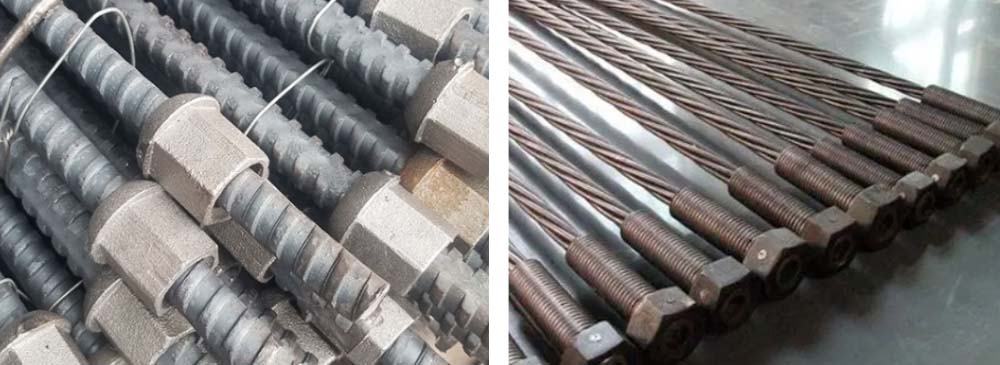
Essential Components of an Anchor Bolt
① A bolt shaft with tensile strength greater than that of the rock and soil;
② One end of the anchor bolt that can make close contact with the rock and soil to generate frictional (or adhesive) resistance;
③ An end of the anchor rod on the exterior that can generate radial resistance against the rock and soil.
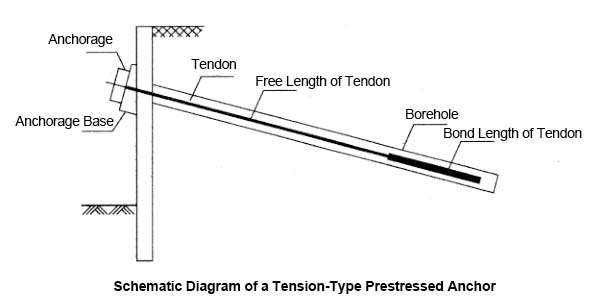
As a tension member embedded deep into the ground, an anchor rod is connected to a structural element at one end and extends into the ground at the other. The entire anchor rod is divided into a free section and an anchored section.
The core value of anchor bolts lies in achieving “active support”—that is, applying restraining forces before significant deformation occurs in the rock mass. This represents a fundamental difference in load-bearing logic compared to traditional forms of passive support (such as steel arches and concrete linings). Anchor bolt support is widely used in underground chambers, tunnel support projects, and steep slope stabilization projects. Anchor support typically uses cement mortar, chemical anchors, or resin as the bonding agent for the anchors, or employs mechanical methods to anchor the anchors within drilled holes.
Anchor bolts can be classified in various ways. Below are several common classification methods and types of anchor bolts.
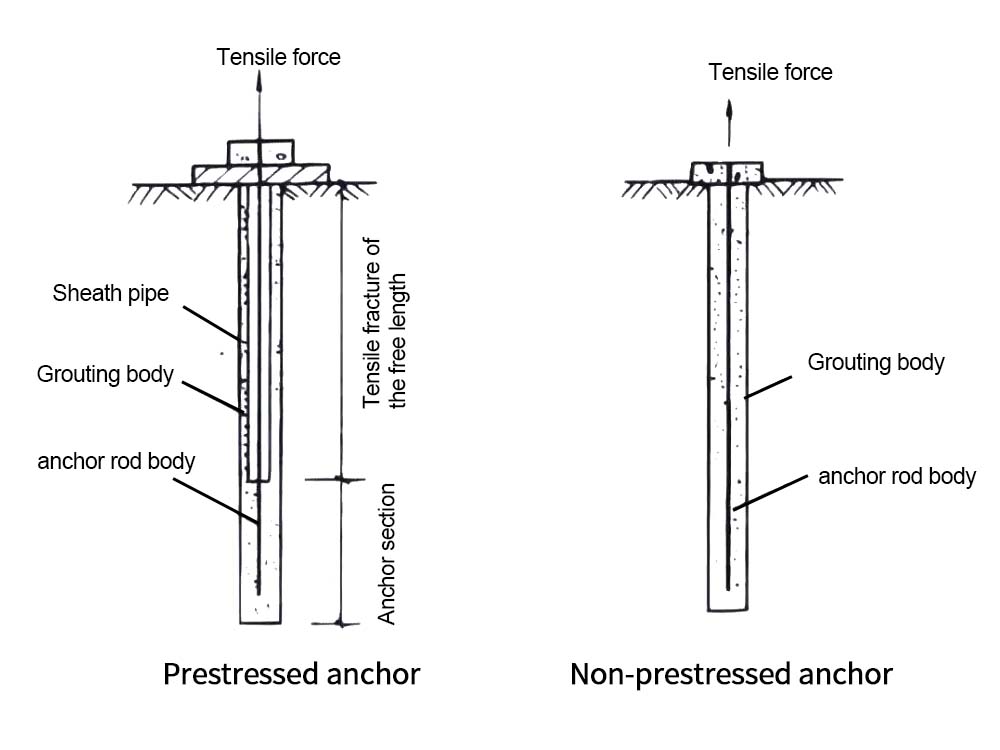
1.1 Based on whether prestressing is applied, they can be classified as follows:
1.Prestressed anchor: An anchor that, after being installed and anchored, is tensioned by applying a predetermined external load, thereby maintaining an active load-bearing condition.
2.Non‑prestressed anchor: An anchor that is not tensioned after installation and anchoring, and thus responds in a passive load‑bearing manner.
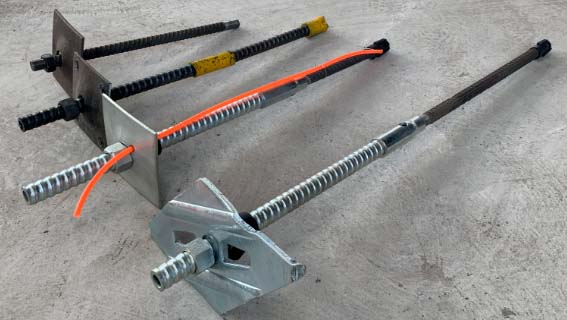
1.2 Based on the load transfer mechanism (anchoring mechanism) of anchor bolts, they can be classified as follows:
1.2.1 Bonded-Type Anchor Bolts
These anchor bolts are bonded to the surrounding rock using an anchoring agent, forming an integrated support structure. They provide effective anchoring and can adapt to various geological conditions. Depending on the type of anchoring agent used, they can be further classified as:
(1) Mortar-anchored bolts: Bonded-type anchor bolts that use cement mortar or quick-setting cement mortar as the anchoring agent. This is a very common type of anchor bolt, typically a full-length bonded-type anchor bolt. It features a simple structure, is easy to use, and provides high support resistance. Its length generally ranges from 1.5 to 12 meters.
Components: Mortar, anchor rod, bearing plate, and nut. The anchor rod is made of standard threaded reinforcing bars with a diameter of 16–32 mm; 22 mm and 25 mm are the most common sizes.
The drill hole diameter should be 20 mm larger than the anchor rod diameter. For example, for a 22 mm anchor rod, the drill hole diameter should be at least 42 mm.
Cement mortar is used as the bonding material between the anchor rod and the drill hole wall.
(2) Cement cartridge anchor bolts: These are adhesive-type anchor bolts that use cement cartridges as the anchoring agent. They are generally suitable for rock and soil masses with a certain degree of self-stabilization, but are not suitable for weak or flow-plastic rock masses rated Grade V or poorer (weaker), nor for sections prone to mud and water outbursts.
(3) Resin-grouted bolts: Adhesive-type bolts that use resin as the grouting agent. They offer strong anchoring force and fast curing, but are relatively expensive. Because resin-grouted bolts can reach their design strength within a few minutes, providing extremely high initial anchoring force and effectively controlling early-stage deformation of the surrounding rock, they are particularly suitable for rapid support in loose and fractured rock formations.
1.2.2 End-Anchored Bolts
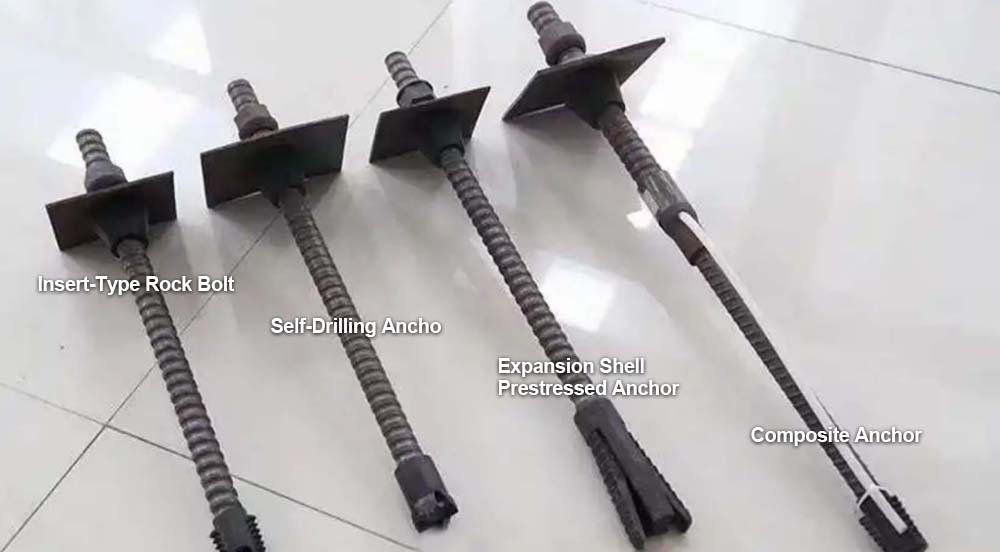
The anchoring force is primarily concentrated at the ends of the bolts, such as in metal inverted-wedge bolts and expansion-shell bolts. These are suitable for applications where the surrounding rock is locally fractured or where rapid support is required.
1.2.3 Friction-type anchor bolts
Anchors that rely on friction between the anchor body and the borehole wall for anchoring, such as split set bolts and inverted wedge-type metal anchors. These anchors generate support force through friction between the anchor and the surrounding rock; they feature a simple design and are easy to install, but their support capacity is relatively limited.
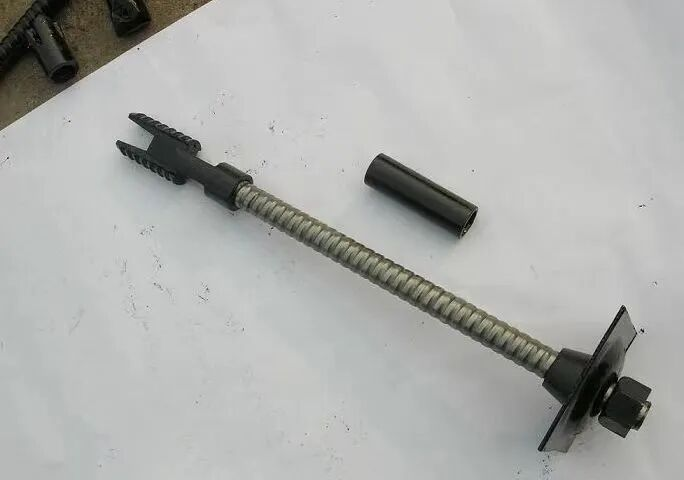
Friction-type anchors are further classified into the following categories:
(1) Slotted-tube anchor: An anchor in which a thin-walled steel tube with a longitudinal slit is forced into a borehole smaller than its outer diameter; the anchoring effect is achieved through the radial pressure exerted by the steel tube against the borehole wall.
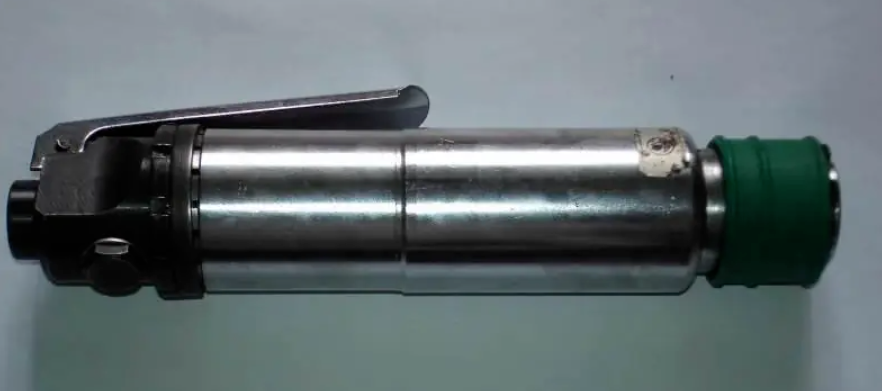
(2) Hydraulic expansion anchor: A type of anchor in which a profiled hollow rod made of thin-walled steel pipe is inserted into a borehole slightly larger than the rod. By injecting high-pressure water into the rod’s cavity, the rod expands, generating frictional resistance against the borehole walls to provide anchorage.
1.2.4 Hybrid Anchor Bolts
This type of anchor bolt combines two or more anchoring mechanisms, with the most common being the “end anchoring + full-length bonding” combination. Specifically, mechanical expansion sleeves or resin end anchors at the bottom of the borehole provide immediate anchoring force, while full-length grouting or resin bonding provides additional anchoring force and corrosion protection. It is frequently used in soft rock formations subject to large deformations, in tunnels exposed to high ground pressure and rockbursts, and in permanent support projects requiring higher safety factors. It balances the immediate load-bearing capacity of end anchoring with the durability and deformation resistance of full-length bonding.
1.3 Based on their specific design and construction methods, anchor bolts can be classified into the following categories:
1.3.1 Self-drilling anchor
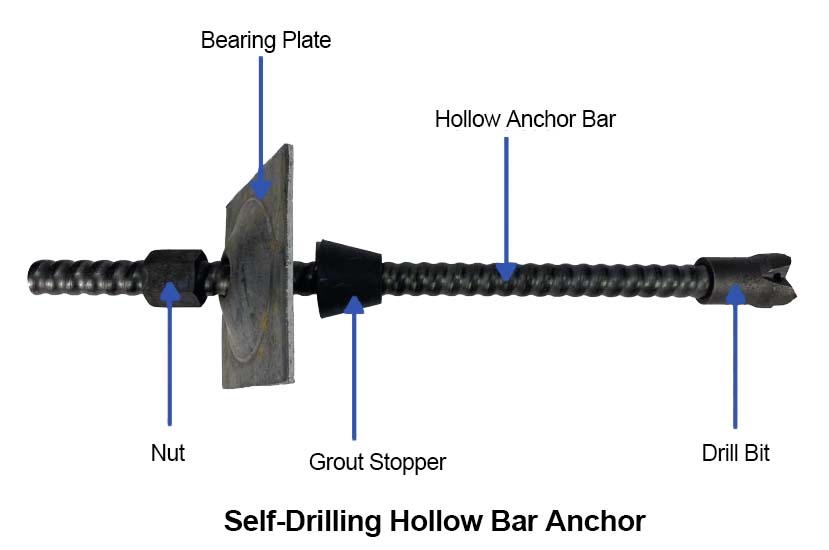
This type of anchor combines the function of a drilling rod with that of an anchor, integrating hole drilling, grouting, and anchoring into a single unit; it is also known as a self-advancing anchor. It is secured in the surrounding rock using physical methods such as wedges or wooden blocks, eliminating the need for additional grout. While this makes installation convenient, the effectiveness of the support is significantly influenced by the conditions of the surrounding rock.
1.3.2 Tension-type anchor bolts
These primarily bear tensile forces through the bolt body (rebar or steel strand) and transfer this force to the surrounding rock and soil; they are one of the most widely used types of anchor bolts in engineering today.
1.3.3 Perforated Pipe Grouting Anchor Bolt
A type of grouted anchor in which a steel tube with a certain number of small holes arranged along its wall is inserted into a drilled hole, and grout is injected into the anchor hole through the small holes in the tube’s cavity.
1.4 Based on service life, they can be divided into:
1. Permanent anchor bolts: Anchor bolts that match the service life of the main structure, maintain stable performance and quality standards throughout the project’s operational lifespan, or can be maintained or replaced to continue functioning.
2. Temporary anchor bolts: These do not meet the same service life standards as the main structure and are required to function only during construction or specific phases of the project; their role is generally not considered under normal operational conditions.
1.5 Based on the strata in which the anchorage is located or the object being anchored, they can be classified as follows:
1.5.1 Rock Anchor
The anchor is fully embedded in stable, hard, or relatively hard rock strata, and primarily relies on the bond and frictional resistance between the anchor and the rock mass to transmit tensile forces. It is commonly used for the support of rock slopes, underground chambers, or mine tunnels.
1.5.2 Soil Anchor
The anchor body is placed and grouted into the soil (such as sandy soil, clay, or fill) and resists earth pressure or water pressure through the frictional resistance between the anchorage section and the surrounding soil. It is commonly used for deep excavation shoring and soil slope stabilization.
1.5.3 Rock-Soil Mixed-Layer Anchor Bolts
When the anchorage section passes through complex overlying soil layers and underlying rock strata, or is located in geological formations consisting of interbedded rock and soil or fractured strata, a special load distribution design is required to account for the varying shear strengths of the multiple geological layers.
1.6 Based on the arrangement of the anchor bolts, they can be classified as follows:
1.6.1 System anchors: Anchors arranged across the entire excavation face at specific intervals and according to a specific pattern, in accordance with the overall stability requirements of the rock (or soil) mass.
1.6.2 Random anchors: Anchors installed in specific locations to prevent the rock (or soil) mass from collapsing or sliding; they do not follow a fixed spacing or pattern.
When purchasing anchor bolts, it is not just a matter of focusing on price; what is even more critical is ensuring that their technical specifications align with the specific engineering design requirements and geological conditions. Please refer to the following for specific parameters to consider.
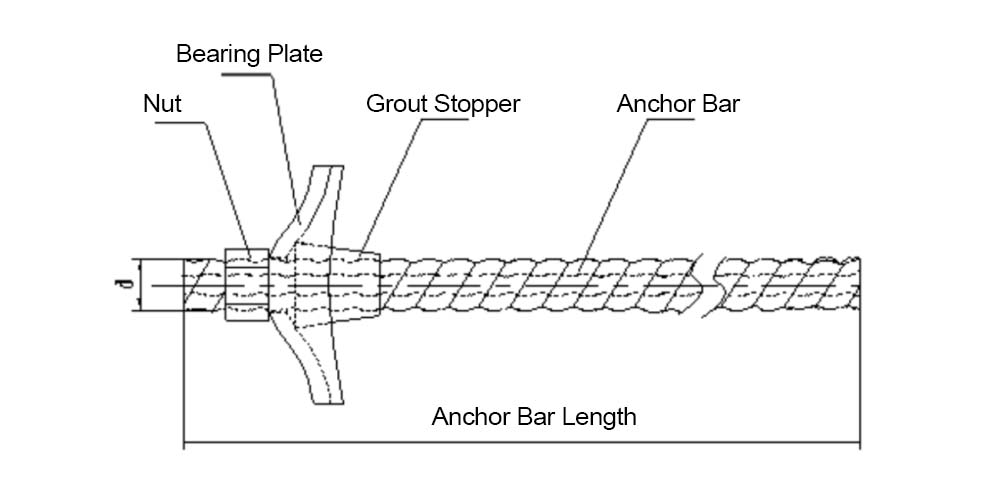
2.1 The diameter and length of the anchor rod are the most basic procurement parameters.
The diameter of an anchor directly determines its load-bearing capacity and stiffness; the commonly used range is between Φ16 mm and Φ28 mm. The length must be determined based on the cross-sectional dimensions of the tunnel, the stability of the surrounding rock, and the support design. When purchasing, the standard specified values and allowable tolerances for both diameter and length must be clearly defined. It should be noted that for special hollow grout-injected anchors, attention must also be paid to their inner diameter to ensure that the grout flow rate meets design requirements.
2.2 The strength of the anchor material is key to its load-bearing capacity
Common materials include HRB400 rebar and Q235, among others. When purchasing, pay close attention to the material grade and the corresponding yield strength class. Additionally, be sure to request a chemical composition analysis report from the supplier to ensure that the levels of harmful elements such as sulfur and phosphorus do not exceed the specified limits, thereby guaranteeing the impact toughness of the rods from the source.
2.3 Materials and Strength Properties
This is the most critical performance metric for anchor bolts, directly determining the product’s load-bearing capacity and safety factor. First, it is essential to identify the type of anchor bolt required, as different engineering environments call for different types; refer to Part One for specific classifications.
When evaluating mechanical performance metrics, attention must be paid not only to yield strength and tensile strength but also to elongation and impact energy absorption.
To standardize product selection and design within the industry, the “Technical Standard for Self-Drilling Anchor Bolts” (T/HNEDA 001-2025) has been officially released. This standard compiles the models and technical specifications of commonly used self-drilling anchor bolt shafts, providing an authoritative reference for engineering design and product selection. The standard covers two major series—R-type and T-type—comprising a total of 28 models with outer diameters ranging from 25 mm to 130 mm, suitable for various engineering applications.
The following is a comparison table of the models, structural parameters, and mechanical properties of commonly used self-drilling anchor rods, designed to facilitate precise selection and scientific construction.
Comparison Table of Common Self-Drilling Anchor Shaft Models and Technical Specifications | ||||||||||
No. | Model Number | Outer Diameter/mm | Inner Diameter/mm | Cross-sectional area/mm² | Quality/kg/m | Tensile strength/kN | Yield Load/kN | Tensile Strength/MPa | Yield Strength/MPa | Elongation/% |
1 | HER25N | 25 | 12 | 299 | 2.35 | 200 | 150 | 669 | 502 | 8 |
2 | HER32S1 | 32 | 15 | 510 | 4.00 | 405 | 320 | 794 | 627 | |
3 | HER32S | 17 | 446 | 3.50 | 360 | 280 | 807 | 628 | ||
4 | HER32N | 19 | 376 | 2.95 | 280 | 230 | 745 | 612 | ||
5 | HER32L | 21 | 331 | 2.60 | 210 | 160 | 634 | 483 | ||
6 | HCR321.1 | 21 | 331 | 2.60 | 250 | 190 | 755 | 574 | 5 | |
7 | HER38S | 38 | 18 | 752 | 5.90 | 550 | 450 | 731 | 598 | 8 |
8 | HER38N | 22 | 631 | 4.95 | 500 | 400 | 792 | 634 | ||
9 | HCR38N | 24 | 555 | 4.36 | 440 | 330 | 793 | 595 | ||
10 | HER38L | 27 | 459 | 3.60 | 300 | 240 | 654 | 523 | ||
11 | HER51S | 51 | 28 | 1178 | 9.25 | 925 | 740 | 785 | 628 | |
12 | HER51N | 31 | 1045 | 8.20 | 800 | 630 | 766 | 603 | ||
13 | HER51L1 | 34 | 860 | 6.75 | 660 | 540 | 767 | 628 | ||
14 | HER51L | 36 | 790 | 6.20 | 550 | 440 | 696 | 557 | ||
15 | HET30S | 30 | 14 | 427 | 3.35 | 320 | 260 | 749 | 609 | |
16 | HET40S | 40 | 18 | 866 | 6.80 | 660 | 525 | 762 | 606 | |
17 | HET40N | 22 | 726 | 5.70 | 539 | 430 | 742 | 592 | ||
18 | HET52N | 52 | 26 | 1236 | 9.70 | 929 | 730 | 752 | 591 | |
19 | HET73S | 73 | 40 | 2701 | 21.2 | 1865 | 1430 | 690 | 529 | / |
20 | HET73N | 45 | 2268 | 17.8 | 1585 | 1270 | 699 | 560 | ||
21 | HET73L | 53 | 1682 | 13.2 | 1160 | 970 | 690 | 577 | ||
22 | HET73L1 | 56 | 2701 | 11.2 | 1035 | 830 | 383 | 307 | ||
23 | HET76S | 76 | 45 | 2510 | 19.7 | 1900 | 1500 | 757 | 598 | |
24 | HET76N | 51 | 2102 | 16.5 | 1600 | 1200 | 761 | 571 | ||
25 | HET103S | 103 | 51 | 5682 | 44.6 | 3660 | 2670 | 644 | 470 | |
26 | HET103N | 78 | 3159 | 24.8 | 2300 | 1800 | 728 | 570 | ||
27 | HET111L | 111 | 78 | 5682 | 44.6 | 2640 | 2000 | 465 | 352 | |
28 | HET130S | 130 | 60 | 9936 | 78.0 | 7940 | 5250 | 799 | 528 | |
2.4 Construction of the Threaded End of the Anchor Bolt and Parameters of Associated Accessories
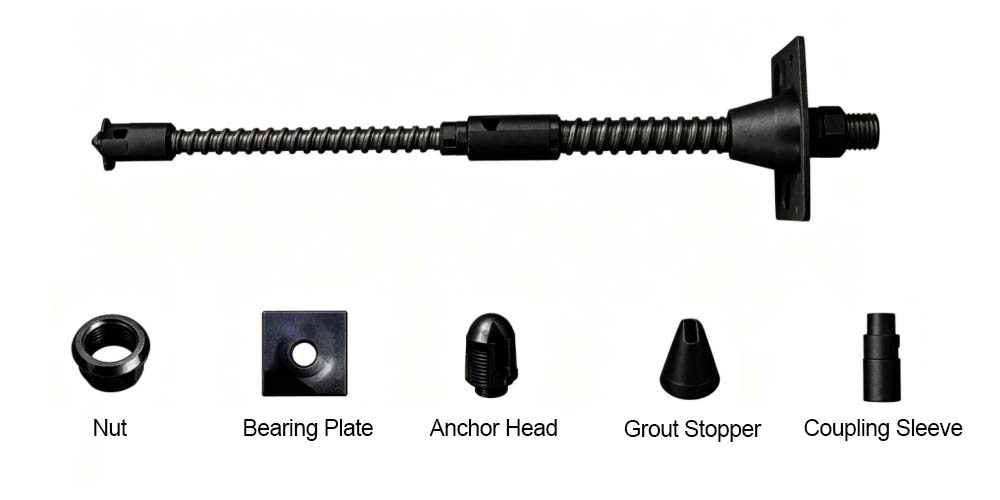
The length, pitch, and direction of the threads at the end of the anchor bolt directly affect the anchoring force. When purchasing, the required thread length, direction, pitch, and other specifications must be clearly defined based on the project requirements. In addition to the rod itself, the specifications of the accompanying accessories must also be clearly defined: nuts must be marked with their performance grade, must be compatible with the rod’s threads, and must ensure that the torque requirements are met; plates (spacers) must specify their external dimensions and steel plate thickness, and their load-bearing capacity, along with the arch height, must satisfy the requirements for yielding to surface deformation of the surrounding rock to prevent the plates from being punctured or flanged.
2.5 The type of corrosion protection treatment should be determined based on the degree of corrosion in the operating environment.
Due to the multifactorial environmental conditions in mines, cases of anchor corrosion and corrosion-induced failure accidents are common in coal mines worldwide. Anchor corrosion reduces the load-bearing capacity of the anchoring structure and can easily lead to mine safety incidents such as surrounding rock instability and tunnel deformation,seriously disrupting the normal operations of mining enterprises. When purchasing, clearly specify to suppliers the corrosion protection requirements, and pay close attention to this aspect during subsequent inspections.
Common surface corrosion protection techniques—such as hot-dip galvanizing,thermal diffusion galvanizing (sheradizing), and organic coatings—alter the properties of the anchor rod’s surface layer.
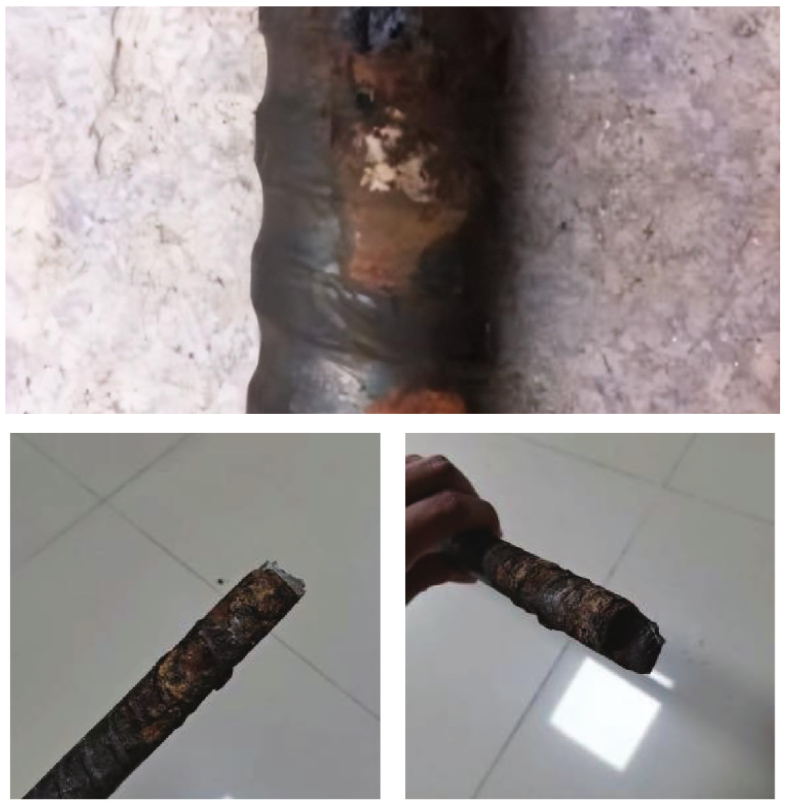
Corrosion and Fracture of Anchor Bolts
Hot-Dip Galvanizing Process
The hot-dip galvanizing process deposits a dense layer of zinc on the surface of metal anchor bolts. This zinc layer consists of two parts: a pure zinc layer and a zinc-iron alloy layer. The pure zinc layer acts as a barrier against the corrosive environment in mines, while the zinc-iron alloy layer provides electrochemical protection for the anchor bolt’s base metal.
Compared to the hot-dip galvanizing process, the hot-dip zinc coating process is more widely used in mining applications. By immersing the derusted metal anchor rods into a high-temperature molten zinc bath, a hot-dip galvanized coating is applied to the surface of the metal anchor rods. This coating offers superior resistance to chlorine; in environments with the same chloride ion concentration, it can extend the service life of the metal anchor rods by 40%. However, the bond strength between the hot-dip galvanized coating and the metal anchor rod substrate is relatively low, making it prone to wear and peeling during transportation and construction.
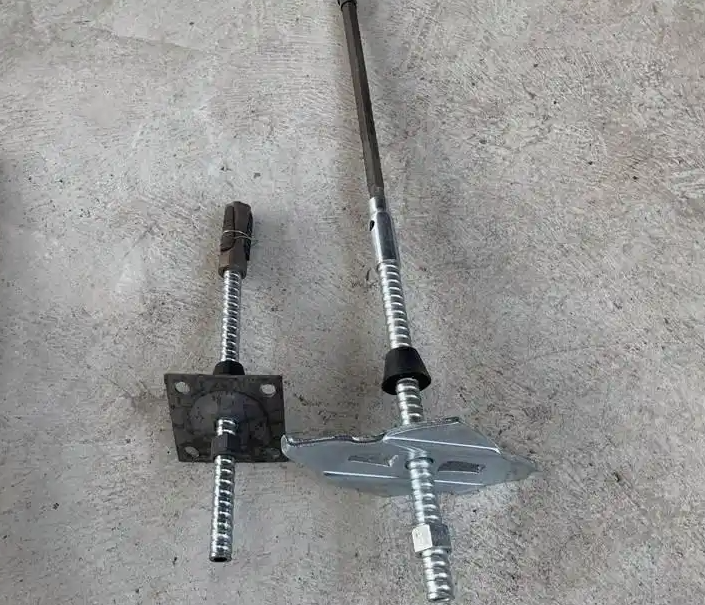
Thermal Diffusion Galvanizing Process
The thermal diffusion galvanizing process is a new technology for surface corrosion protection of anchor bolts. Under high temperatures, active zinc atoms diffuse from the exterior into the interior of the anchor bolt, while iron atoms diffuse from the interior to the exterior, thereby forming a dense and uniform zinc-iron diffusion coating on the surface of the anchor bolt. This zinc-iron alloy diffusion layer not only isolates the metal anchor bolt from the corrosive environment of the mine but also provides electrochemical protection for the anchor bolt’s base metal.
Furthermore, compared to hot-dip galvanized coatings, the zinc-iron alloy diffusion layer exhibits superior wear resistance and higher metal bonding strength, with a microhardness ranging from 220 to 420 HV0.2 and an bonding tensile strength of 600 to 700 MPa. However, as an emerging process for anchor corrosion protection, the thermal zinc diffusion process is relatively expensive, and its economic viability is limited when used on a large scale.
Organic Coatings
Epoxy resin is a commonly used organic material for corrosion protection on the surfaces of anchor bolts. Epoxy resin has excellent adhesion and bonds firmly to metal anchor bolts, forming a dense epoxy coating. Epoxy coatings offer good heat resistance, water resistance, and wear resistance, and provide an effective barrier against ions, oxygen, and water.
However, epoxy resin coatings are highly susceptible to damage during handling, transportation, and installation. Damage to the coating can easily lead to a loss of adhesion, thereby reducing the anchor’s corrosion resistance.
2.6 Compliance Standards and Safety Certifications
When making purchases, one must never rely solely on verbal agreements; the contract must explicitly state the specific national or industry standards to which the product complies. For use in underground coal mines, it is essential to verify that the anchor bolts possess a valid safety certification mark for mining products and to confirm that the model and specifications listed on the certificate match the actual product. Suppliers must also be required to provide complete production licenses, product conformity certificates, and quality inspection reports. Particular attention should be paid to the production license to confirm its validity period and ensure that the scope of business includes the production of anchor bolts. It is recommended to prioritize manufacturers with ISO 9001 quality management system certification, as these companies typically have more standardized production processes.
As mining operations move deeper into the earth and into areas with complex geological conditions, the performance requirements for rock bolts are becoming increasingly stringent. An ideal anchor material must balance strength and toughness. Excessive hardness can lead to increased brittleness, making the anchor prone to brittle fracture when subjected to rockburst or severe deformation of the surrounding rock. The selection of materials and the design of heat treatment processes aim to maintain sufficient elongation while ensuring high strength, allowing the anchor to exhibit clear signs of plastic deformation prior to failure.
Anchor bolts are among the most widely used support components in underground and slope engineering projects worldwide. According to industry statistics, global annual consumption of anchor bolts reaches billions of units, with applications ranging from deep mines hundreds of meters underground to steep slopes at the earth’s surface. The following sections detail these applications by major field.
3.2.1 Mining and Mine Tunnel Support
The mining industry is the sector with the largest volume of anchor applications and the longest history of their use. Their application in the mining sector is undergoing a shift from “passive suspension” to “active high pretension”—by applying high preload, anchors no longer simply suspend unstable rock layers from stable ones, but actively compress the surrounding rock and improve its stress state, thereby making the surrounding rock itself part of the load-bearing structure.
The core role of anchor bolts in mining is to control deformation of the surrounding rock in mine tunnels, prevent roof falls, and ensure the safety of mining operations. Their support mechanism primarily involves three aspects:
First, the suspension effect: using anchor bolts to “suspend” shallow, unstable rock layers on deeper, stable rock masses, thereby preventing roof detachment and caving; second, the composite beam effect: using anchor bolts to anchor and combine multiple thin, layered rock masses into a single, thick slab, thereby enhancing the rock layers’ flexural load-bearing capacity; Third, the reinforcing arch function, which forms a compressed arch of a certain thickness around the tunnel to convert the surrounding rock pressure into the rock mass’s own bearing capacity.
In recent years, China’s mine bolting support technology has continued to advance. Taking the 4101 working face at Xinshun Coal Mine as an example, the mine addressed the engineering challenge of soft, friable surrounding rock in the mining face tunnels—which is prone to support failure due to mining disturbances—by proposing a rock mass control strategy combining “tunnel rock grouting, high-preload long bolts, and anchor cables,” and conducting on-site industrial trials.
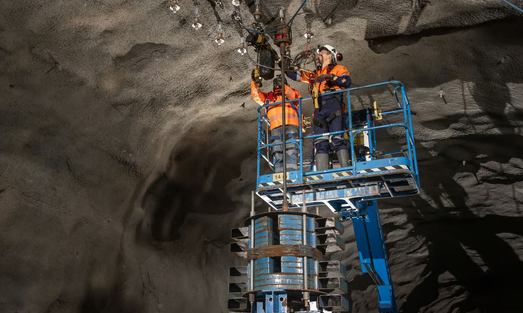
In the international mining sector, the world-renowned LKAB mine in Sweden has recently launched a project to accelerate bolting support, with the goal of doubling the bolting speed compared to the original system. This demonstrates that even in the most mature areas of mine support, bolting efficiency remains a key focus for continuous optimization by global mining companies.
3.2.2 Tunnels and Underground Engineering
Tunnel engineering is the second-largest application area for anchor bolts. Whether in railway tunnels, highway tunnels, or underground metro stations constructed using the cut-and-cover method, anchor bolts serve as the core support measure for controlling rock mass deformation and preventing collapse. In tunnel construction, anchor bolts are typically installed immediately after excavation, working in conjunction with shotcrete and steel mesh to form “initial support.” Secondary lining is then installed once the deformation of the surrounding rock has stabilized. This “anchor-shotcrete support” system has become the standard practice in tunnel engineering worldwide.
In a deep-buried TBM (tunnel boring machine) tunnel in southwest China, faced with the challenge of significant rock mass deformation caused by high in-situ stress in soft rock, the engineering team established a three-dimensional finite element model to analyze rock mass deformation and stress evolution during the excavation and support installation processes, and optimized the anchor support parameters based on these findings.
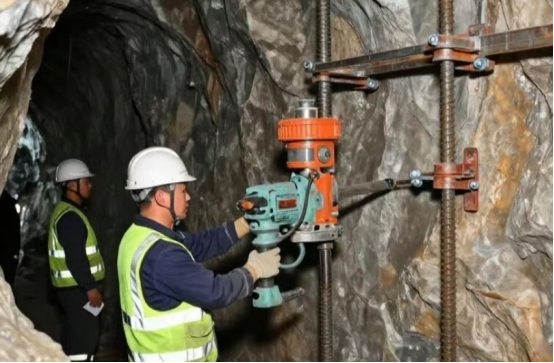
Internationally, the Pyntentunnelen Tunnel in Norway serves as a prime example of the application of anchor support technology; this tunnel employs an advanced anchor support scheme to address specific stress conditions and rock mass stability requirements. In addition, Sandvik, a world-leading supplier of mining and tunneling equipment, has also used R32 and R51 self-drilling bolts in loose rock tunnel projects to reinforce the tunnel face and lining structures.
3.2.3 Slope and Excavation Projects
In slope and excavation projects, anchors are primarily used for slope support and protection, and for retaining wall anchoring, to prevent landslides and collapses and ensure safety in the surrounding areas. In the protection of highway embankment slopes, anchor bolts are typically used in conjunction with techniques such as water intercepting strips, vegetation, concrete pouring, and tensioning and locking. Engineering examples demonstrate that, with anchor bolt support,the horizontal displacement of the slope can be limited to within 10 mm, effectively ensuring the construction quality of the embankment slope.
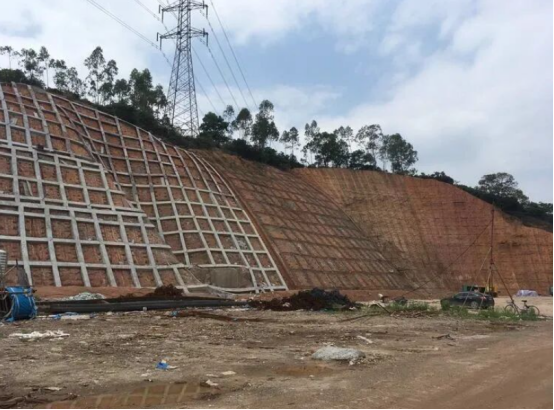
In rock slopes with highly fractured rock masses, anchored retaining walls are a commonly used form of support. For example, the geological hazard mitigation project on the northern slope of Beiganshan in Xiaoshan District, Hangzhou, employed a reinforcement scheme featuring a combination of prestressed cable anchors and fully bonded rock bolts. In excavation projects, soil anchors have been used for deep excavation shoring since the 1970s.. Projects such as the Beijing International Trust Building, Jingcheng Building, Shanghai Pacific Hotel, and Shanghai Exhibition Center have all employed soil anchor support systems. For excavation shoring under complex geological conditions, composite shoring solutions such as “micropiles + prestressed anchor rods + soil nails” have also emerged.
3.2.4 Stability of Dam Foundations and Reservoir Shores in Water Conservancy and Hydropower Projects
Dam foundations, slopes, and tunnels in hydropower projects are also key applications for anchor bolts. Anchors are installed to reinforce and anchor the slopes of various reservoir dams and river-blocking weirs, as well as the sidewalls of gate chambers and the perimeters of impermeable walls. This enhances the overall resistance to overturning and seepage, ensuring the stable operation of the project under high water pressure; In flood control embankments and riverbank protection projects, anchor bolts are used in conjunction with ecological slope protection and rigid retaining walls to both reinforce the embankment body and reduce soil collapse caused by flood scouring; In underground water conservancy facilities such as water diversion tunnels and culverts, where rock mass pressure is high and geological conditions are complex, systematic anchor bolts serve as the core of the tunnel’s initial support. They prevent rock mass detachment and collapse, ensuring the unobstructed flow of water. Additionally, anchor bolts are frequently used to rapidly reinforce structures in water conservancy pump stations, diversion structures, and flood control and emergency reinforcement projects.
The foundation of the Xiaoxi Hydropower Station’s gravity dam is affected by a regional fault running parallel to the river; the fractured zone in the middle of the riverbed and its impact zone extend up to 180 meters. To address the stability of the dam foundation, the project installed a systematic array of anchor piles (a type of large-diameter anchor rod), and on-site tests confirmed the reliability of the dam foundation’s anchoring. In 1964, the Meishan Reservoir in Anhui Province was the first to use prestressed anchor cables ranging from 30 to 47 meters in length to reinforce the dam foundation and enhance its resistance to sliding. This marked a milestone in the history of anchoring technology in China, signifying the transition of anchoring technology from mine tunnels to large-scale water conservancy projects.
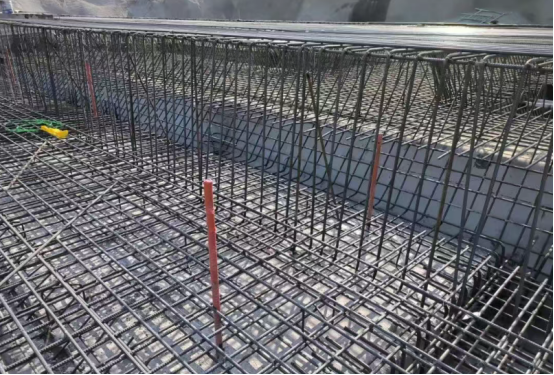
Overall, procurement for mining applications prioritizes installation speed and support density, while tunnel projects place greater emphasis on the durability of anchor bolts and prestress control capabilities. Slope stabilization and hydropower projects, on the other hand, have higher requirements for corrosion resistance and long-term reliability. Understanding these differences helps international buyers make more precise product selections based on specific application scenarios.
Selecting the appropriate anchor type is one of the most critical decision-making steps in geotechnical engineering design. An inappropriate selection not only risks support failure and safety incidents but may also erode project profits due to subsequent reinforcement work and project delays.
Selecting the appropriate anchor is a systematic process; the choice of anchor type should be based on a comprehensive evaluation of factors such as project requirements, the properties of the anchoring strata, the ultimate tensile strength of the anchor, the operational characteristics of different anchor types, site conditions, and construction methods.
Selection of Prestressing Types
The choice between prestressed and non-prestressed anchor bolts essentially comes down to a choice between active and passive support.
Prestressed anchor bolts apply active pressure to the rock and soil mass by artificially inducing tensile stress, thereby effectively controlling deformation. Their advantages include high load-bearing capacity and effective deformation control, making them suitable for projects with strict deformation control requirements; however, their construction is complex and costs are relatively high. In slope stabilization, prestressed anchor bolts apply active confinement to layered surrounding rock, allowing the design thickness of the subsequent lining to be reduced by 15% to 20%.
Non-prestressed anchor bolts (including low-prestressed anchor bolts) are subjected to tensile stress only when the rock or soil mass deforms, and the tensile stress increases as displacement increases; they primarily serve to suspend the deforming mass. Their advantages include ease of installation and low cost, making them suitable for small- and medium-scale projects with modest deformation requirements.
The selection decision should be based on a comprehensive assessment of the project’s safety classification and deformation control requirements. The anchorage section of permanent anchor bolts must not be installed in untreated organic soil layers, soil layers with a liquid limit greater than 50%, or soil layers with a relative density less than 0.3.
Selection of Anchor Types
Anchors can be classified into tension-type, compression-type, and load-distribution-type systems based on their load-bearing mechanisms. These different load-bearing mechanisms determine the load transfer path, the efficiency of load-bearing capacity, and the long-term performance of the anchors, and are among the core technical considerations in the selection process. The operational characteristics and applicable conditions for different types of prestressed anchors are shown in the table.
Anchor Types | Performance Characteristics and Application Conditions of Anchor Bolts |
Tension-Type Anchors | The anchoring strata consist of hard rock, medium-hard rock, or non-soft soil layers; The ultimate tensile load-bearing capacity of a single anchor ranges from 200 kN to 10,000 kN; When the anchorage length exceeds 8 m (in rock) or 12 m (in soil), the increase in the anchor’s ultimate pull-out load-bearing capacity is extremely limited or ceases to increase; Anchor lengths can reach 50 m or more |
Pressure-Type Anchors | The anchoring strata consist of highly corrosive rock and soil layers; The ultimate tensile load-bearing capacity of a single anchor is no greater than 300 kN (soil) and 1,000 kN (rock); When the anchorage length exceeds 8 m (rock) or 12 m (soil), the increase in the anchor’s ultimate pull-out load-bearing capacity is extremely limited or ceases to increase; Excellent corrosion resistance; Anchor lengths can reach 50 m or more |
Pressure-Dispersed Anchors | The anchoring strata consist of soft rock, soil, or highly corrosive formations; The ultimate pull-out strength of the anchor rod increases proportionally with the length of the anchored section; The anchored section exhibits high load-bearing capacity per unit length and minimal creep; Good corrosion resistance; Anchor rods can reach lengths of 50 meters or more |
Tension-Dispersed Anchors | The anchoring strata consist of soft rock or soil; The ultimate pull-out strength of the anchor rod increases proportionally with the length of the anchored section; The anchored section has high load-bearing capacity per unit length and minimal creep; Anchor rods can be up to 50 meters long or longer |
Post-High-Pressure Grouting Anchors | Suitable for temporary or permanent anchor bolts in soil or soft rock; The pull-out load-bearing capacity per unit length of the anchored section can be increased by more than 1.0 times; Multiple high-pressure grouting operations can be performed on the surrounding strata of the anchored section |
Removable Anchors | Temporary anchor bolts anchored in rock or soil; Projects requiring the removal of prestressed tendons from anchor bolts |
Choosing the right anchor bolt is not about choosing the most expensive option, nor is it about having the highest specifications for safety. It's crucial to consider the entire life-cycle cost when making decisions, rather than just the unit price of materials.
Direct costs include the cost of the bolt itself, grouting materials, drilling consumables, and equipment. Time costs are reflected in the impact of anchor bolt installation on the cycle time; self-drilling anchor bolts, by eliminating the need for casing installation and hole cleaning, can reduce the construction time per bolt by more than half. Risk costs include support failure due to improper selection, subsequent reinforcement costs, and losses due to project delays.
For short-term projects, slotted pipe or hollow grouting anchor bolts are preferable, balancing cost and construction efficiency. For long-term projects, resin or FRP anchor bolts offer significant durability advantages, effectively reducing total life-cycle costs.
For a specific anchor bolt, please refer to the following systematic decision-making path:
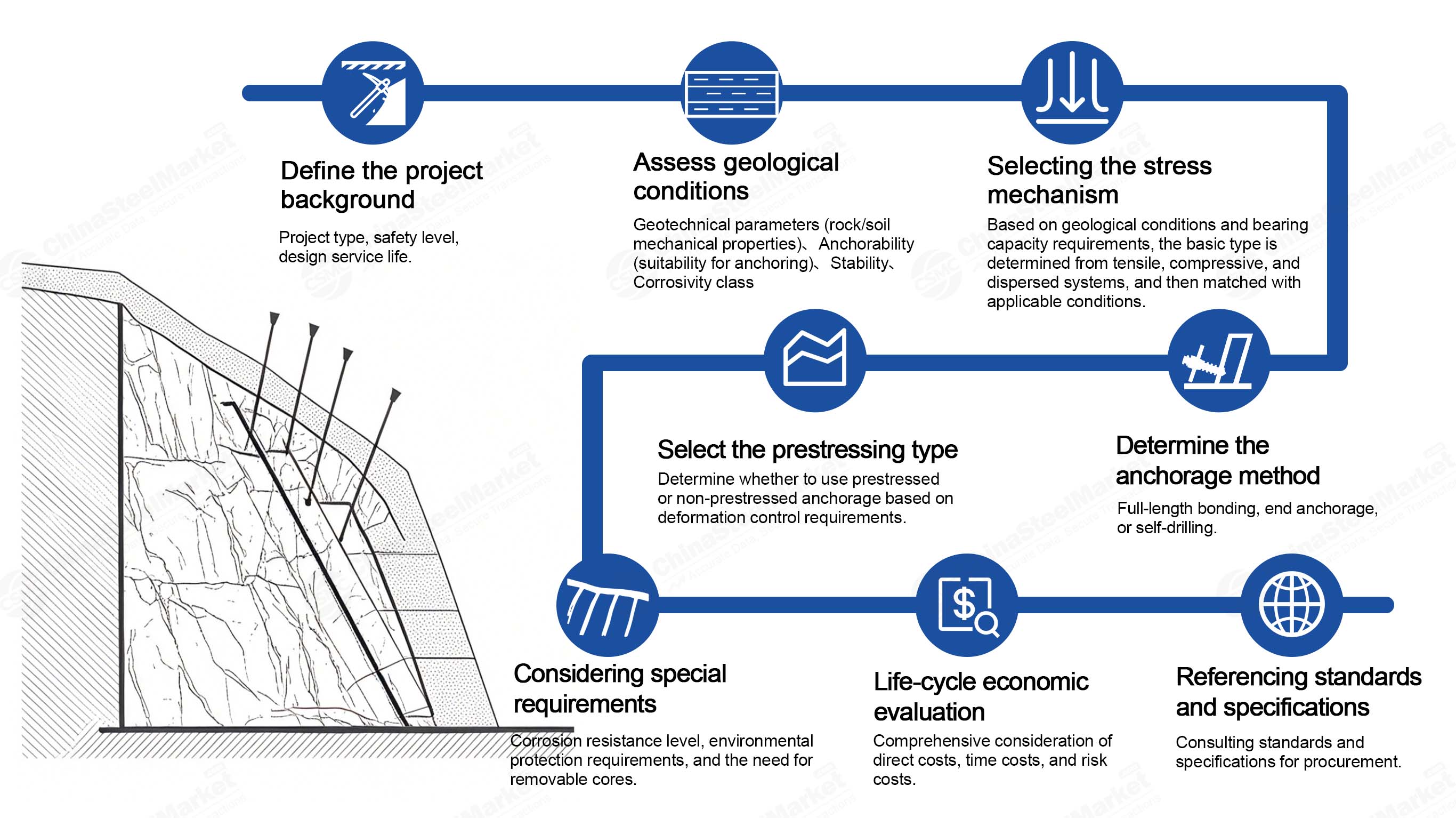
The essence of anchor bolt selection lies in achieving the optimal match between project requirements, geological conditions, and anchor bolt characteristics. It is recommended that a qualified professional engineer conduct a systematic design based on current international standards in the early stages of the project, and that the rationality of the selection scheme be verified through on-site pull-out tests.
This article aims to provide some assistance. While anchor bolts may seem small, they represent a significant safety cost. Before purchasing, it's crucial to understand the geological conditions, define the support objectives, select the appropriate anchor type, and finally verify each key parameter. Choosing the most suitable anchor bolts is essential to ensuring both technical and safety standards are met while also balancing cost-effectiveness and ease of construction.
It's important to note that no written parameter comparison can completely replace on-site verification. For key projects or complex geological formations, it's recommended to conduct anchor bolt pull-out tests before bulk purchases, using the measured data as the basis for final selection. Furthermore, including clauses regarding third-party sampling and inspection, and on-site acceptance in the procurement contract is an effective way to prevent quality loopholes from a management perspective.
If you have any questions about anchor bolt selection and procurement, or are unsure about certain parameters, please feel free to contact us with your geological data. CSMC will continue to monitor information regarding anchor bolt support and actively provide more assistance to our clients.
We sincerely hope that the information we provide can make more beneficial value. In addition, we sincerely invite you to leave valuable comments and advice on our website. We will follow up on your comments and advice at any time on our website.
CSMC - Empowering small and medium-scale steel purchasing.
Editor: Hana Kyra
Mail: cs@chinasteelmarket.com






|

|

|

|

|
| Timely Info | Independent | Platform | Multiple guarantees | Self-operated storage |
China Steel Market
Empowering small and medium-scale steel purchasing
| About us | Channel | Useful tools |
|---|---|---|
| About China Steel Market | Prices | Steel Weight Calculation |
| Contact Us | Answers | Avoiding Trade Fraud Guide |
| Terms & Conditions | Inventory | Why Choose Us |
| Privacy Policy | Help |
Hot search words:
China Rebar prices China Wire Rod Prices Welded Steel Pipe Prices



