


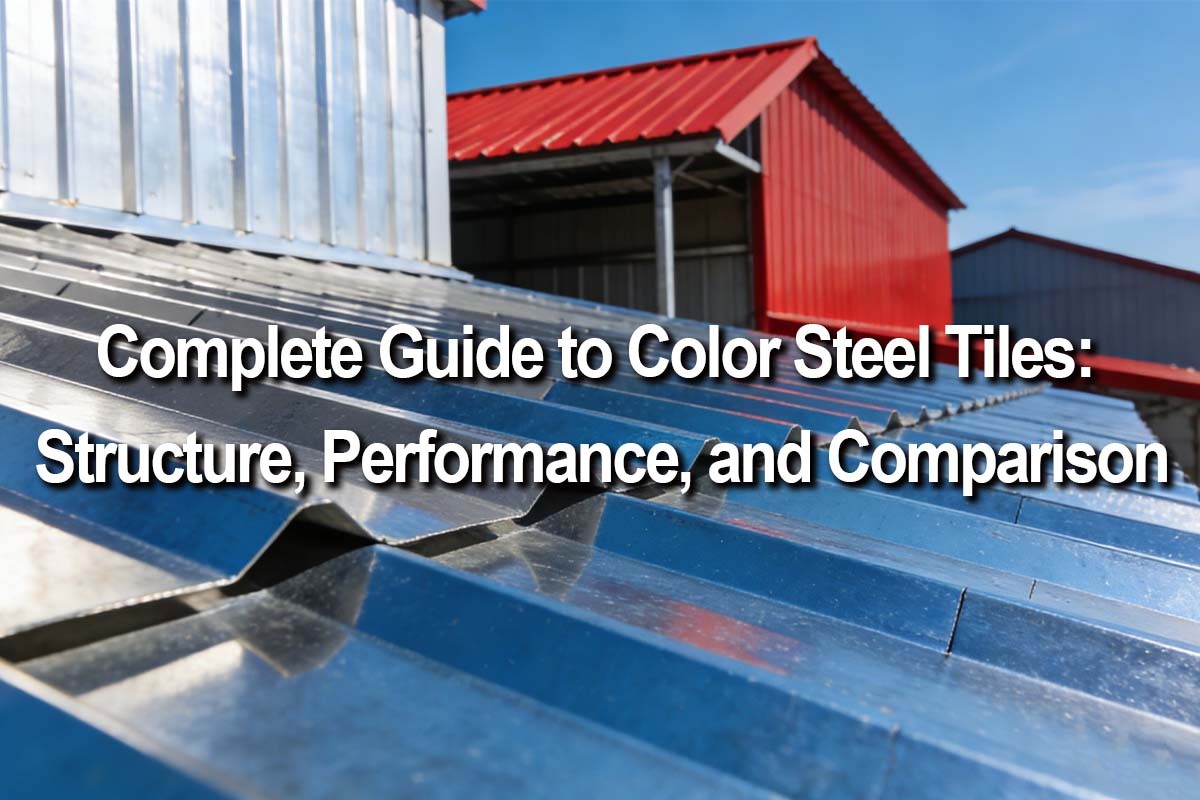
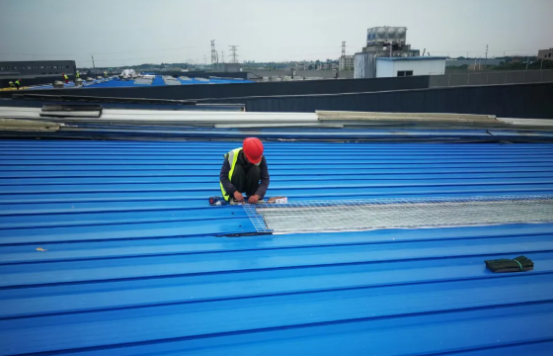
Color steel tiles, also known as colored profiled tiles, are formed by cold-rolling and bending colored coated steel sheets into profiled panels. As a key material in modern steel structures, it combines multiple advantages: lightweight, high strength, rich colors, easy installation, earthquake resistance, durability, and low maintenance. With its outstanding performance, color steel roofing has been widely adopted in industrial and civil buildings, large steel structure factories, special structures, and roofing systems.
1. Structure and Profiles of Color-Coated Steel Roofing Sheets
Color steel tiles can be broadly categorized into single-layer profiled sheets and sandwich composite panels based on their factory-manufactured finished forms.
Single-layer color-coated steel sheets formed by roll forming. Without insulation layers, these represent traditional “color steel tiles.” Based on different applications, single-layer profiled sheets can be broadly categorized into four types: general-purpose roof panels, general-purpose wall panels, standing-seam panels, and floor decking panels.
1.1.1General-purpose Roofing Panels
Primarily used for roof installation, these panels typically feature a higher wave height to enhance drainage and load-bearing capacity, effectively resisting wind pressure and snow/rain loads.
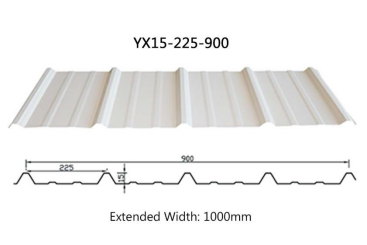
YX8-31.5-882
YX8-31.5-882 Color-Coated Profiled Sheet, also known as YX8-31.5-882 Color-Coated Corrugated Roofing Sheet, YX8-31.5-882 Small Corrugated Tile, YX8-31.5-882 Small Corrugated Panel, is a profiled steel sheet with an extremely low wave height. The wave crest height is only 8mm, featuring 28 wave profiles. The wave crest spacing is just 31.5mm, with a cover width of 882mm and an extended width of 1000mm.
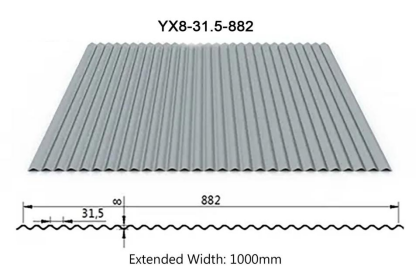
YX12-110-880
YX12-110-880 Color-Coated Steel Profiled Sheet, also known as YX12-110-880 Color-Coated Steel Sheet, YX12-110-880 Color Steel Roofing Tile, features a 12mm rib height, composed of 8 waves with an 110mm wave pitch, a cover width of 880mm, and an extended width of 1000mm. Suitable for walls or construction fencing, standard colors include sea blue, crimson, and white-gray, with custom colors available upon request.
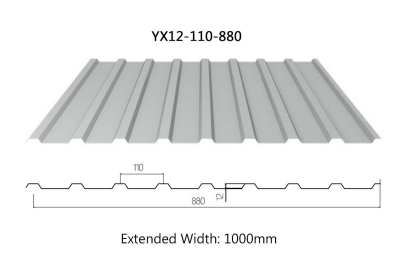
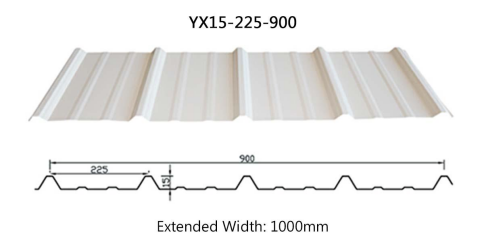
YX15-225-900
YX15-225-900 color-coated steel sheet, also known as YX15-225-900 color-coated steel tile, YX15-225-900 color-coated profiled sheet, YX15-225-900 profiled steel sheet, etc. It is manufactured by cold-rolling 1000mm-wide color-coated galvanized steel sheets into various wave profiles. The cover width is 900mm, with an extended width of 1000mm. It features lightweight construction, high strength, rich color options, quick and easy installation, earthquake resistance, fire resistance, waterproofing, long service life, and low maintenance requirements.
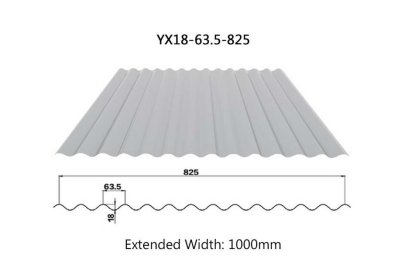
YX18-63.5-825
YX18-63.5-825 Color-Coated Corrugated Steel Sheet is a profiled sheet manufactured by cold-rolling and bending color-coated steel plate into various wave patterns. It is widely used in steel structure enclosures. The wave height is 18mm, wave length is 63.5mm, cover width is 825mm, and extended width is 1000mm.
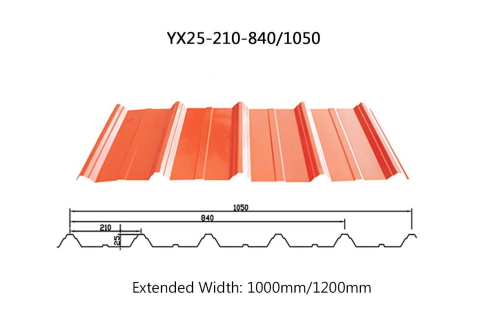
YX25-210-840/1050
YX25-210-840 color steel roofing panels are specialized color steel sheets for roofing and wall cladding, featuring high strength and rapid installation. With a wave height of 25mm, they consist of 5 waves spaced 210mm apart, providing an effective coverage area of 840mm. The extended width is 1000mm.
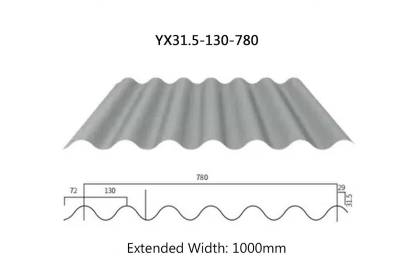
YX31.5-130-780
Wave height: 31.5mm, Wave Length: 130mm, Cover width: 780mm, Extended width: 1000mm, Thickness: 0.3-0.6mm. Suitable for lightweight roofing systems such as small warehouses or temporary structures. The increased corrugation height enhances structural rigidity.
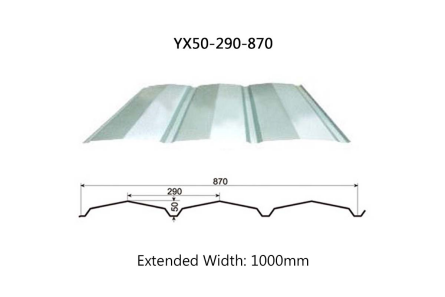
YX50-290-870
Wave height 50mm, wave length 290mm, cover width 870mm, extended width 1000mm, thickness 0.3-0.6mm. Specifically designed for large-span steel structure roofs such as airport terminals or sports stadiums, where the high wave height and wide wave spacing effectively distribute loads.
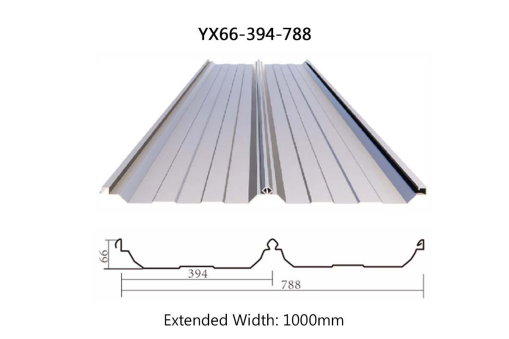
YX66-394-788
Wave height: 66mm, wave length: 394mm, cover width: 788mm. Exceptionally strong typhoon resistance. Used in heavy-duty structures such as ports and airports.
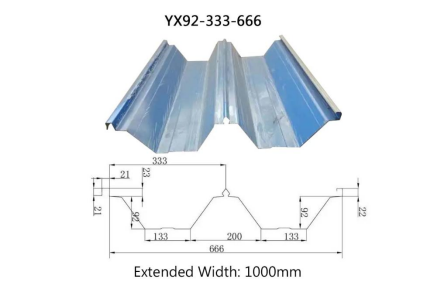
YX92-333-666
With a wave height of 92mm, wave length of 333mm, and effective coverage width of 666mm, this profile is cold-formed from color-coated steel sheets with an extended width of 1000mm. Designed specifically for high-load industrial roofing applications.
1.1.2 General-Purpose Wall Panels
General-purpose wall panels are primarily used for facade cladding in industrial buildings or structures. Featuring a lower corrugation height, they emphasize horizontal or vertical decorative lines while prioritizing a smooth, aesthetically pleasing appearance.
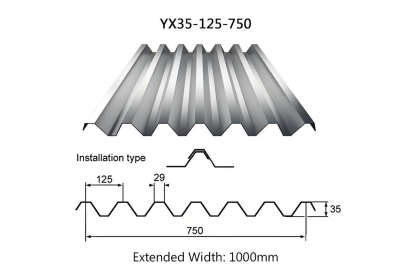
YX35-125-750
Wave height: 35mm, wave length: 125mm, cover width: 750mm, making it one of the mainstream choices for industrial building walls.
YX15-225-900
Wave height: 15mm, wave length: 225mm, cover width: 900mm, sheet thickness: 0.3–0.6mm. Features include lightweight construction, high strength, rich color options, quick and easy installation, seismic resistance, fireproofing, waterproofing, long service life, and maintenance-free operation. Applications: Roofing and wall lining panels.
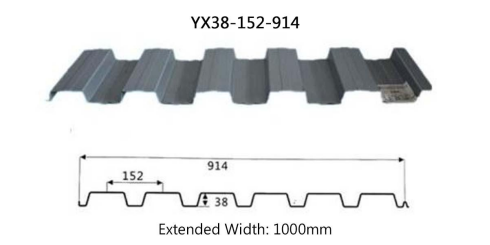
YX38-152-914
YX38-152-914 color steel sheet, also known as YX38-152-914 profiled steel sheet, is roll-formed from aluminized-zinc steel sheet, galvanized steel sheet, or color-coated steel sheet with an unrolled width of 1250mm. It features a wave height of 38mm and a wave length of 152mm. with a total panel width of 914mm. The panel pattern utilization rate is 73%. It offers excellent bending resistance, load-bearing capacity, and seismic performance, making it suitable for various building structures such as industrial plants, warehouses, and garages.
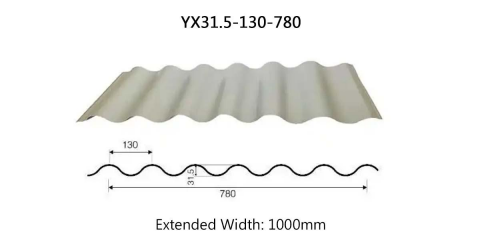
YX31.5-130-780
Manufactured by rolling color-coated steel sheets with a 1000mm extended width using advanced equipment, the formed profiled steel sheet has a cover width of 780mm, a wave height of 31.5mm, and a wave lenth of 130mm.
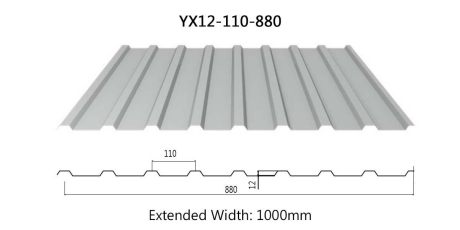
YX12-110-880
Wave height: 12mm, wave length: 110mm, cover width: 880mm, suitable for construction fencing.
1.1.3 Jiaochi board
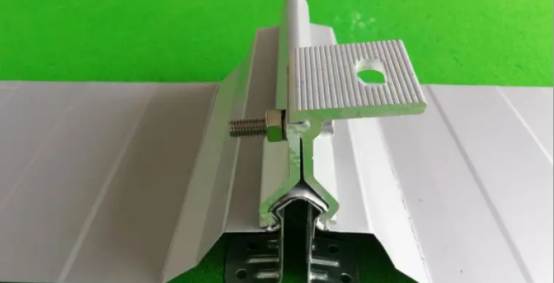
Commonly known in China as “jiaochi board,” these are standing seam roof panels.A specialized concealed-fastening roof panel, formed by pressing the tile surface into square locking positions, with both ends bent into an angled metal plate. It offers exceptional waterproofing and wind-resistance capabilities.During edge sealing, two tiles are rolled together by a machine to form a square corner shape, commonly referred to as “jiaochi”in Chinese.”jiaochi board”must be secured using concealed clips and square corners beneath. This design facilitates the installation of clamping fixtures for equipment above. When overlapping on both sides, they interlock directly into 180-degree or 360-degree configurations, forming an upright interlocking structure. Common specifications are as follows:
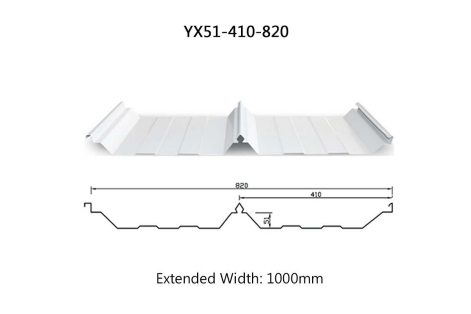
YX51-410-820
YX51-410-820 is a concealed metal roof panel featuring a 180-degree interlocking seam connection. This profiled sheet is a standing seam roof panel characterized by high wave peaks and exceptional strength. It allows for arching, has no exposed screws on the surface, and offers outstanding waterproofing performance.
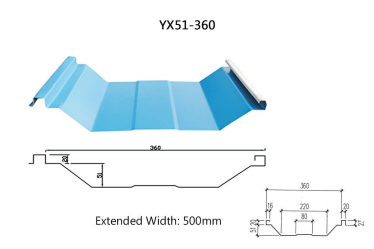
YX51-360
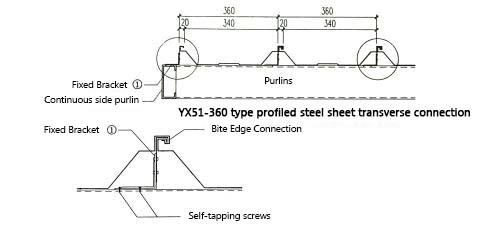
Key features include thermal expansion and contraction, excellent sliding properties, and excellent waterproofing between panels. It fully meets snow load requirements for most northern regions. The YW51-360 YX51-360 (Jiao Chi II) profile resolves roof leakage issues common in conventional profiled sheets. Its connection method breaks from traditional bolted roofing practices, utilizing a 180-degree interlocking installation for superior waterproofing performance. This profiled sheet is a standing seam roof panel featuring high wave peaks, high strength, and screw-free construction.
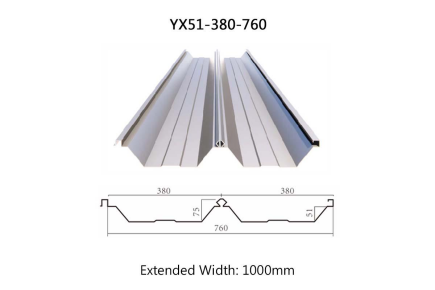
YX51-380-760
Jiao Chi Type 3 Roof Panel, featuring excellent thermal expansion and contraction properties, superior sliding performance, and enhanced waterproofing between panels. This addresses the common issue of roof leakage found in conventional profiled sheet series. The panel connection breaks from the traditional practice of bolted fastening for roofs. Instead, it employs a 180-degree interlocking installation method, significantly improving the roof's waterproofing effectiveness. This profiled panel is a standing seam roof panel characterized by high wave peaks, high strength, and screw-free installation.
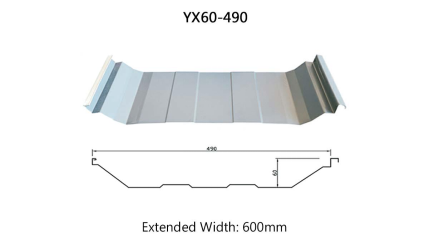
YX60-490
The YX60-490 employs an advanced standing seam locking system, fundamentally eliminating the risk of leaks associated with traditional fastening methods where screws directly penetrate the roof panels. To install the roof panels, first secure galvanized mounting brackets to the purlins with screws. Then clip the small ribs of the roof panels onto the galvanized brackets. Finally, use an electric standing seam machine to interlock the overlapping edges of the panels. The standing seam fastening method eliminates exposed screws on the roof surface. This not only creates an aesthetically pleasing and tidy appearance but also eradicates the potential for leaks caused by thousands of screw holes.
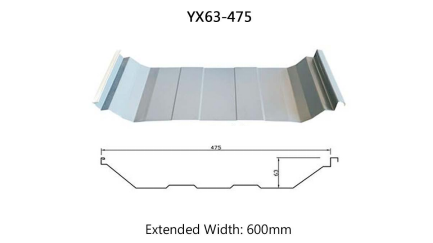
YX63-475
Features a vertical locking edge fastening system, eliminating the risk of leaks associated with traditional screw-through fastening methods that penetrate the roof panel.
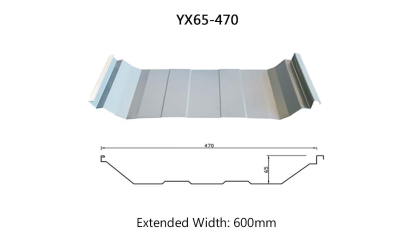
YX65-470
360° Standing Seam Locking Connection System, featuring a sliding connection mechanism that accommodates deformation caused by roof panel expansion and contraction. Suitable for buildings with excessively long single-slope dimensions or environments with significant temperature variations.
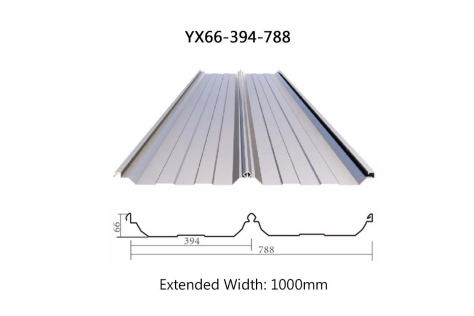
YX66-394-788
YX66-394-788 Roof Panel with 360-degree interlocking profile, providing reliable sealing to prevent leaks. Sliding bearings enable perfect thermal expansion and contraction compensation. Concealed, self-locking edges deliver outstanding wind resistance and waterproofing capabilities. Wave height: 66mm,wave length: 394mm,cover width: 788mm,extended width: 1000mm
The floor decking panels described below, while also manufactured from color-coated steel sheets or galvanized steel sheets through roll forming, serve primarily as permanent formwork that bears structural loads in conjunction with concrete. As structural components, they differ fundamentally from roofing and wall panels used solely for enclosure. In project selection, floor decking panels must be procured separately according to structural design specifications and should not be confused with ordinary color-coated steel roofing sheets.
1.1.4 Floor Deck
Floor decking, also known as composite floor panels, floor slabs, steel decking, or profiled steel sheets, serves as a critical supporting product for steel structures. Manufactured by cold-forming galvanized steel sheets through roll forming, these panels feature cross-sections shaped into V-shaped, U-shaped, trapezoidal, or similar wave patterns. Primarily functioning as integrated components for floor load-bearing and formwork, they may also be selected for other applications.
Floor decks are mainly divided into three categories: open profile floor deck, closed profile floor deck, and dovetailed floor deck. Each of these three types has its own characteristics.
Open profile Floor Deck
Open profile floor deck, also known as open-type floor deck, open profiled steel sheet, open floor deck, or open steel deck, serves as a vital supporting product for steel structure buildings. Primarily used as permanent formwork, it may also be selected for other applications.
Its low cost makes it suitable for projects with simple requirements where formwork is the sole purpose and no structural load-bearing is required.
Common models: YX76-344-688, YXB76-305-915, YXB51-305-915.
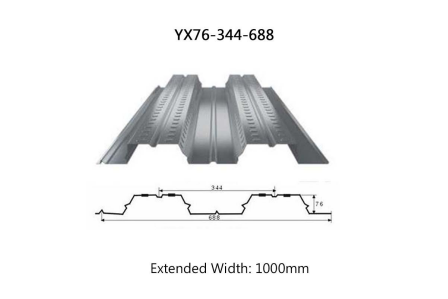
YX76-344-688
YX76-344-688 open-end floor decking features a wave height of 76mm, wave spacing of 344mm, and an effective coverage area of 688mm per meter. Manufactured from 1000mm hot-dip galvanized steel plate through cold-forming, it offers high load-bearing capacity and excellent fire resistance.
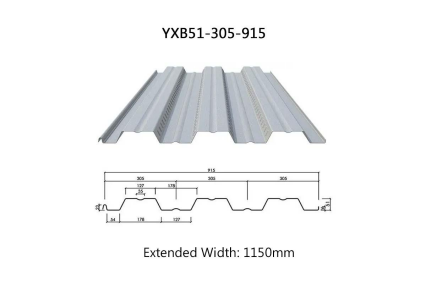
YXB51-305-915
The YXB51-305-915 open-profile steel sheet has a cross-sectional height of 51mm, consisting of 3 waves with a wave spacing of 305mm each. Its effective utilization width is 915mm (excluding overlap width). This profile is cold-formed from 1150mm-wide cold-rolled hot-dip galvanized steel sheet via roll forming, achieving a material utilization rate of 79.56%.
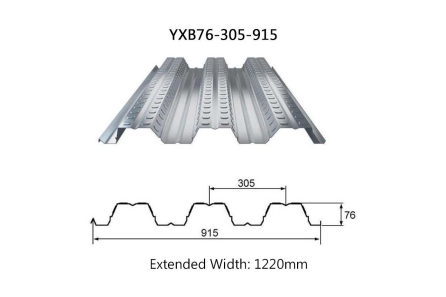
YXB76-305-915
The rib height of the YXB76-305-915 profiled steel sheet is 76mm, consisting of 3 waves with a wave spacing of 305mm each. The effective width of the entire profiled steel sheet is 915mm. YXB76-305-915 is a standard profile type in building profiled steel sheet specifications, with an unfolded width of 1220mm and a utilization rate of 76%.
Closed-end floor decking
is currently a highly popular type in high-rise construction. Its cross-section is fully enclosed, featuring an “O”-shape or dovetail groove configuration. Shear grooves are added to the deck surface, enhancing the bond strength between steel and concrete to function as a unified structure. It offers excellent fire resistance without requiring additional fireproof coatings and boasts high load-bearing capacity, though transportation efficiency is relatively low.
Common models: YXB51-200-600, YXB65-185-555, YXB66-240-720, YXB65-170-510, etc.
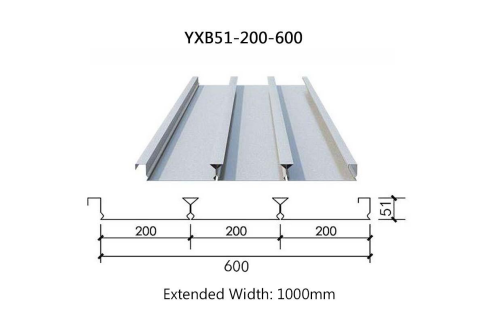
YXB51-200-600
Featuring a wave height of 51mm, it consists of three waves spaced 200mm apart, with an effective width of 600mm across the entire profiled steel sheet. The YXB51-200-600(B) floor decking panel has an unfolded width of 1000mm and a utilization rate of 60%. The primary characteristics of the YXB51-200-600(B) floor decking include high load-bearing capacity, excellent seismic resistance, superior fire performance, and ease of installation. The unique suspension system of the closed-end floor decking also reduces mechanical and electrical piping installation costs. Furthermore, these advantages significantly accelerate processing speed and shorten project timelines.
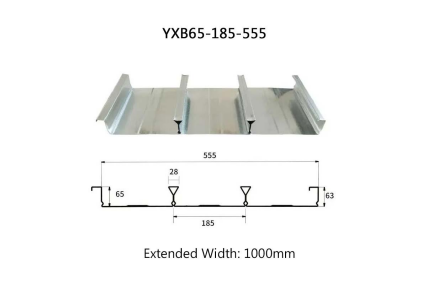
YXB65-185-555
The YXB65-185-555 closed-end floor decking features a wave height of 65mm and a wave length of 185mm, with three wave spacings. It is manufactured by mechanically roll-forming hot-dip galvanized cold-rolled steel sheets with an input width of 1000mm. The cover width after forming is 555mm, with a plate utilization rate of 55%. This is a relatively mature and stable older design, and also one of the most widely used plate types among various building steel formwork.
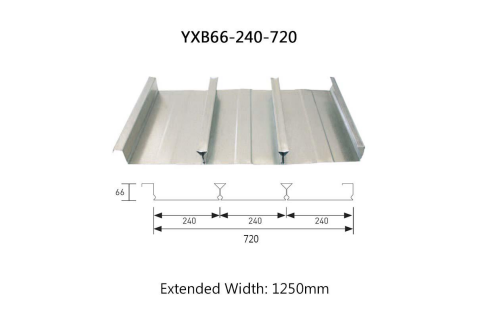
YXB66-240-720
This is a cost-effective, versatile closed-end panel profile. It features a wave height of 66mm and a wave length of 240mm. The cover width is 720mm. Comprising three waves, its generous width reduces the number of panels required, enhancing construction efficiency. The extended width is typically 1250mm, achieving a utilization rate of 57.6%–59%, resulting in relatively economical steel consumption. Beyond the common advantages of closed-end plates—such as strong concrete bond and a flat underside—its structural parameters like sectional moment of inertia and sectional resistance moment are clearly defined, facilitating selection in engineering design.
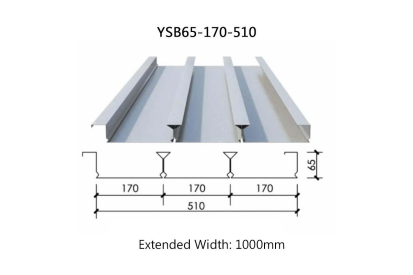
YSB65-170-510
The YXB65-170-510 closed-end floor decking features a wave height of 65mm, composed of three waves spaced 170mm apart. After forming, the cover width of the entire panel is 510mm (excluding overlap width). It is manufactured by cold-rolling and roll-forming 1000mm-wide cold-rolled hot-dip galvanized steel sheet. With a material utilization rate of 51%, it is one of the most mature and frequently used floor decking profiles.
Dovetailed floor deck
Dovetailed floor deck, also known as re-entrant floor deck, was developed to address the limitation of open profile decks, which do not contribute to load-bearing capacity. Engineers narrowed the opening to form a "re-entrant" or "dovetail" shape, enabling the deck to work compositely with concrete. This improvement not only enhances the stiffness of the floor slab but also improves fire resistance and corrosion protection. A representative profile is the YX51-155-620.
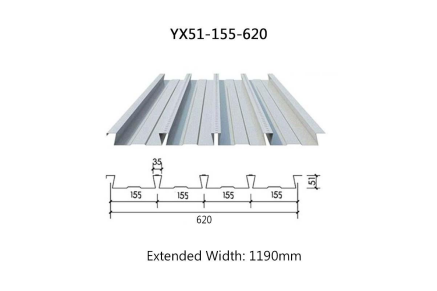
YX51-155-620
The YX51-155-620 floor decking panel, also known as the YX51-155-620 dovetail floor decking panel, is manufactured by mechanically rolling galvanized cold-rolled steel sheets with an input width of 1190mm. Note that this input width is not a standard width readily available on the market, such as: (1000mm, 1200mm, 1250mm, etc.). It requires special customization at 1190mm width. This profile features 4 wave pitches, with clean, burr-free cut edges and a material utilization rate of approximately 52.1%. It represents a typical example of second-generation floor decking.
1.2 Sandwich Composite Panel
Color steel sandwich panels are a new type of composite building material, often referred to as "sandwich" panels in the industry. They consist of two layers of color-coated steel sheets as the outer layer and thermal insulation material as the core material in the middle. They are composited on a special automated production line. This design cleverly combines the strength of metal materials with the thermal insulation properties of thermal insulation materials, and has significant characteristics such as noise insulation, thermal insulation, lightweight and high strength, and quick installation.
Currently, the mainstream core materials on the market include: rock wool core material, polyurethane (PU) core material, polystyrene (EPS) core material, and magnesium oxide core material.
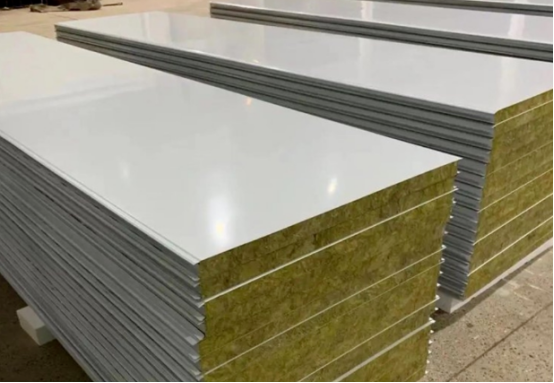
Rock wool core material: It has the best fire resistance, reaching the Class A non-combustible standard, and is suitable for places with high fire protection requirements.
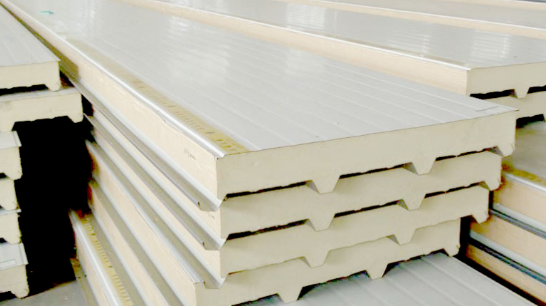
Polyurethane (PU) core material: Excellent thermal insulation performance, low thermal conductivity, and high bonding strength, suitable for cold chain warehouses and energy-saving buildings.
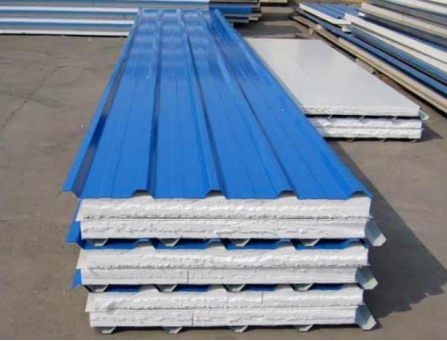
Polystyrene (EPS) core material: lightweight and low cost, but the fire rating is generally B1, suitable for temporary buildings or occasions with low fire protection requirements.
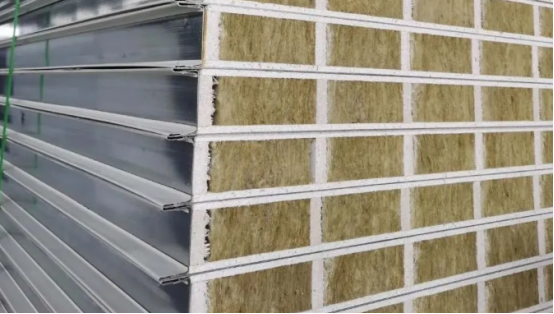
Magnesium oxide (MgO) core material: Fire-resistant (Class A), high strength, easy to install, can be produced to size, and can be disassembled and reassembled multiple times. Suitable for high-requirement locations such as hospitals, laboratories, and new energy facilities.
It is important to note that the classification of roof panels, wall panels, floor decking, and jiaochi board in this article is primarily based on general industry practices and application scenarios in China, rather than strict boundaries. In actual engineering projects, the uses of classic panel types often overlap into a "middle ground"—many models are designed with their cross-sectional characteristics (such as wave height and moment of inertia) so that they can be used for roof load-bearing, wall cladding, and even, under certain conditions, floor decking. Therefore, selection should not be limited by names such as "roof panel" or "wall panel." The key is to verify whether the mechanical properties (such as moment of inertia and section modulus) of the selected model at a specific thickness meet the design requirements based on the actual load and span. This article's classification of models is intended to provide a reference index; specific applications must be based on structural calculations.
2. Performance Characteristics of Color Steel Tiles
2.1 Physical Properties:
Lightweight is one of the most significant advantages of Color steel tile. The weight per unit area of a color steel tile is only 10-14 kg/m², equivalent to 1/30th the weight of a brick wall. This characteristic greatly reduces the overall load-bearing burden of the building, lowers the requirements for the foundation and main structure, and is especially suitable for large-span steel structure houses and roof renovation projects of existing buildings.
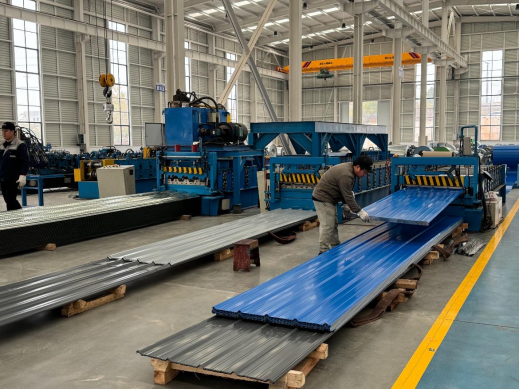
High strength is another major highlight of color steel tile. Formed by roll forming and cold bending, the corrugated structure of these sheets endows them with excellent mechanical properties, making them suitable for load-bearing ceiling and wall cladding panels with good bending and compressive strength. In general housing applications, they can even eliminate the need for beams and columns, achieving a more open spatial layout.
2.2. Functional Characteristics:
Bright colors are a prominent visual feature of color-coated steel tiles. The surface of these sheets uses color-coated steel plates, allowing for a wide range of color choices without the need for additional surface decoration. More importantly, the anti-corrosion layer of the color-coated galvanized steel plate can last for 10-15 years, meaning that for a considerable period, the building will not only maintain its aesthetic appeal but also effectively resist weathering.
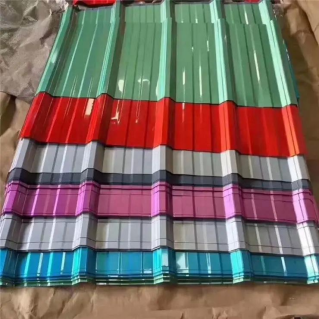
It's worth noting that the fire resistance of colour steel roofing tile needs to be objectively assessed.
Since steel itself is a non-combustible material, if only a single layer of corrugated steel sheet is used (without a core layer), its fire resistance mainly depends on the thickness of the steel sheet and the coating, primarily serving an enclosure function in buildings.
If the color steel tiles is a sandwich panel, it becomes a major source of fire hazard. For insulation and soundproofing, many buildings use sandwich panels. The ignition points of several commonly used core materials mentioned above are as follows: Polystyrene foam: ignition point approximately 345℃, a highly flammable material that ignites upon contact with fire, posing a significant fire hazard; Polyurethane foam: ignition point only around 130℃, comparable to paper, extremely flammable; Rock wool: a Class A non-combustible material with excellent fire resistance, reaching a fire resistance limit of over 1000℃; Magnesium oxide core material: a Class A non-combustible material with a fire rating of A1, it will not burn at high temperatures of 800℃-1200℃, and is smokeless, non-toxic, and odorless when exposed to fire. Both polystyrene and polyurethane are flammable and combustible materials with poor fire resistance and safety. They can be ignited by welding sparks, cigarette butts, etc., and will melt and drip at 80°C. Combustion produces large amounts of toxic and harmful gases (carbon monoxide, hydrogen cyanide, etc.), which can easily cause injury or death. Experiments show that polystyrene sandwich material turns into burning viscous liquid in just 3 minutes and 10 seconds after being ignited.
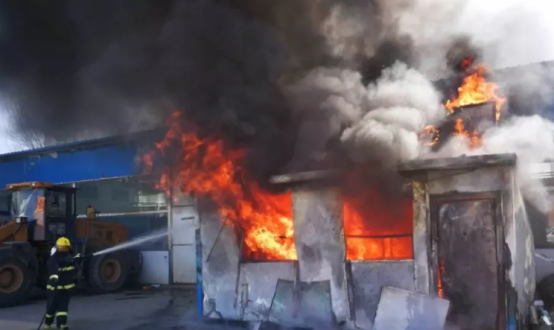
Therefore, China's "Code for Fire Protection Design of Buildings" stipulates that temporary buildings for on-site personnel offices, accommodations, etc., in densely populated places and construction sites shall not be constructed using color steel plates that are lower than the Class A requirement, and the use of polystyrene and polyurethane foam sandwich panels is strictly prohibited.
2.3. Construction Advantages:
A short construction period is a core advantage of color steel tile in engineering construction. Due to their lightweight, ease of cutting and installation, the construction period can be shortened by more than 40% - 3. For projects with tight schedules, this advantage translates to significant savings in time and labor costs.
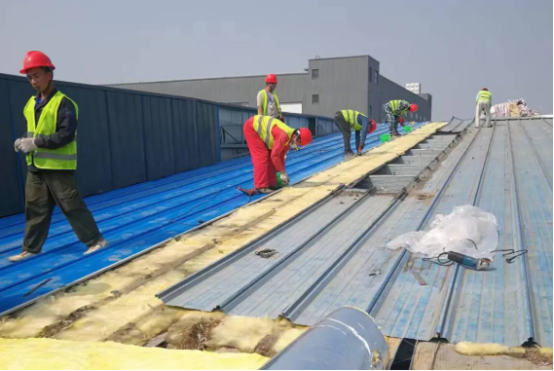
Various installation methods are available: colour steel tile can be laid in an overlapping manner (suitable for roofs ≤15m in length) or a staggered manner (suitable for roofs ≥15m in length), flexibly adapting to the needs of buildings of different sizes. The spacing of the special nails can be controlled between 50-100cm, ensuring both secure fixing and construction efficiency. Additionally, sealing and waterproofing treatment can be applied to the joints and fixing points of the colour steel tile. Using special sealant or waterproof gaskets ensures that rainwater will not seep into the roof. Furthermore, treating the edges and corners of the colour steel tile can effectively prevent water accumulation when rainwater flows over them.
3. Differences between Color Steel Tile and Stone-Coated Metal Roofing Tile
Previously released information regarding colored stone tiles has already provided a detailed introduction, particularly regarding their appearance, shape, and specifications. A quick link is provided: FEATURE|A New Fashion in the Field of House Construction, Colored Stone Metal Tile
Color steel tile and Stone-coated metal roofing tile both belong to the metal roofing sheet family. Although both are made of steel, they differ significantly in terms of positioning, performance, and application experience. To help you distinguish them more clearly, this article will compare them from the following four dimensions:
3.1. Differences in Appearance
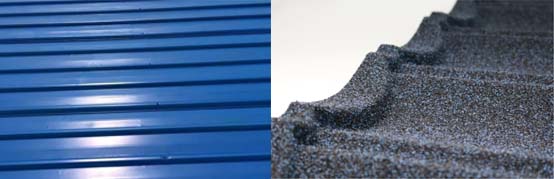
Firstly, to the naked eye, color steel tiles have a smooth surface, with a coating on the surface and a thin steel plate in cross-section, giving them a light and smooth overall feel; while stone-coated metal roofing tiles have a frosted surface with a granular texture and are thicker. Secondly, in terms of style and color, stone-coated metal roofing tiles offer more than ten styles and over twenty colors. Color steel tiles have fewer colors, mainly blue, red, and white, and their styles are also more limited.
3.2. Material Differences:
Color steel tiles are typically made of color-coated steel sheets, which are roll-formed into various corrugated shapes. Colored stone metal tiles, on the other hand, use aluminum-zinc coated steel sheets with excellent corrosion resistance as the base material, water-based acrylic ester as the adhesive, sintered colored sand as the surface layer, and highly weather-resistant acrylic resin as the outer surface layer.
3.3. Key Performance Differences
3.3.1 Corrosion Resistance: Since both are metallic materials, corrosion is a crucial factor. Colored stone metal tiles use a fingerprint-resistant coated aluminum-zinc steel plate, further protected by multiple layers of colored sand and resin. This type of steel plate offers excellent aging resistance, corrosion resistance, and hardness, with a typical service life of 30-50 years. It's a material that requires only one installation and requires no maintenance for a long period. Color steel tiles, on the other hand, have only a single layer of paint. Under long-term use and exposure to sun and rain, the coating is prone to aging and powdering, and the cut edges are highly susceptible to rust and corrosion starting from the cross-section. Its anti-corrosion protection period is typically 10-15 years, with a comprehensive service life of about 8-15 years, requiring regular maintenance.
3.3.2 Thermal Insulation: Color steel tiles, being single-layer metal plates, have high thermal conductivity, easily transferring heat into the room during summer, resulting in poor insulation. Colored stone metal tiles, however, have a colored sand layer on the surface that effectively reflects and insulates heat. Combined with their multi-layer structure, they possess excellent thermal insulation performance, providing a more comfortable living experience.
3.3.3 Fire Resistance: The fire resistance of color steel tiles depends on their core material. If flammable materials such as polystyrene or polyurethane are used, they have low ignition points and produce toxic smoke when burning, posing a significant safety hazard. In contrast, the base material and colored sand layer of colored stone metal tiles are both non-combustible materials, achieving a fire rating of Class A. They will not burn even in a fire, effectively reducing disaster losses.
3.3.4 Noise Reduction: Color steel tiles are thin and lightweight, easily producing noticeable "rain noise" when raindrops hit them, resulting in poor sound insulation. Colored stone metal tiles, on the other hand, have a colored sand layer on the surface that effectively buffers impact sound, significantly reducing noise and creating a quieter indoor environment.
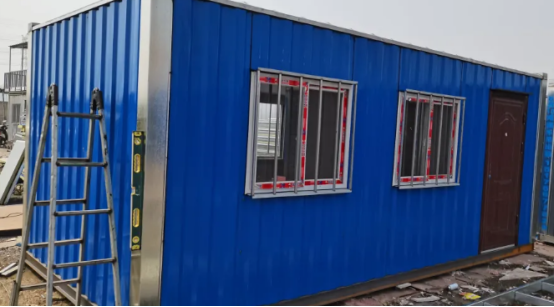
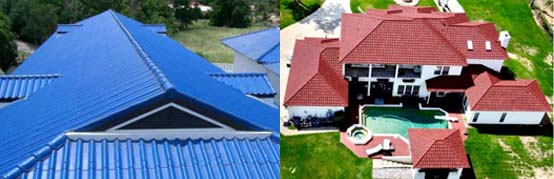
3.4. Differences in Applications: Color steel tiles, due to their low cost and quick installation, are mainly used in industrial and temporary construction. They are commonly found in factory buildings, warehouses, prefabricated houses, construction site fences, temporary wholesale markets, carports, and other places where aesthetics and comfort are not critical.
Colored stone metal tiles, on the other hand, are more commonly used in residential and permanent buildings. They are frequently used in high-end villas, townhouses, resorts, antique-style buildings in scenic areas, self-built houses in new rural areas, and urban "flat-to-slope" roof conversion projects. Their purpose is to enhance the overall grade of the building and the comfort of living.
We sincerely hope that the information we provide can make more beneficial value. In addition, we sincerely invite you to leave valuable comments and advice on our website. We will follow your comments and advice at any time on our website.
CSMC-Empowering small and medium-scale steel purchasing.
Editor: Kyra Hana
Mail: cs@chinasteelmarket.com





|

|

|

|

|
| Timely Info | Independent | Platform | Multiple guarantees | Self-operated storage |
China Steel Market
Empowering small and medium-scale steel purchasing
| About us | Channel | Useful tools |
|---|---|---|
| About China Steel Market | Prices | Steel Weight Calculation |
| Contact Us | Answers | Why Choose Us |
| Terms & Conditions | Inventory | |
| Privacy Policy | Help |
Hot search words:
China Rebar prices China Wire Rod Prices Welded Steel Pipe Prices